

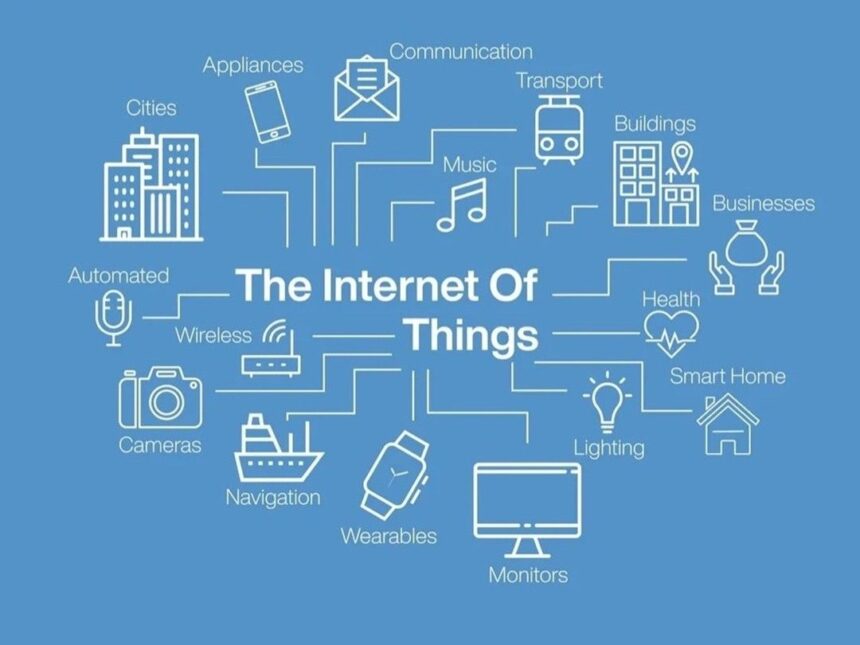
The Internet of Things (IoT) is transforming the way people live, work, and interact with technology. From smart home devices and wearable fitness trackers to connected vehicles and industrial equipment, IoT enables everyday objects to collect, share, and analyse data through the internet.
As businesses and consumers increasingly adopt connected technologies, IoT is becoming a key driver of innovation across industries. It improves convenience, enhances efficiency, supports automation, and enables smarter decision-making. This guide explains what IoT is, how it works, its everyday applications, benefits, challenges, and future trends.
What Is the Internet of Things (IoT)?
The Internet of Things (IoT) is a network of physical devices that are connected to the internet and capable of collecting, sending, and receiving data.
These devices often include sensors, software, and communication technologies that allow them to interact with users, other devices, or cloud-based systems.
Examples of IoT devices include:
- Smart thermostats
- Smart speakers
- Fitness trackers
- Security cameras
- Smart appliances
- Connected vehicles
The goal of IoT is to improve efficiency, automate tasks, and provide valuable insights through real-time data.
How IoT Works
An IoT system typically operates through several connected components.
These include:
- Sensors that collect information
- Internet connectivity for data transmission
- Cloud platforms for data storage and processing
- Software applications for analysis
- User interfaces such as mobile apps or dashboards
Once data is collected, it can be analysed and used to trigger automated actions or provide useful information to users.
Key Technologies Behind IoT
Several technologies make IoT possible.
Sensors
Sensors measure physical conditions such as temperature, humidity, motion, light, location, and air quality.
Connectivity
IoT devices communicate through technologies such as Wi-Fi, Bluetooth, mobile networks, satellite communication, or other wireless protocols.
Cloud Computing
Cloud services provide scalable storage and processing power, allowing connected devices to share and analyse large volumes of data.
Artificial Intelligence (AI)
AI helps interpret IoT data, identify patterns, predict outcomes, and automate decision-making.
Edge Computing
Edge computing processes data closer to where it is generated, reducing delays and improving response times for time-sensitive applications.
Smart Homes
One of the most familiar uses of IoT is the smart home.
Connected devices can help homeowners:
- Control lighting remotely
- Adjust heating and cooling automatically
- Monitor security systems
- Lock or unlock doors
- Manage smart appliances
- Track energy consumption
These systems improve convenience while supporting energy efficiency.
Wearable Technology
Wearable IoT devices have become increasingly popular.
Examples include:
- Smartwatches
- Fitness trackers
- Health monitoring devices
- GPS-enabled sports watches
These devices collect information such as heart rate, activity levels, sleep patterns, and exercise performance, helping users better understand their health and fitness.
Healthcare Applications
IoT is improving healthcare by enabling continuous monitoring and better patient care.
Common applications include:
- Remote patient monitoring
- Connected medical devices
- Smart hospital equipment
- Medication tracking
- Emergency alert systems
Healthcare providers can use this information to support earlier intervention and more personalised treatment.
Smart Transportation
IoT is making transportation safer and more efficient.
Examples include:
- Connected vehicles
- Real-time traffic monitoring
- Smart parking systems
- Fleet management
- Vehicle diagnostics
- Intelligent public transport systems
These technologies help reduce congestion, improve safety, and optimise travel.
Industrial IoT
Businesses use Industrial IoT (IIoT) to improve operations.
Applications include:
- Predictive maintenance
- Equipment monitoring
- Supply chain tracking
- Inventory management
- Energy optimisation
- Manufacturing automation
Industrial IoT helps organisations reduce downtime and increase productivity.
Agriculture and Farming
Farmers are using IoT to improve crop production and resource management.
Examples include:
- Soil moisture monitoring
- Smart irrigation
- Weather monitoring
- Livestock tracking
- Crop health analysis
These technologies help increase efficiency while reducing water and energy use.
Retail and E-commerce
Retail businesses use IoT to improve customer experiences and operations.
Applications include:
- Smart inventory management
- Contactless payments
- Personalised shopping experiences
- Connected shelves
- Warehouse automation
IoT helps retailers respond more quickly to customer demand.
Benefits of IoT
IoT provides significant advantages for both businesses and consumers.
Some key benefits include:
- Increased efficiency
- Better decision-making
- Greater convenience
- Improved safety
- Reduced operational costs
- Enhanced automation
- Real-time monitoring
These benefits contribute to improved productivity and customer satisfaction.
Challenges of IoT
Despite its advantages, IoT also presents several challenges.
Common concerns include:
- Cybersecurity threats
- Data privacy
- Device compatibility
- Network reliability
- High implementation costs
- Managing large amounts of data
Organisations must address these issues to ensure secure and reliable IoT systems.
The Future of IoT
The Internet of Things continues to evolve rapidly.
Future developments are expected to include:
- AI-powered automation
- Smarter cities
- Autonomous transportation
- More advanced wearable devices
- Improved industrial automation
- Greater integration with 5G and future communication networks
- Sustainable energy management systems
As technology advances, IoT is expected to become even more integrated into everyday life.
Conclusion
The Internet of Things is reshaping the way people interact with technology by connecting everyday devices to the internet and enabling them to communicate intelligently. From smart homes and wearable technology to healthcare, manufacturing, agriculture, and transportation, IoT is improving efficiency, convenience, and decision-making across countless industries.
While challenges such as cybersecurity, privacy, and interoperability remain, continued innovation is expected to unlock even greater opportunities. As IoT technologies mature, they will play an increasingly important role in creating smarter homes, businesses, cities, and communities around the world.
Frequently Asked Questions (FAQs)
1. What is the Internet of Things (IoT)?
The Internet of Things (IoT) is a network of internet-connected physical devices that collect, exchange, and process data to perform tasks or provide useful information.
2. How does IoT work?
IoT devices use sensors to gather data, transmit it over the internet, process it through cloud or edge computing systems, and provide insights or trigger automated actions.
3. Where is IoT used in everyday life?
IoT is commonly used in smart homes, wearable fitness devices, connected vehicles, healthcare systems, retail stores, agriculture, manufacturing, and smart city infrastructure.
4. What are the benefits of IoT?
IoT improves efficiency, enables automation, enhances safety, supports better decision-making, reduces operational costs, and provides real-time monitoring of devices and systems.
5. What are the main challenges of IoT?
Key challenges include cybersecurity risks, protecting user privacy, ensuring compatibility between devices, maintaining reliable network connections, and managing large volumes of data.
6. What is the future of IoT?
The future of IoT includes greater integration with artificial intelligence, advanced wireless networks, smart cities, autonomous vehicles, industrial automation, healthcare innovations, and more sustainable resource management.