

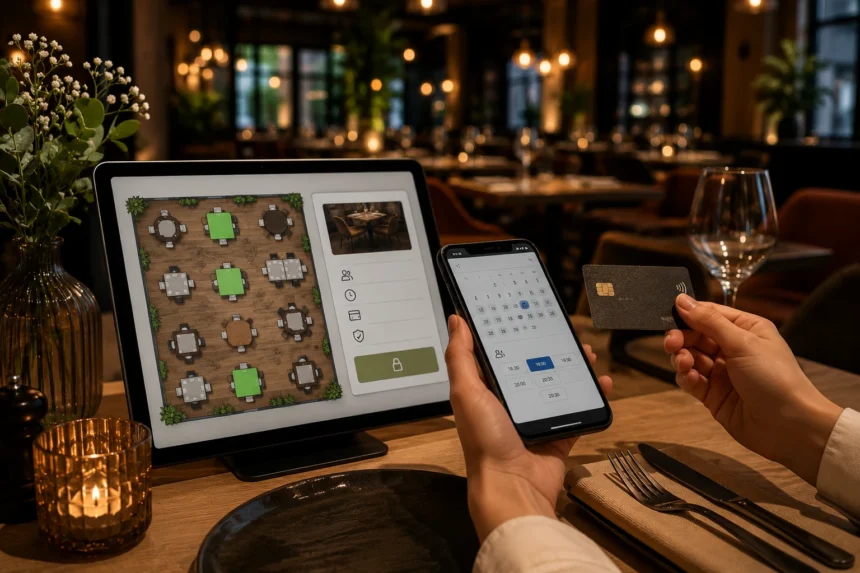
Restaurant reservations are no longer limited to phone calls and handwritten booking lists. Modern guests expect to reserve a table online, receive immediate confirmation and easily manage their plans. At the same time, restaurants need better ways to protect valuable tables during busy periods and reduce the financial impact of no-shows. Digital reservation technology can help solve both challenges.
An effective booking process should do more than record the date and time of a visit. It should help restaurants manage table availability, communicate with guests, organize seating and protect reservations that are especially important for revenue. A https://restaurant.reservble.com/ platform can combine online reservations with deposits, prepayments, table management and other restaurant operations.
One increasingly useful approach is requiring a deposit for selected reservations. A deposit table booking system allows restaurants to secure a booking financially while giving customers a convenient way to confirm their plans online.
What Is a Deposit-Based Table Booking System?
A deposit-based booking system is a reservation solution that allows a restaurant to require customers to pay a specified amount before a table is confirmed. The deposit can be used to protect the restaurant against no-shows and late cancellations, particularly when demand is high.
The amount does not necessarily have to be identical for every reservation. Restaurants may apply different deposit rules depending on the date, time, dining area, table or type of event. This makes the approach more flexible than a universal deposit policy.
For example, a restaurant may accept ordinary weekday reservations without a deposit but require one for Friday evening, a popular terrace or a private dining room. This allows the restaurant to protect the most valuable inventory without creating unnecessary restrictions for every guest.
Why No-Shows Are a Problem for Restaurants
A no-show means that a guest has reserved a table but does not arrive and does not provide sufficient notice. For a restaurant, this can mean losing potential revenue from a table that could have been offered to another customer.
The problem becomes more serious when a restaurant operates close to full capacity. During a busy evening, even one empty table can represent a significant missed opportunity. If several reservations are not honored, the impact on revenue can become substantial.
No-shows also affect operational planning. Restaurants prepare staff schedules, food supplies and table arrangements according to expected demand. Unexpectedly empty tables can therefore create an imbalance between resources and actual guest numbers.
How Deposits Help Secure Reservations
A deposit creates a financial commitment at the time of booking. When customers have already paid part of the amount, they have an additional reason to arrive or cancel according to the restaurant’s policy.
For restaurants, this makes future attendance more predictable. Instead of having a reservation that represents only a verbal or digital commitment, the business has a booking connected to a completed payment.
Deposit rules can also be used to cover part of the expected spending or the cost associated with holding a table. The restaurant can determine the appropriate amount according to its business model and the characteristics of the reservation.
Deposits for Peak Hours
Not every reservation has the same commercial value. A table at 3 p.m. on a quiet weekday may be relatively easy to replace, while a table at 8 p.m. on Saturday can be highly valuable.
For this reason, restaurants can use deposits selectively. Applying them to peak periods allows businesses to protect the time slots where a no-show would have the greatest financial impact.
Restaurants can also create different policies for holidays, special events and seasonal periods. This approach makes reservation management more responsive to actual demand instead of relying on one fixed rule throughout the year.
Deposits by Dining Area or Table
Some areas of a restaurant may be more desirable than others. A terrace, private room, window table or premium dining zone may generate higher demand and therefore require additional protection.
Modern reservation platforms can allow deposits to be associated with specific zones or individual tables. This gives restaurants greater control over their inventory and makes it possible to apply different conditions according to seating type.
Such flexibility is particularly useful for restaurants with several dining areas. A single deposit policy may not be appropriate when the venue includes a standard dining room, private rooms, a terrace and premium tables.
Automatic Confirmation After Payment
One important advantage of digital deposits is that payment can be connected directly with the reservation workflow. When the required amount is successfully paid, the booking can be confirmed automatically according to the restaurant’s settings.
This reduces the need for staff to manually check payments and update reservation statuses. Guests also receive faster confirmation because the booking process does not depend on an employee completing an additional administrative step.
If payment is not completed within the specified period, the reservation can be cancelled according to the configured rules. This prevents unpaid bookings from blocking tables that could otherwise be offered to other guests.
Clear Cancellation Policies
A deposit system works best when cancellation conditions are easy to understand. Before completing a reservation, guests should know how the deposit will be treated if they cancel.
A restaurant may offer a full refund when a cancellation is made sufficiently early, a partial refund closer to the reservation time or no refund for a late cancellation. The appropriate policy depends on the restaurant’s business model.
Clear communication helps avoid misunderstandings. Customers are more likely to accept a deposit when the conditions are visible before payment and presented in simple language.
Deposits and Customer Experience
Requiring payment before a visit can sometimes create friction, so the process should be convenient. Guests should be able to understand why the deposit is required and complete payment without unnecessary steps.
Modern payment methods can make this process faster. Customers may be able to use a bank card or digital wallets such as Apple Pay and Google Pay, depending on the payment infrastructure available to the restaurant. :contentReference[oaicite:1]{index=1}
The goal is to create a balance between protecting the restaurant and maintaining a comfortable booking experience. A complicated or unclear deposit process can discourage potential guests, while a simple and transparent process can become a normal part of the reservation journey.
Prepayments for Special Events and Group Bookings
Deposits are not the only way restaurants can secure future revenue. Prepayments can also be used when guests want to order food or services in advance.
This can be especially useful for banquets, tasting menus, private events and large groups. Guests can select certain dishes or packages during the reservation process and pay before arriving.
For the restaurant, advance orders provide additional information for kitchen preparation. Staff can better estimate portions, organize ingredients and prepare the service according to confirmed demand. :contentReference[oaicite:2]{index=2}
How Deposit Systems Improve Restaurant Planning
Reliable reservations make it easier to plan restaurant operations. When a greater percentage of bookings are financially secured, managers can make more informed decisions about staffing, inventory and table allocation.
For example, a restaurant expecting several confirmed groups on a particular evening can prepare the appropriate number of employees and organize the dining room in advance. This is more predictable than relying entirely on reservations that may not be honored.
Prepayments can provide an additional layer of predictability because the restaurant knows not only that guests intend to arrive but also which products or services have already been selected.
Combining Deposits With Automatic Reminders
Deposits can be combined with automated reservation reminders. A reminder gives guests an opportunity to review the date and time of their booking before the visit.
When a customer realizes that plans have changed, an early notification gives the restaurant more time to release the table and potentially offer it to another guest. This is especially important for high-demand time slots.
Automated communication also reduces the amount of manual work required from restaurant staff. Instead of contacting every guest individually, the system can handle standard confirmation and reminder messages.
Connecting Deposits With Table Management
A reservation should not exist separately from the restaurant’s floor plan. When payment status, reservation status and table availability are connected, staff have a more complete view of the service.
Employees can see which tables are reserved, which bookings have been confirmed through payment and which tables remain available. This can make seating decisions faster and reduce the possibility of booking conflicts.
Interactive table management is particularly useful for restaurants with different table sizes and dining zones. Staff can match party size with appropriate seating while maintaining the restaurant’s deposit rules.
POS Integration and Payment Information
Connecting reservation software with a point-of-sale system can further reduce manual work. Reservation and seating information can be synchronized with the POS, allowing staff to work with more consistent data.
Payment information can also be tracked digitally. Restaurants can see whether deposits are pending, paid or cancelled and use this information when managing upcoming bookings.
According to Reservble’s current product information, its deposit and prepayment functionality can be integrated with POS systems and fiscalization, while payment history can be tracked within the platform. :contentReference[oaicite:3]{index=3}
Using Reservation Data to Improve Performance
Digital booking systems can provide more than reservation management. They can generate data that helps restaurant owners understand demand and customer behavior.
Managers can review booking volume, cancellations, no-shows, occupancy and reservation sources. This information can help identify which days and time slots perform best and where changes to the booking policy may be useful.
For example, if a restaurant sees frequent no-shows for a particular time slot, management may consider introducing a deposit for that period. If another period consistently has low demand, the restaurant may decide that a deposit is unnecessary.
Deposit Policies for Different Types of Guests
Restaurants do not always need to use identical rules for every reservation. A small booking may require one policy, while a large group or private event may require another.
Large parties create additional operational risks because a significant amount of seating capacity is reserved for one booking. If the group does not arrive, replacing the lost demand at short notice can be difficult.
A larger deposit can therefore be appropriate for banquets, celebrations and special events. The policy should remain proportional and clearly communicated to customers.
How to Implement a Deposit Booking Strategy
Restaurants should introduce deposits based on actual operational needs rather than applying them without a clear purpose.
- Identify the time slots with the highest demand.
- Determine which tables or zones are most difficult to replace after a cancellation.
- Choose appropriate deposit amounts.
- Define cancellation and refund conditions.
- Decide whether deposits apply to specific dates, zones or tables.
- Configure payment deadlines for reservations.
- Set up automatic confirmations and reminders.
- Train staff to explain the policy to guests.
- Monitor no-shows and cancellations after implementation.
- Adjust the policy according to actual results.
This approach allows restaurants to protect valuable reservations without unnecessarily complicating the booking experience for customers.
Common Mistakes When Using Deposits
One common mistake is requiring deposits for every reservation regardless of demand. A strict policy can discourage customers when there is little operational reason to require upfront payment.
Another mistake is failing to communicate refund conditions clearly. Guests should never have to guess what happens to their deposit after cancelling.
Restaurants should also avoid setting deposit amounts that are disproportionate to the expected value of the reservation. The purpose is to secure the booking and protect the business, not to create an unnecessary barrier.
The Role of Digital Reservation Technology
A modern reservation platform can bring together online bookings, deposits, table management, reminders, waitlists and analytics. This creates a more structured workflow for both guests and restaurant employees.
Instead of treating payment, seating and reservations as separate processes, restaurants can manage them as connected parts of the same customer journey.
This is particularly valuable for restaurants that receive bookings from several channels. Website, Google and social media reservations can be centralized, while table availability is managed through a shared system. :contentReference[oaicite:4]{index=4}
The Future of Deposit-Based Restaurant Reservations
Restaurant reservation technology is increasingly moving toward automated and data-driven management. Deposits, prepayments, digital communication and real-time table availability can work together to make restaurant demand more predictable.
The future of reservation management is not simply about getting more bookings. It is about getting reliable bookings and using available tables as efficiently as possible. Restaurants can combine flexible deposit policies with smart seating, waitlists and analytics to improve the performance of each service.
Conclusion
Deposit-based reservations can help restaurants protect valuable tables, reduce the impact of no-shows and make future demand more predictable. When deposits are applied selectively to peak hours, premium areas, individual tables or special events, they can become a practical part of restaurant revenue management.
The most effective system combines deposits with convenient online booking, automatic confirmation, reminders, clear cancellation policies and accurate table management. Integration with POS and analytics can further reduce administrative work and provide managers with useful information for decision-making.
For restaurants looking to improve reservation reliability without making the customer journey unnecessarily complicated, digital deposit management offers a practical balance between guest convenience and business protection.