

Twenty years ago, burglar alarm installation meant a technician drilling through door frames, pulling wire to a metal box in the basement and plugging the panel into a telephone line. The homeowner
got a beige keypad by the front door, a yard sign and a monitoring contract. That was the whole user experience.
The job looks very different in 2026. Sensors talk to the panel over encrypted radio, the panel reports over a cellular network, and family members can arm and disarm from their phones. Parks Associates found in 2025 that 47% of U.S. internet households now own a security solution of some kind,
while 19% have professionally monitored systems. Here’s how the technology reshaped the install itself, and what still requires a professional.
From Copper Wire to Encrypted Radio
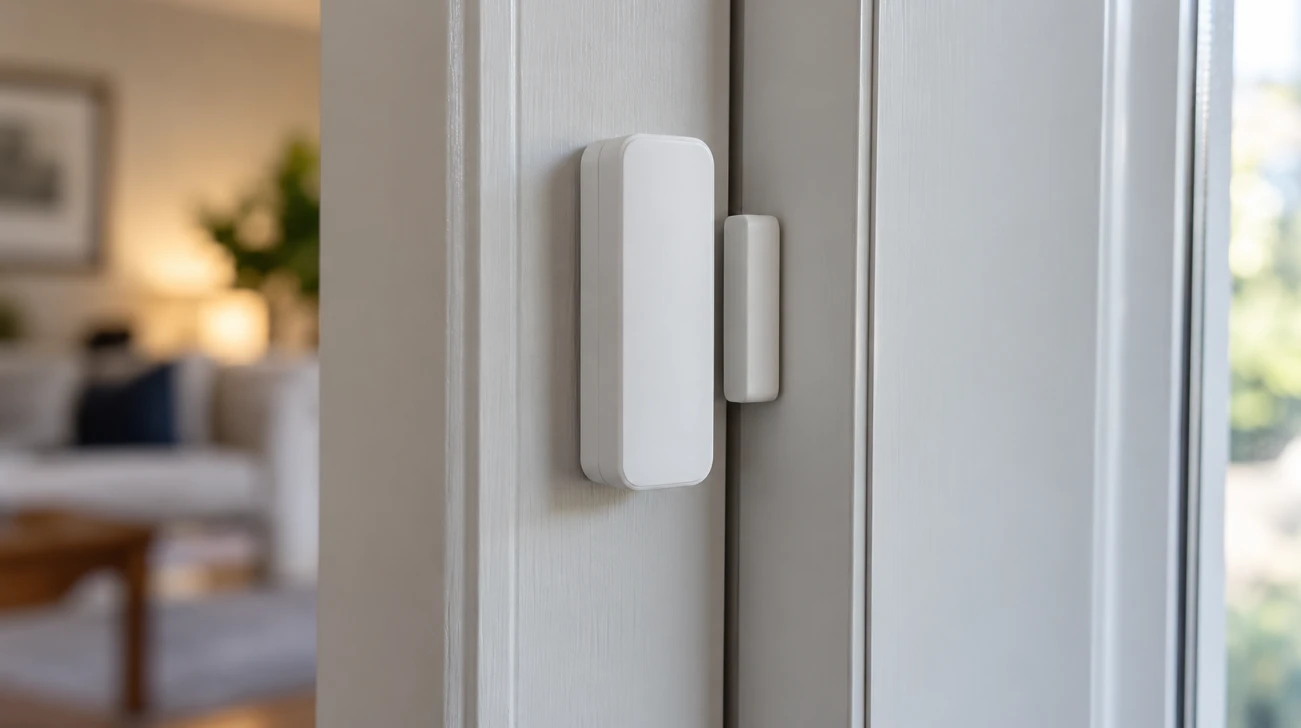
Classic alarms ran hardwired loops from each door and window contact back to the control panel. The wiring was reliable, and installing it in a finished house meant fishing cable through walls, patching drywall and spending most of a day on site.
Early wireless sensors cut that labor, and they came with a weakness that took years to surface publicly. In 2014, Oak Ridge National Laboratory researcher Logan Lamb showed that sensors from several major home alarm brands sent their signals without encryption or authentication. He could record a
sensor’s transmission, replay it to trigger a false alarm, or jam the signal so an opened door never reached the panel, and Wired reported the attacks could work from as far as 250 yards away.
The industry answered with new radio protocols. DSC’s PowerG, for example, hops across frequencies in the 915 MHz band, encrypts traffic with 128-bit AES and is rated for up to 2 kilometers of line-of-sight range. Honestly, that shift changed installation more than any app did: a technician can
now protect a two-story house without opening a single wall, and the security gap that made installers wary of wireless has largely closed on current professional equipment.
Modern wireless sensors also report on their own condition. Each one checks in with the panel on a schedule, so a sensor that goes silent, loses its battery or gets pried off the wall shows up on the panel as a trouble alert.
Time on site dropped with it. Vector Security estimates about three to four hours for a wireless system against six to eight hours for a wired one.
Hybrid Installs Keep the Old Wires Working
Plenty of houses still have contacts and cable from an alarm installed decades ago, and smart-era installers rarely rip that out. Hybrid panels accept wired zones and wireless sensors at the same time, so existing door contacts keep working while new wireless sensors cover additions, garages and
windows the original installer skipped. DSC even sells a PowerG wired-to-wireless converter, the PG9WLSHW8, that turns existing hardwired zones into encrypted wireless signals for a newer panel.
The practical benefit is cost. Reusing working wires avoids new holes in finished walls, and the technician spends the saved time on testing each old contact, since some of them will have failed quietly over the years.
The Phone Line Disappeared
For decades, alarm panels dialed the monitoring center over copper phone lines. That path is going away. AT&T plans to retire traditional copper landline service across nearly all of its footprint by 2029, and many homes cut the landline long ago.
Cellular communicators took over, and they brought their own lesson. When AT&T, T-Mobile and Verizon shut down their 3G networks in 2022, alarm panels with 3G radios lost their connection to monitoring centers until the radios were replaced. Installers now fit LTE communicators, often with
home internet as a second reporting path, and the carrier sunset history is a good reason to ask which network a new communicator uses before signing.
The App Became the Keypad
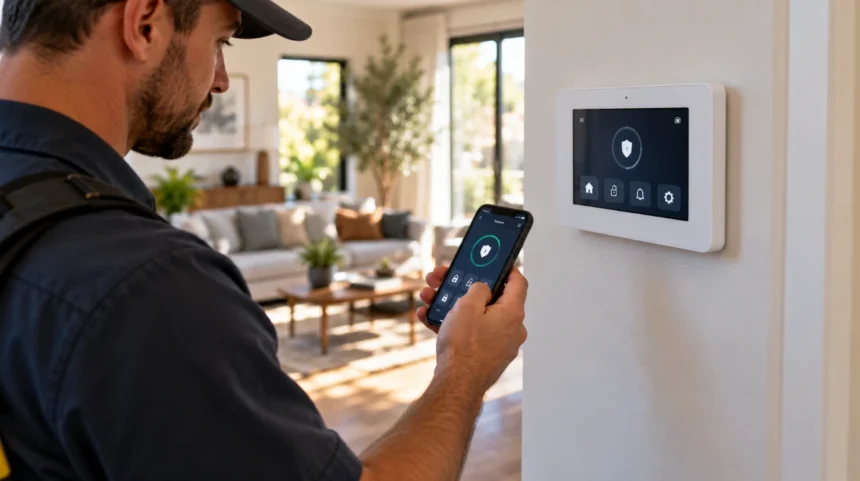
The biggest change homeowners notice is control. The wall keypad still exists, and a phone app now handles most of the daily work: arming the system from the office, checking whether the back door is closed, issuing a temporary code to a contractor and deleting it when the job ends.
Many professional panels also include Z-Wave radios that link the alarm to smart locks, lights and thermostats. That opens up automation rules an older system couldn’t run. Arming the system at night can lock the front door and turn off downstairs lights, and an alarm can switch every light in the
house on at once. Panels from manufacturers such as Honeywell, DSC, Bosch and DMP all support some version of app control, either directly or through partner platforms.
Small business owners get a bonus from the same apps. Open and close reports show when a shop was actually unlocked each morning and which employee code armed it at night. App security matters too: a strong unique password and two-factor login keep that control out of the wrong hands.
For the installer, that means part of every job now happens on a phone. Pairing the app, setting up user permissions and testing notifications takes real time on install day, and skipping it leaves owners with a modern system they run like a 1990s one.
Cameras Joined the Alarm
Burglar alarms have a long-standing credibility problem. The U.S. Department of Justice’s guide on false burglar alarms puts the share of alarm calls that turn out false at 94 to 98 percent, and many police departments treat unverified intrusion alarms with low urgency as a result.
Cameras changed that equation. A monitoring operator can now review a short clip from the camera tied to the triggered zone before calling police, and since 2012 the Partnership for Priority Verified Alarm Response has pushed departments to give video-verified alarms higher dispatch priority. AI
person and vehicle detection filters out many of the swaying branches and passing headlights that used to trigger needless calls. Parks Associates reports that 33% of U.S. internet households already own a smart camera, so many installs now tie existing cameras into the alarm.
Then and Now, Side by Side
The table below compares a typical install from the landline era with a smart-era install in 2026.
| Part of the system | Classic install | Smart-era install |
|---|---|---|
| Door and window sensors | Hardwired loops through walls | Encrypted wireless sensors, or a hybrid with existing wires |
| Path to the monitoring center | Copper phone line | LTE cellular with internet backup |
| Daily control | Wall keypad | Keypad plus phone app with per-user codes |
| Alerts | Siren and a call from the monitoring center | Push notifications with video clips |
| Alarm verification | One call to the premises | Video review, AI filters, two-call verification |
| Typical time on site | Six to eight hours for wired | Three to four hours for wireless |
DIY Kits and Where Professionals Still Matter
Smart tech also made self-installation realistic. Parks Associates found in 2024 that professional installations had recovered from a pandemic-era DIY surge to the point where both approaches were equally popular, and more than 60% of households using self-monitoring believed it kept them as safe
as professional monitoring.
A DIY kit handles a small apartment well. Professional installation still earns its fee on the jobs where details decide whether the alarm works: placing motion detectors so pets and sunny windows don’t trigger them, converting an old wired system without losing usable zones, registering the alarm
with the city where permits are required, and connecting to a UL-listed central station that an insurer will accept for a premium discount. Chubb’s published discount schedules in several states, for example, list 5 percent off homeowners premiums for a central station burglar alarm.
What a Smart Burglar Alarm Install Includes in 2026
If you’re comparing quotes, a current professional install should cover these items:
- Encrypted wireless or hybrid sensors
- LTE communicator with internet backup
- Backup battery in the control panel
- App setup with separate user codes
- Option for video verification
- Smart lock and lighting integration
On price, Vivint’s 2026 pricing guide puts equipment at roughly $200 to $1,500, professional installation at $99 to $199 and often waived with a contract, and professional monitoring at about $30 to $60 a month.
For all the encryption, apps and AI, the oldest part of the system still carries a surprising share of the load. In a University of North Carolina at Charlotte study of more than 400 incarcerated burglars, roughly 83 percent said they would try to find out whether a home had an alarm before
breaking in, and about 60 percent said they would look for another target if they found one. The yard sign and window decals that go up in the last five minutes of install day remain the first layer an intruder actually sees.