

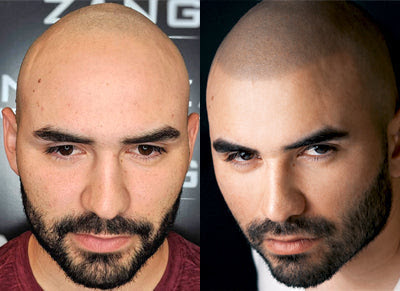
Scalp micropigmentation can be customized for different types of hair loss and scalp scarring. Practitioners use different techniques based on each client’s needs, whether the goal is to camouflage a scar, create the appearance of fuller hair, or define a receding hairline. Here are a few treatment types of micropigmentation that are tailored to individual goals:
Hairline Restoration
Scalp micropigmentation is often used to create the appearance of a fuller, more defined hairline. During treatment, practitioners deposit pigment into the scalp to mimic the look of closely cropped hair follicles along areas where hair appears thinner or has receded. The treatment does not restore hair growth or increase the amount of hair; it creates visual contrast that makes the hairline and surrounding areas appear more defined and fuller.
Practitioners customize the hairline based on the client’s existing hair pattern, degree of hair loss, facial features, and desired appearance. Rather than applying the same shape to every client, they adjust the placement and design of the pigment to complement the individual. A hairline can have a more defined edge or a softer, broken appearance for a less uniform look. Common hairline styles include:
- Round hairline, which follows a gentle curve from one temple toward the other with a rounded shape through the center
- Straight hairline, which follows a relatively even line across the forehead from one temple to the other
- Slightly receded hairline, which sits farther back near the temples while maintaining a gradual curve through the center
Hair Density Treatments
Thinning hair affects both men and women and often becomes more noticeable with age. Scalp micropigmentation improves the appearance of density in thinning areas by placing pigment between existing hairs. The small, closely spaced impressions mimic the look of hair follicles, creating a fuller appearance without increasing the amount of hair; this approach suits areas where hair remains but appears less dense. Practitioners select pigment tones that complement the client’s existing hair and skin tone, then build the desired appearance over multiple sessions. Each session typically lasts two to four hours. Results often last several years, with occasional maintenance helping preserve the desired appearance over time.
Scalp Scar Camouflage
Scalp scars often result from medical procedures, hair transplants, injuries, or burns. Scalp micropigmentation helps reduce their visual contrast by placing carefully matched pigment across and around the scar. Rather than restoring hair to the scarred area, the treatment creates the appearance of closely spaced follicles that blend with the surrounding scalp.
Before treatment, practitioners assess the scar during an in-person or video consultation. They evaluate factors such as the scar’s size, texture, location, and how it differs from the surrounding skin. These details guide the treatment plan and influence pigment placement and spacing.
Different scars require varied approaches. A linear scar from a hair transplant has a different shape and texture than an irregular scar from an injury or burn. Practitioners adjust the pigment pattern to follow the surrounding hair and reduce the visual distinction between the scar and nearby scalp. This customized approach addresses a range of scar types, including narrow, wide, flat, and textured scars.
Alopecia Treatment
Scalp micropigmentation offers a cosmetic option for clients with alopecia or other conditions that cause hair loss by creating the appearance of closely cropped hair across affected areas. Practitioners use stippling to place small, carefully spaced pigment impressions throughout sparse regions, creating greater visual contrast and a fuller-looking scalp without producing new hair. The pigment sits within the scalp at a shallow depth and follows the surrounding hair pattern for a cohesive appearance.
Future appointments allow practitioners to refine the design as the pattern of hair loss changes. If additional areas become sparse, they can extend the treatment or adjust the hairline to maintain a balanced appearance. Each treatment plan reflects the individual’s existing hair pattern, areas of concern, and preferred look rather than following a uniform design.
Choose Your Scalp Micropigmentation Approach
The appropriate scalp micropigmentation style depends on the client’s existing hair, treatment goals, and hair loss pattern. The available approaches range from hairline restoration and hair density treatments to scalp scar camouflage and alopecia treatment. Start by booking a consultation to discuss your aesthetic goals and develop a customized treatment plan.