

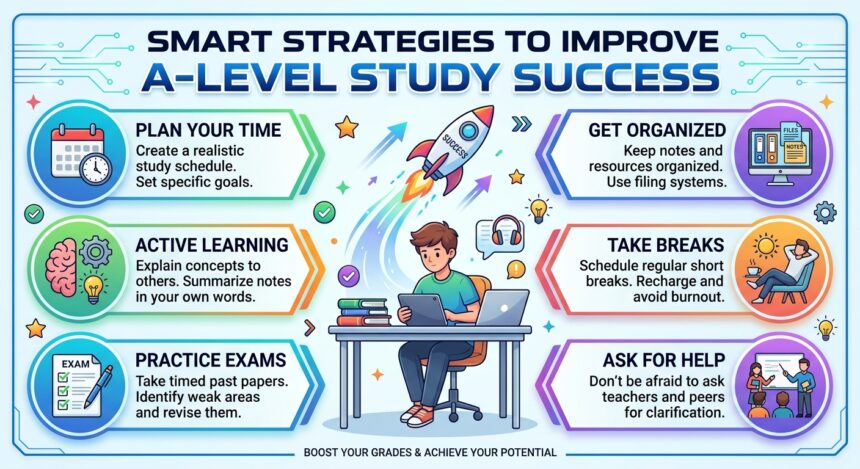
Better Academic Results Begin with Effective A-Level Study Tips
A-Level education is an important milestone that prepares students for university studies and future career opportunities. The curriculum demands a deeper understanding of concepts, stronger analytical thinking, and consistent revision across multiple subjects. To meet these expectations, students benefit from following A-level study tips that encourage organised learning, efficient revision, and smart time management. Rather than relying on last-minute preparation, adopting effective study strategies helps learners retain information, apply knowledge confidently, and reduce examination stress. When combined with high-quality educational resources and a disciplined routine, these approaches create a solid foundation for achieving strong academic results.
Success at the A-Level stage is not determined by the number of hours spent studying but by how effectively students use their time, learning materials, and revision techniques.
Key Takeaways
|
Building a Strong Foundation for A-Level Success
Academic success begins with mastering the fundamentals before progressing to more advanced topics. Students who build a strong conceptual foundation are better equipped to analyse complex questions, connect different ideas, and apply their knowledge in examinations. This gradual approach makes learning more manageable and improves confidence throughout the academic year.
Strong foundations are developed through regular revision, active classroom participation, and consistent practice. Instead of memorising information, students should focus on understanding how concepts relate to one another. This deeper understanding supports long-term retention and prepares learners for challenging examination questions.
Understanding Concepts Before Memorising
A clear understanding of key concepts enables students to solve unfamiliar questions with confidence. Concept-based learning also encourages critical thinking and reduces dependence on rote memorisation.
Creating Realistic Learning Goals
Breaking larger topics into smaller, achievable objectives helps students maintain steady progress. Clear goals improve motivation while making revision sessions more productive.
Effective Study Techniques That Improve Academic Performance
Successful students often rely on structured study methods rather than simply increasing the number of hours they spend revising. Effective techniques encourage active learning, strengthen memory, and help students identify areas that require additional attention. Choosing suitable revision strategies also makes studying more engaging and less overwhelming.
Study Techniques and Their Benefits
| Study Technique | How It Helps | Expected Outcome |
| Active Recall | Strengthens memory through self-testing | Better knowledge retention |
| Spaced Revision | Reinforces learning over time | Long-term understanding |
| Practice Papers | Familiarises students with exam questions | Improved confidence |
| Mind Mapping | Organises ideas visually | Better concept understanding |
| Self-Assessment | Identifies weaker topics | More focused revision |
The table above highlights how different revision strategies contribute to more effective learning. Combining these techniques allows students to strengthen understanding while preparing for examinations with greater confidence.
Revising Smarter, Not Longer
Focused revision sessions with clear objectives are more effective than studying continuously for long periods. Smart revision improves concentration and reduces mental fatigue.
Learning from Practice Papers
Completing practice papers helps students understand examination formats, improve time management, and identify areas that require further revision.
Effective study habits include:
- Using active recall techniques.
- Revising topics through spaced repetition.
- Completing timed practice papers.
- Reviewing mistakes after each revision session.
- Creating visual summaries for complex topics.
Choosing Learning Resources That Support A-Level Preparation
The quality of study materials has a significant impact on academic progress. Well-structured educational books provide clear explanations, worked examples, and progressive exercises that help students understand difficult concepts more effectively. Reliable learning resources also encourage independent revision and reinforce classroom teaching.
Students preparing for advanced secondary education can also explore Secondary School Books, where they can find educational resources that strengthen subject knowledge and support consistent academic progress.
Selecting Curriculum-Aligned Study Materials
Books that follow the latest syllabus ensure students revise relevant topics while building confidence through structured learning and targeted practice.
Balancing Theory with Practice
Combining conceptual explanations with regular exercises helps students understand subject content while developing the skills needed to answer examination questions accurately.
Managing Time Effectively During A-Level Preparation
Good time management also improves productivity by helping students focus on important topics while avoiding last-minute cramming. By allocating sufficient time to each subject and reviewing progress regularly, learners can prepare more confidently for assessments and reduce examination pressure.
Creating a Weekly Study Schedule
A structured timetable helps students organise their learning, set realistic goals, and maintain consistency. Dividing subjects into manageable sessions makes revision more focused and productive.
Maintaining Balance Between Study and Rest
Regular breaks, adequate sleep, and leisure activities help students stay motivated and avoid burnout. A balanced routine supports concentration and long-term academic performance.
Students can manage their study time more effectively by:
- Planning weekly revision goals.
- Prioritising challenging subjects first.
- Breaking large topics into smaller sections.
- Scheduling regular short breaks.
- Reviewing progress at the end of each week.
Developing the Right Mindset for Academic Excellence
Academic achievement depends not only on knowledge but also on attitude and perseverance. Students who approach learning with confidence and determination are more likely to overcome challenges and remain motivated throughout their A-Level journey. Developing a positive mindset encourages learners to view mistakes as valuable learning opportunities rather than setbacks.
Staying Motivated Throughout the Year
Setting achievable milestones and celebrating small accomplishments helps students maintain enthusiasm during long periods of study. Positive reinforcement encourages continuous improvement.
Turning Challenges into Learning Opportunities
Analysing mistakes and understanding difficult concepts help students strengthen their knowledge. Every challenge becomes an opportunity to improve analytical thinking and problem-solving abilities.
Helpful habits for maintaining motivation include:
- Setting realistic academic goals.
- Tracking revision progress regularly.
- Learning from mistakes without discouragement.
- Celebrating improvements along the way.
- Maintaining a consistent study routine.
Achieving Sustainable Academic Growth
Strong academic performance is built through continuous learning rather than short-term effort. Students who develop effective study habits, manage their time wisely, and revise consistently often achieve better results while experiencing less examination stress. These habits also prepare them for university studies, where independent learning becomes increasingly important.
Strengthening Independent Learning
Students who take responsibility for their learning become more organised and confident when tackling advanced topics. Independent study also improves problem-solving and decision-making skills.
Preparing for Future Educational Success
The study habits developed during A-Level education continue to benefit students in higher education and professional life. Consistency, discipline, and critical thinking remain valuable lifelong skills.
Long-term benefits include:
- Better academic performance.
- Improved analytical thinking.
- Greater confidence in examinations.
- Stronger independent learning skills.
- Readiness for university education.
Final Takeaway
Academic success at the A-Level stage is achieved through consistent effort, smart planning, and effective learning strategies. Following practical A-Level study tips helps students strengthen understanding, improve revision efficiency, and approach examinations with greater confidence. Combined with quality educational resources, these habits lay the foundation for lasting academic achievement.
For students and parents seeking trusted learning materials, SAPGRP offers a wide selection of educational books and revision resources to support subject mastery, effective revision, and continuous academic improvement.
Ready to enhance your A-Level preparation with reliable learning resources?
Purchase educational books at sapgrp.com, where you’ll find a comprehensive collection of study guides and revision materials designed to strengthen subject knowledge, improve exam readiness, and support academic success.
Frequently Asked Questions
- What are the most effective A-Level study techniques?
Effective study techniques include active recall, spaced revision, practice papers, and regular self-assessment. These methods help students retain information more effectively and improve examination performance. Combining multiple techniques creates a balanced and productive study routine.
- How should students plan their A-Level revision schedule?
Students should create a realistic timetable that allocates sufficient time to each subject while allowing for regular breaks. Revising consistently throughout the year is generally more effective than last-minute preparation. Weekly progress reviews help keep revision on track.
- Why are practice papers important for A-Level preparation?
Practice papers familiarise students with examination formats and improve time management during assessments. They also help identify weaker areas that require additional revision. Regular practice builds confidence and reduces examination anxiety.
- How can students stay motivated during A-Level studies?
Setting achievable goals, maintaining a balanced study routine, and recognising gradual improvement help students stay motivated. Viewing challenges as learning opportunities encourages resilience and continuous progress. Support from teachers and parents can also strengthen motivation.
- Where can students find quality A-Level study books in Singapore?
Students and parents can explore SAPGRP for a wide range of educational books and revision resources that support A-Level preparation. These carefully selected materials provide structured explanations, practice exercises, and exam-focused content to help learners strengthen their understanding and achieve their academic goals.