

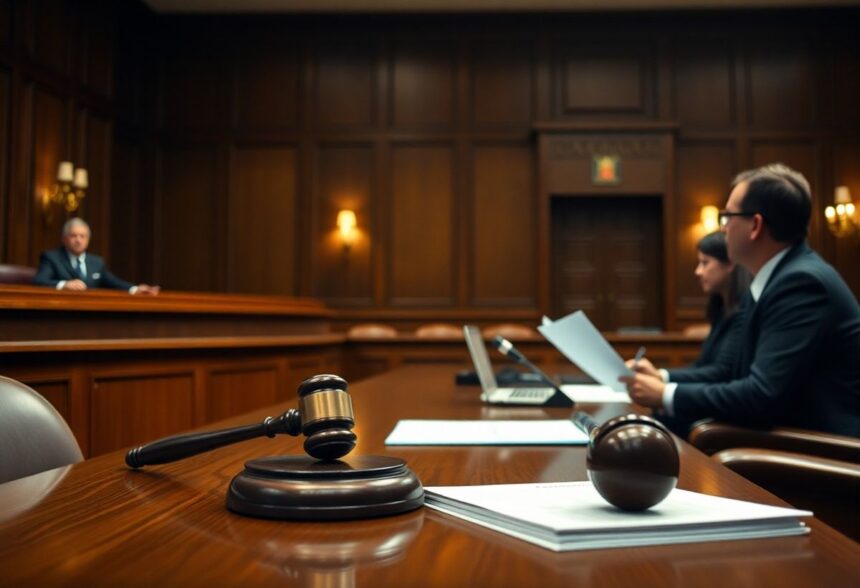
A court trial serves as a fundamental aspect of the judicial system, representing a structured process wherein legal disputes are resolved by an impartial authority. The primary purpose of a trial is to establish the truth surrounding a legal matter, ultimately allowing for a fair resolution. Court trials occur in a formal legal context, where rules and procedures dictate the flow of events. This environment is designed to uphold the rights of all parties involved and ensure the administration of justice.
The significance of a court trial extends beyond mere dispute resolution. It embodies the principles of due process and serves as a critical mechanism for upholding the rule of law. In a functioning democracy, trials provide a forum where individuals can present their cases and seek remedies for perceived wrongs, thereby reinforcing societal norms and legal standards.
Central to the court trial process are several key roles, each with distinct responsibilities. The judge presides over the proceedings, ensuring that the trial follows legal protocols and that the rights of both parties are protected. The judge is responsible for interpreting the law, guiding jurors, and making rulings on evidentiary matters. Meanwhile, juries, which often consist of members from the community, play a crucial role in fact-finding. They listen to evidence presented by both sides and render a verdict based on the admissible facts and legal guidelines provided by the judge.
Additionally, the trial involves plaintiffs who initiate the action, seeking to prove their claims against defendants, who are accused or charged with wrongdoing. This interplay between plaintiffs and defendants is fundamental to the adversarial system in place, an essential aspect of court trials that facilitates the pursuit of justice.
Understanding the Different Types of Trials
In the legal landscape, the types of trials can broadly be categorized into civil trials and criminal trials, each serving unique purposes within the judicial system. Understanding these differences is crucial for comprehending the overall trial process.
Civil trials primarily deal with disputes between individuals or organizations, typically involving claims for monetary damages or specific performance. In this context, the burden of proof lies with the plaintiff, who must establish their case by a preponderance of the evidence. This standard is relatively lower than that of criminal proceedings, making it easier for the plaintiff to prevail. Outcomes in civil trials often involve compensation or injunctions but do not result in criminal penalties such as imprisonment.
On the other hand, criminal trials focus on violations of criminal law, where the government prosecutes the accused. The primary aim here is to ascertain guilt or innocence, with the prosecutor bearing the burden of proof, which is significantly higher — beyond a reasonable doubt. This heightened standard reflects the severe consequences, including potential imprisonment or fines, that can result from a conviction. In criminal trials, the defendant is afforded several rights, including the right to remain silent and the right to legal representation, adhering to principles ensuring a fair trial.
While both trial types are governed by the principles of justice, their procedures, standards of proof, and outcomes clearly delineate their fundamental differences. The procedural intricacies in civil and criminal trials can impact the strategies employed by legal representatives and the experiences of those involved. As such, understanding these distinctions is vital for individuals navigating the judicial process.
Pre-Trial Preparations
Prior to the commencement of a court trial, several crucial steps unfold, collectively known as pre-trial preparations. These steps play a vital role in establishing the framework for the trial itself. One of the first components in this pre-trial stage is the preliminary hearing, wherein the court determines whether there is sufficient evidence to proceed with the case. This hearing helps to ascertain the merits of the claims made, allowing the court to filter out any cases lacking in substantial proof.
Following the preliminary hearings, the discovery phase comes into play, a critical process that involves the exchange of information between the parties involved. This phase aims to uncover all relevant facts, enabling both sides to prepare their arguments more effectively. During discovery, parties may exchange documents, take depositions, and respond to interrogatories. The thorough exchange of evidence not only ensures transparency but also helps to streamline issues for trial, ultimately leading to a more informed judicial process.
In addition to discovery, the filing of motions is another significant step in pre-trial preparations. Parties may file various types of motions, such as motions to dismiss, motions for summary judgment, or motions to suppress evidence. These motions can address legal questions or procedural issues that, if resolved before trial, might significantly influence the outcome of the case. The court’s rulings on these motions often set the stage for the trial, determining which aspects of the case will be considered during the proceedings.
Overall, effective pre-trial preparations are essential not only for organizing the case but also for ensuring that both sides have the opportunity to present their arguments and evidence fairly. By taking the time to engage in thorough preparation, the court is better equipped to handle the complexities that will arise during the trial itself.
The Trial Process: Opening Statements
The opening statements mark the commencement of a court trial, serving as a pivotal moment for both the prosecution and defense. These statements are the first opportunity for each party to present their case to the jury, aiming to establish a preliminary understanding of the facts and the legal issues involved. During these initial remarks, attorneys outline the core elements of their arguments, set the tone for their respective narratives, and strive to engage the jury’s attention.
For the prosecution, the objective is to present a compelling narrative that demonstrates the defendant’s guilt beyond a reasonable doubt. Prosecutors typically begin by summarizing the evidence that will be presented, articulating how each piece supports their theory of the case. It is essential for them to present this information clearly and logically, ensuring that jurors can easily follow the narrative and understand the significance of the evidence that will be introduced later in the trial.
Conversely, the defense aims to introduce doubt regarding the prosecution’s claims. This may involve casting suspicion on the credibility of the evidence or presenting alternative explanations for the events in question. Effective defense attorneys utilize opening statements to frame the narrative in a way that highlights inconsistencies or gaps in the prosecution’s argument. They may also touch upon key themes that will be addressed throughout the trial, establishing a foundation for the jury to consider as they evaluate the evidence.
In summary, opening statements are a crucial component of the trial process, allowing both sides to present their perspectives and strategies. The effectiveness of these statements can significantly influence how the jury perceives the case. A well-crafted opening statement not only sets the stage for the trial but can also resonate with jurors, potentially impacting the trial’s outcome.
Presenting Evidence and Witness Testimonies
The presentation of evidence and witness testimonies is a fundamental aspect of a court trial, serving as the backbone for the arguments made by both the prosecution and defense. The process begins with the selection and preparation of evidence, which can take various forms including documents, physical objects, photographs, and digital recordings. Each piece of evidence must conform to specific rules governing its admissibility in court, which ensures that only relevant and reliable information is presented to the judge or jury.
Evidence is categorized broadly into two types: direct and circumstantial. Direct evidence provides straightforward proof of a fact (e.g., eyewitness accounts), while circumstantial evidence requires inference to connect the dots (e.g., fingerprints at a crime scene). Understanding the difference between these types is crucial, as it affects the strategy deployed by legal representatives during the trial.
When it comes to examining witnesses, two primary methods are utilized: direct examination and cross-examination. During direct examination, the party that called the witness is allowed to ask open-ended questions to elicit informative responses that support their case. This initial examination seeks to establish the witness’s credibility and the relevance of their testimony. Following this, the opposing party can conduct a cross-examination, which is designed to challenge the witness’s statements and cast doubt on their reliability. Cross-examinations typically involve leading questions that guide the witness toward specific answers, often revealing inconsistencies or weaknesses in their testimony.
Throughout this process, judges and legal professionals must navigate complex legal standards to ensure that the trial remains fair and just. The interplay of evidence and witness testimonies can significantly influence the outcome of the trial, making this phase crucial for both parties involved.
Closing Arguments: Summarizing the Case
Closing arguments hold significant importance in a court trial, serving as the final opportunity for both the prosecution and defense to present their narratives to the jury. During this phase, each party summarizes its case and aims to reinforce its position based on the evidence presented throughout the trial. The objective is to solidify the arguments made previously and persuade the jury members to arrive at a favorable verdict.
Typically, closing arguments commence with the party that bears the burden of proof, usually the prosecution in criminal cases. The speaker succinctly outlines the key elements of the case, emphasizing critical pieces of evidence that support their argument. This includes references to testimonies, documents, or physical evidence that were part of the trial. By reviewing these points, the attorney attempts to create a coherent and compelling narrative that resonates with jurors, ultimately convincing them of the defendant’s guilt.
Following the prosecution, the defense presents its closing arguments. This segment aims not only to challenge the prosecution’s claims but also to introduce reasonable doubts concerning the evidence. The defense may highlight inconsistencies in witness testimonies or emphasize the absence of proof establishing guilt beyond a reasonable doubt. It is an opportunity for the defense attorney to remind jurors of their duty to uphold the principle of presumption of innocence until proven otherwise.
As both sides conclude their arguments, the effectiveness of their persuasive tactics can significantly impact the jury’s decision-making process. Closing arguments encapsulate the essence of the trial, serving as a platform for each party to reinforce their respective positions and actively engage the jury’s thoughts just before deliberation begins. This critical stage underscores the weight of advocacy and the art of persuasion in the courtroom setting.
The Jury’s Role and Deliberation Process
The jury plays a crucial role in the judicial system, serving as a body of peers tasked with delivering a verdict based on the evidence presented during the trial. Jurors are typically selected from the general public and go through a process called voir dire, where potential jurors are questioned by the judge and attorneys to ensure impartiality. This selection process is vital to the integrity of the trial as it aims to form a balanced panel capable of fairly evaluating the case.
During the trial, jurors are responsible for listening to testimony, examining evidence, and considering the arguments made by both the prosecution and the defense. They must pay close attention to each piece of evidence, as their ultimate verdict will depend heavily on their understanding of the facts presented. Jurors are instructed by the judge regarding the legal standards relevant to the case, which guides them in interpreting the evidence and applying the law appropriately.
After the trial concludes, the jury enters the deliberation phase. This process involves jurors discussing the case among themselves in a private setting, allowing them to express their views, analyze the evidence collectively, and work towards reaching a consensus. The deliberation can take considerable time, depending on the complexity of the case and the dynamics of the jury. It is during this crucial stage that jurors may raise questions or seek clarification on legal points, though they must rely on the trial’s recorded evidence since they are not permitted to consider outside information.
Reaching a verdict is of utmost importance, as it signifies the jury’s collective decision regarding the defendant’s guilt or innocence. The strength of this outcome is anchored in the jurors’ commitment to fairness and their understanding of the facts, ultimately playing a fundamental role in upholding justice within the legal system.
Verdict: The Conclusion of the Trial
In the judicial process, the verdict represents the culmination of a court trial, serving as the formal decision rendered by the jury or, in some cases, the judge. The verdict determines the outcome of the case, whether it pertains to criminal charges or civil disputes, and can have significant repercussions for the individuals involved. During a criminal trial, the jury evaluates the evidence presented, listens to arguments from both the prosecution and defense, and ultimately deliberates to reach a consensus on the defendant’s guilt or innocence.
For criminal cases, the available verdict options typically include “guilty” or “not guilty.” A guilty verdict indicates that the jury believes the prosecution has proven its case beyond a reasonable doubt, while a not guilty verdict signifies that the evidence did not meet this rigorous standard. It is essential to note that a not guilty verdict does not equate to innocence; rather, it simply reflects a lack of sufficient evidence for conviction. In the context of civil trials, the jury may decide in favor of the plaintiff or the defendant, leading to various potential outcomes, such as damages or specific performance.
Once the jury reaches a decision, the verdict is delivered to the court. This process often takes place in a formal setting, where the jury foreperson announces the verdict to the judge. Subsequently, the implications of the verdict can be profound, especially in criminal cases, as the guilty party may face sentencing. Sentencing is influenced by the nature and severity of the offense, and it is guided by statutory laws and guidelines. Thus, understanding the verdict’s role in court trials is essential, as it signifies both the conclusion of the trial proceedings and the beginning of the next phase—sentencing or appeals, depending on the outcome.
Post-Trial Options: Appeals and Other Considerations
Once a court trial concludes, parties involved typically face various options that may influence the outcome further. The most common path is the appeals process, which allows a losing party to challenge the trial court’s verdict. An appeal occurs in a higher court, where the appellant argues that legal errors significantly impacted the trial’s outcome. This process requires adherence to strict timelines and comprehensive documentation, including transcripts and legal briefs. The purpose of an appeal is not to retry the case but to review whether the law was applied correctly by examining the trial court’s procedures and decisions.
In addition to appeals, parties might consider seeking a retrial under specific circumstances. A retrial may be warranted if new evidence emerges or if there are concerns regarding juror misconduct, which can compromise the integrity of the initial trial. Retrials may also result from procedural irregularities that undermine the fairness of the trial, thereby necessitating another judicial examination of the case.
Another alternative after a trial’s conclusion is reaching a settlement. Parties may opt for a negotiated agreement instead of pursuing lengthy and costly appeal processes. Settlements can provide a more predictable outcome and expedite resolution, allowing both sides to avoid further uncertainties that an appeal or retrial may entail. This process fosters a more collaborative approach, often leading to an outcome beneficial for both parties.
Ultimately, the decision on whether to pursue an appeal, retrial, or settlement depends on various factors, including the legal grounds available, the opinions of legal counsel, and the individuals’ emotional and financial resources involved in the process. Each of these options plays an important role in the judicial landscape, reflecting the complexities and the possibilities that exist in the aftermath of a court trial.