

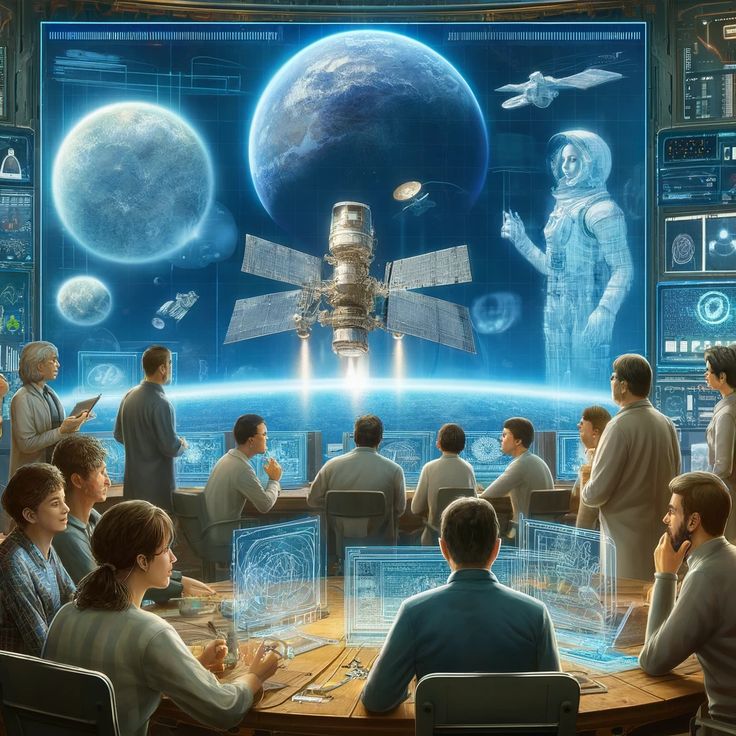
Introduction to Space Exploration 2.0
Space Exploration 2.0 represents a transformative phase in humanity’s quest to explore the cosmos, built upon the foundational efforts of previous eras. Unlike the early days of space exploration, characterized by government-led initiatives during the space race, this new era is distinguished by the involvement of a diverse range of stakeholders including private companies, international agencies, and collaborative partnerships across borders. This shift towards a multi-faceted approach has not only democratized access to space but has also accelerated advancements in technology and innovation.
The technological advancements of Space Exploration 2.0 are significant. The increased capability of launch systems, miniaturization of satellite technology, and the advent of reusable rocket technology have all contributed to making space travel more accessible and cost-efficient. Companies such as SpaceX, Blue Origin, and Virgin Galactic are at the forefront, pushing boundaries that were once considered insurmountable. Their goal extends beyond mere exploration; they aim to create sustainable frameworks for future space endeavors, including tourism, mining, and even colonization.
Equally essential in shaping the future of space exploration is the role of international collaboration. With challenges such as space debris and the need for shared resources, cooperative efforts among nations have become paramount. Initiatives such as the Artemis Accords illustrate how countries can work together to establish norms and frameworks that govern activities in outer space. Partnerships between government entities and the private sector foster an environment of innovation while addressing regulatory and ethical considerations.
As we venture deeper into this new era, the evolution of space exploration presents not only opportunities but also challenges that will require collective efforts and adaptive strategies. The question remains: who will lead the charge in this exciting new frontier?
Key Players in Current Space Endeavors
Space exploration has evolved significantly in recent years, led by a mixture of government agencies and private companies dedicated to expanding humanity’s presence beyond Earth. One of the most prominent organizations in this arena is the National Aeronautics and Space Administration (NASA). Established in 1958, NASA has played a pivotal role in numerous historic missions, including the Apollo moon landing and the Mars rover deployments. With a renewed focus on lunar exploration under the Artemis program, NASA aims to return humans to the moon and eventually enable missions to Mars, ensuring it remains at the forefront of space exploration.
The European Space Agency (ESA) is another key player contributing to our understanding of space. Established in 1975, ESA consists of 22 member states. The agency has been instrumental in launching missions that study everything from the blue planet to distant galaxies. Through partnerships with other space agencies, such as NASA, ESA continues to be a significant force contributing to both scientific research and international collaboration in space efforts.
In the realm of private sector involvement, companies such as SpaceX and Blue Origin have revolutionized the landscape of space exploration. SpaceX, founded by Elon Musk in 2002, achieved historic landmarks by developing the Falcon 9 rocket and the Crew Dragon spacecraft, which successfully ferry astronauts to and from the International Space Station (ISS). Blue Origin, led by Jeff Bezos, also focuses on reusable rocket technology, with ambitions to support human space travel and enable the colonization of space.
Additionally, several emerging players are making their mark in the global space race. Countries like India, with its Indian Space Research Organisation (ISRO), and China, through its China National Space Administration (CNSA), have launched ambitious programs that include planetary exploration and lunar missions. This diverse array of organizations reflects a rapidly changing landscape in space exploration, where collaboration between private and public entities is increasingly vital for future missions.
Technological Innovations Revolutionizing Space Travel
The landscape of space exploration is undergoing a transformative shift, driven by groundbreaking technological innovations. Among these, reusable rockets have emerged as a game-changer, dramatically reducing the cost of access to space. Companies such as SpaceX have pioneered the development of rockets that can land back on Earth after launching payloads into orbit. This capability not only enhances the sustainability of space missions but also facilitates more frequent launches, opening new avenues for research and exploration.
Another critical advancement lies in propulsion systems, where traditional chemical propulsion is being supplanted by more advanced technologies. For instance, ion propulsion systems and nuclear thermal propulsion are being explored for deep-space missions. These technologies enable spacecraft to travel farther and faster, thus extending the boundaries of our solar system. The potential to harness solar energy for propulsion is also on the horizon, promising a greener approach to space travel.
Artificial intelligence (AI) has begun to play a pivotal role in navigation and mission control for space exploration. AI algorithms improve the accuracy of trajectory calculations and assist in real-time decision-making during missions. This minimizes human error and optimizes the performance of space vehicles. Additionally, machine learning can process vast amounts of data from celestial observations, enhancing our understanding of the cosmos.
Life support systems have also seen significant advancements, making long-duration space travel feasible for future missions to Mars and beyond. These systems are designed to maintain a stable environment for astronauts, including recycling air and water, thus reducing the need for resupply missions. Furthermore, robotics technologies are revolutionizing the way we conduct exploration on other planets. Robotic systems equipped with advanced sensors can conduct detailed surveys and perform tasks that are too dangerous or complex for human astronauts.
In conclusion, these technological advancements are laying the foundation for a new era of space exploration. As we continue to refine these innovations, the possibilities for human travel beyond Earth become increasingly promising.
International Collaboration vs. Competition
The dynamics of international collaboration versus competition significantly shape the landscape of space exploration efforts. Notably, partnerships like the International Space Station (ISS) exemplify how nations can unite to achieve shared objectives despite differing political agendas. The ISS showcases a successful sixteen-year collaboration involving multiple nations, including the United States, Russia, Japan, Europe, and Canada. This partnership allows scientists from various backgrounds to conduct experiments in microgravity, fostering not only scientific advancement but also international goodwill.
However, the space sector is also marked by fierce competition among countries and corporations striving for dominance in the next technological advancements. Missions to Mars exemplify this competitive rivalry, as nations like the United States, China, and the European Union race to establish a human presence on the Red Planet. Each party brings distinct methodologies, resources, and ambitions. For instance, China’s recent Mars rover landing has intensified discussions on the potential for space colonization, sparking concerns among other countries regarding technological superiority and strategic advantages.
The implications of these dynamics extend beyond mere advancements in technology; they also influence global policies and international relations. Competition fosters innovation, as countries allocate substantial resources to develop cutting-edge technologies, ensuring progress is made at a rapid pace. Conversely, excessive competition may lead to increased tensions and mistrust among nations, potentially resulting in conflicts over space resources and territorial claims. Therefore, finding a balance between collaboration and competition is critical for the sustainable development of space exploration.
As the future of space exploration unfolds, it will be essential to analyze how these forces interact and what role they will play in determining who leads the next frontier. Achieving a harmonious synergy between collaborative efforts and competitive ambitions could be the key to unlocking the mysteries of outer space.
The Role of Commercial Space Enterprises
The landscape of space exploration is undergoing a significant transformation, primarily driven by the increasing influence of commercial space enterprises. This shift represents a departure from the traditional government-centric models of space missions, allowing private companies to play a pivotal role in funding, developing, and executing various exploration initiatives. These commercial entities, leveraging innovative technologies and business models, are reshaping how missions are planned and executed.
Among the most notable advancements is the emergence of public-private partnerships, where government agencies collaborate with commercial firms to reduce costs and enhance the pace of exploration. Companies such as SpaceX and Blue Origin are leading the charge, demonstrating that reliable and cost-effective access to space can be achieved through innovation and competition. The ability of these enterprises to minimize launch expenses significantly alters the financial landscape of space missions, making them more accessible to countries and institutions that previously could not afford to enter the arena.
Furthermore, the role of commercial space enterprises extends beyond mere transportation. They engage in diverse activities, including satellite deployment, space tourism, and planetary exploration. This diversification not only accelerates the pace of exploration but also fosters an ecosystem of collaboration where different sectors work together to push the boundaries of what is possible in space. For instance, the development of reusable rocket technology has revolutionized the industry, reducing the barriers to entry for new players and opening up a new era of possibilities.
In conclusion, the growing influence of commercial space enterprises is revitalizing the space industry by introducing innovative funding models and enhancing access to space. This collaborative dynamic between private companies and governmental organizations is accelerating exploration efforts and reshaping the future of space travel and research.
Sustainability in Space Exploration
Sustainability has emerged as a pivotal component of modern space exploration, necessitating a paradigm shift in how missions to other celestial bodies are conceived and executed. As humanity prepares to embark on increasingly ambitious endeavors, the need to address the environmental implications of these activities becomes paramount. This includes the management of waste generated during missions, utilization of in-situ resources, and even considerations for the ecological footprint left behind on other planets.
One of the significant challenges in promoting sustainability in space travel is waste management. As missions become longer and involve more astronauts, the accumulation of waste, including packaging, leftover food, and even human waste, poses considerable challenges. Effective strategies for recycling and repurposing materials onboard will not only reduce the amount of waste sent back to Earth but will also ensure that astronauts have a sustainable environment in which to live and work. Implementing circular economy principles—where waste is minimized, and materials are continually reused—could prove beneficial in this context.
Resource utilization is another critical area that contributes to sustainable practices in space exploration. The potential to harness water from lunar ice or atmospheric gases from Mars presents an opportunity to decrease the dependency on supplies launched from Earth. This concept, often referred to as in-situ resource utilization (ISRU), allows spacecraft to extract and utilize resources found on other celestial bodies. This approach not only conserves Earth-based resources but also enhances mission viability by enabling longer-term human presence beyond our planet.
Moreover, the environmental impact of space missions must be managed meticulously. As more private entities and governments launch satellites and endeavor towards manned missions, the increasing number of launches contributes to atmospheric pollution and space debris. Collaborative regulations and technological innovations are necessary to minimize these impacts, ensuring that space remains a sustainable frontier for exploration.
The Human Factor: Astronaut Selection and Training
The selection and training of astronauts play a crucial role in the success of space missions. As we enter what can be termed as Space Exploration 2.0, agencies worldwide are re-evaluating their astronaut selection processes to ensure they meet the demands of the next frontier. Future space endeavors, including Mars missions and long-duration habitation in space, will necessitate a diverse and well-prepared crew capable of facing unprecedented challenges.
Traditionally, astronaut candidates were often drawn from highly specialized fields such as engineering, military, or science. However, the demand for varied skill sets is emerging stridently, as missions become more complex and interdependent. Future leaders in space will require not only technical knowledge but also soft skills such as adaptability, teamwork, and problem-solving capabilities in a dynamic environment. This multifaceted approach to candidate selection opens the door for individuals from diverse backgrounds, including those in fields such as medicine, agriculture, and even the arts.
The increasing focus on diversifying astronaut candidates is also essential for fostering innovation. A more inclusive selection process can lead to different perspectives and ideas that enhance mission planning and execution. Furthermore, it is paramount that diversity not only encompasses gender and ethnicity but also experiences and educational backgrounds. Consequently, space agencies are implementing outreach programs aimed to inspire interest in space exploration among underrepresented groups, ensuring that future astronaut corps better reflect the global population.
Training regimens for astronauts have evolved significantly. Current programs now emphasize psychological resilience, physical fitness, and technical preparation. Simulated environments, such as underwater training or using virtual reality, are increasingly utilized to replicate the conditions of space missions. Rigorous training protocols are essential for cultivating the necessary skills in future astronauts, equipping them to handle the complexities and uncertainties associated with space travel.
The Future of Space Colonization
The idea of establishing human bases or colonies on celestial bodies such as Mars and the Moon captivates the imagination and embodies the aspiration of becoming a multi-planetary species. As we move forward into the new era of space exploration, several key dimensions warrant consideration: technological advancements, physiological adaptations, and ethical implications.
Technologically, colonization efforts hinge on the development of sustainable life-support systems. To thrive on Mars or the Moon, human habitats must establish reliable food production, water recycling, and breathable atmosphere. Innovations in biotechnology and engineering are crucial, including the potential for using in-situ resources—such as locally oxygen-extracting methods or utilizing Martian regolith for construction. Spacecraft capable of responsible transport and efficient landing are vital too. Moreover, the logistics of constant supply routes will play a substantial role in the success of these extraterrestrial bases.
Physiological challenges remain significant and multifaceted. Astronauts would face exposure to harsh environments, including radiation, which necessitates innovations in shielding technologies. Additionally, low gravity conditions could have adverse effects on human health over extended periods, prompting the need for ongoing research focused on bone density and muscle atrophy. Understanding the psychosocial dynamics of long-term isolation and small communities is equally paramount to ensure the emotional well-being of those involved in colonization ventures.
The ethical dimensions of space colonization cannot be overlooked. The prospect of terraforming other planets to make them habitable raises critical questions about planetary protection and the potential impact on existing ecosystems, if any exist. Governance frameworks must also be developed to address issues of ownership, scientific responsibility, and the rights of future inhabitants.
Ultimately, the vision of humanity as a multi-planetary species is daring yet fraught with challenges that require a collaborative approach across various disciplines, ensuring a responsible path toward a new chapter in human exploration.
Conclusion: Who Will Lead the Next Frontier?
As we analyze the ongoing advancements in space exploration, it becomes increasingly clear that the future of this cosmic endeavor is defined by collaboration and innovation among various stakeholders. From governmental space agencies like NASA and ESA to private enterprises led by visionary entrepreneurs such as Elon Musk and Jeff Bezos, the landscape of space exploration is evolving rapidly. Each entity brings its unique strengths and capabilities to the table, which will be essential in addressing the complex challenges that lie ahead.
Collaboration among nations and sectors is critical. Joint missions and partnerships can facilitate the sharing of resources, expertise, and technological advancements necessary for missions to distant planets and beyond. When we consider past achievements, such as the International Space Station, it is evident that successful ventures stemmed from cooperation. The question now is whether this spirit of collaboration can be maintained in future pursuits, particularly as national interests and competition become more pronounced.
Moreover, innovation will play a pivotal role in selecting the leaders of this next frontier. Emerging technologies, such as reusable launch systems, advanced propulsion methods, and artificial intelligence, will likely determine which players can navigate the intricate landscape of space travel most effectively. As private participation increases, the race to harness these innovations intensifies, leading to a dynamic environment where agility and foresight come to the forefront.
Ultimately, the most crucial question remains: who will take the helm in leading humanity into this next era of space exploration? Will it be governments, driven by scientific research and international cooperation, or private companies, capitalizing on technological advancements and investment opportunities? As we eagerly await the answers to these questions, one principle remains clear: the quest for knowledge and understanding of our universe transcends any one entity, fostering a shared responsibility among all of humanity to explore the stars.