

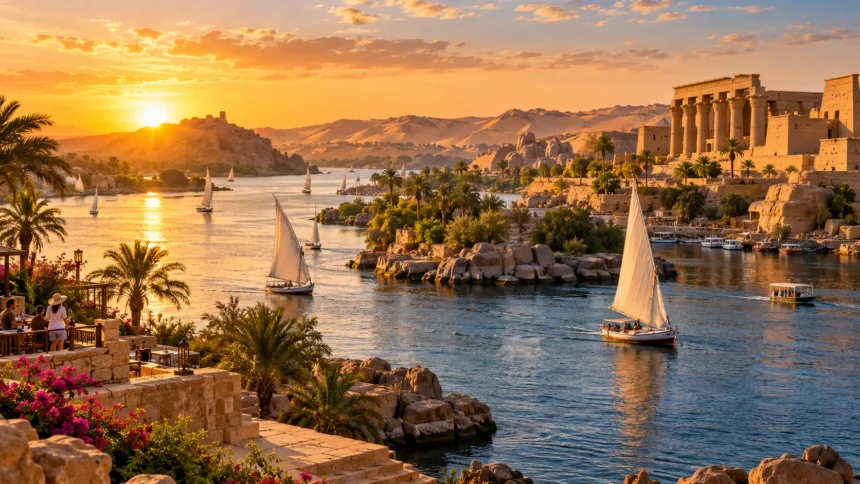
Aswan is one of Egypt’s most beautiful travel destinations, known for its peaceful Nile River scenery, ancient temples, colorful Nubian villages, and fascinating history. Located in southern Egypt, this charming city offers a more relaxed atmosphere than the busy streets of Cairo. Visitors can explore remarkable archaeological sites, sail along the Nile, and discover the traditions that make Aswan special.
The city has played an important role in Egyptian history for thousands of years. Its location near ancient Nubia made it a major trading center and an important gateway between Egypt and other parts of Africa. Today, travelers visit Aswan to admire famous landmarks such as Philae Temple, the Unfinished Obelisk, and the beautiful islands scattered along the Nile.
Planning an Aswan vacation involves choosing the best attractions, transportation options, accommodation, and travel season. Whether you want to explore ancient monuments or enjoy peaceful river views, Aswan offers memorable experiences for different types of travelers. This Aswan travel guide covers the best things to do, places to visit, and practical tips for planning your journey.
Where Is Aswan in Egypt?
Aswan is located in southern Egypt along the eastern bank of the Nile River, approximately 220 kilometers south of Luxor. The city is the capital of Aswan Governorate and serves as an important destination for travelers exploring Upper Egypt. Its location near Nubia gives the region a distinctive cultural and historical identity.
The surrounding landscape features beautiful river islands, desert hills, granite formations, and traditional settlements. The contrast between the green Nile banks and the golden desert creates spectacular scenery. Many of Aswan’s attractions are located along the river or on nearby islands, making boat transportation an important part of the visitor experience.
Aswan is accessible from Cairo, Luxor, and other major Egyptian destinations. Visitors can arrive by train, domestic flight, or road transportation, depending on their travel plans. The city is also a popular starting or ending point for Nile cruises between Aswan and Luxor.
Why Is Aswan Famous?
Aswan is famous for its impressive archaeological landmarks, beautiful Nile scenery, and important connection to ancient Egyptian civilization. The region contains temples, quarries, tombs, and historic settlements that reveal how people lived thousands of years ago. Its geographical position also made it an important center for trade and cultural exchange.
The city is particularly well known for Philae Temple, the Aswan High Dam, and its proximity to Abu Simbel. These attractions demonstrate different periods of Egyptian history, from ancient religious traditions to modern engineering achievements. The surrounding Nile islands also provide beautiful natural landscapes and opportunities for relaxed sightseeing.
Another distinctive feature is Aswan’s Nubian cultural heritage. Traditional villages, colorful houses, local crafts, and community experiences introduce visitors to the region’s living traditions. This combination of cultural attractions and peaceful river scenery makes Aswan an excellent destination for travelers interested in more than ancient monuments.
1. Visit the Beautiful Philae Temple
Philae Temple is one of the most famous attractions in Aswan and an essential destination for first-time visitors. The temple complex is located on Agilkia Island and is primarily associated with the ancient Egyptian goddess Isis. Its impressive columns, detailed carvings, and beautiful riverside setting create an unforgettable sightseeing experience.
Visitors reach the temple by taking a boat from the nearby departure area. The short journey provides attractive views of the surrounding water and rocky islands. Inside the complex, travelers can explore historic structures, decorated walls, and architectural details that reflect the religious importance of the site.
The monuments were relocated from their original location during an international preservation campaign associated with the construction of the Aswan High Dam. This remarkable effort helped protect the ancient buildings from rising water levels. Visiting Philae Temple provides an opportunity to appreciate both Egyptian history and modern archaeological preservation.
2. Explore the Abu Simbel Temples
Abu Simbel is one of Egypt’s most extraordinary archaeological destinations and a popular excursion from Aswan. Located approximately 280 kilometers south of the city, the site contains two impressive rock-cut temples constructed during the reign of Ramesses II. Their enormous statues and detailed carvings attract travelers from around the world.
The Great Temple is particularly famous for the four colossal statues of Ramesses II positioned along its entrance. The nearby smaller temple honors the goddess Hathor and Queen Nefertari. Together, these monuments provide remarkable examples of ancient Egyptian architecture, religious traditions, and royal artistic achievements.
Visiting Abu Simbel generally requires a substantial road journey or other organized transportation arrangements. Many travelers choose an early departure to avoid the hottest part of the day. Because the excursion takes considerable time, it is important to plan transportation, admission, and sightseeing schedules before leaving Aswan.
3. Discover the Unfinished Obelisk
The Unfinished Obelisk is a fascinating archaeological attraction located in Aswan’s ancient granite quarries. It provides valuable insight into the methods used by ancient Egyptian workers to shape enormous stone monuments. Unlike completed obelisks, this example remains attached to the surrounding bedrock.
The obelisk was abandoned after cracks developed during its construction. Had it been completed, it would have been one of the largest ancient Egyptian obelisks ever produced. Visitors can observe its enormous dimensions and examine evidence of the techniques used to carve granite.
Exploring the site helps travelers understand the engineering challenges faced by ancient builders. The open-air quarry also provides an interesting contrast with the completed monuments found throughout Egypt. Comfortable footwear and suitable sun protection are useful because much of the attraction is exposed to the outdoor environment.
4. Explore Elephantine Island
Elephantine Island is one of the most historically significant islands in the Nile near Aswan. It served as an important settlement and trading center during ancient Egyptian history. Today, visitors can discover archaeological remains, traditional neighborhoods, and scenic views of the river.
The island contains ruins associated with ancient temples, settlement areas, and a historic Nilometer used to observe Nile water levels. These remains provide insight into the relationship between the river and ancient Egyptian communities. Visitors can also explore selected museum displays and archaeological areas.
Elephantine Island offers a different atmosphere from the mainland city. Its traditional neighborhoods and riverside surroundings provide opportunities for relaxed exploration. Travelers should respect local residents and community spaces while discovering the island’s historical and cultural attractions.
5. Visit a Traditional Nubian Village
Visiting a Nubian village is one of the most memorable cultural experiences available in Aswan. Nubian communities have a distinctive heritage reflected in their languages, architecture, crafts, music, and traditions. Many villages feature beautifully painted houses with colorful walls and decorative patterns.
Visitors can learn about local customs, explore traditional streets, and discover handmade crafts offered by community businesses. Some experiences include opportunities to try regional dishes or learn about everyday village life. The most rewarding visits are those that support local residents and encourage respectful cultural exchange.
Gharb Soheil is a well-known Nubian village that attracts many visitors. Boat journeys to the village can provide beautiful views of the Nile and surrounding desert landscape. Travelers should ask permission before photographing residents or private homes and choose experiences that respect community traditions.
6. Take a Traditional Felucca Ride on the Nile
A felucca ride is one of the most relaxing activities to enjoy in Aswan. Feluccas are traditional sailing boats that use wind power to travel along the Nile. Their simple design creates a peaceful experience for visitors who want to appreciate the river’s natural beauty.
During a boat ride, travelers can admire green islands, riverside buildings, and the surrounding desert hills. The scenery becomes particularly beautiful during the late afternoon when sunlight creates warm reflections across the water. Some sailing routes pass near Elephantine Island and other scenic locations.
The experience depends on wind conditions, weather, and the route selected by the boat operator. Travelers should confirm the journey details and pricing before departure. Choosing an experienced, licensed operator with suitable passenger safety arrangements helps make the excursion more comfortable and enjoyable.
7. Visit the Nubian Museum
The Nubian Museum is one of Aswan’s most important cultural attractions. It introduces visitors to the history, archaeology, and traditions of Nubia, a region extending across southern Egypt and northern Sudan. Its collections provide valuable context for understanding the area’s distinctive cultural identity.
The museum features archaeological artifacts, sculptures, traditional objects, and displays explaining different periods of Nubian history. Exhibitions also explore the impact of major Nile development projects on historic communities and archaeological sites. These collections help visitors understand the region beyond its most famous temples.
The museum is particularly useful for travelers interested in history and cultural heritage. It also provides an indoor sightseeing option during warmer parts of the day. Allowing enough time to explore the exhibitions can make visits to nearby archaeological attractions more meaningful.
8. Explore the Aswan High Dam
The Aswan High Dam is one of Egypt’s most significant modern engineering achievements. Constructed across the Nile during the twentieth century, the dam plays an important role in water management and electricity generation. Its development also created Lake Nasser, one of the world’s largest artificial reservoirs.
Visitors can explore designated viewpoints and learn about the dam’s historical importance. The surrounding landscape provides views of the Nile, engineering structures, and nearby reservoir areas. The attraction offers a different perspective on Egypt’s development compared with ancient temples and monuments.
The construction of the dam had major environmental, cultural, and archaeological consequences, including the relocation of communities and historic sites. Understanding these effects provides important context for the region’s modern history. Many travelers combine a visit to the dam with nearby attractions such as Philae Temple.
9. Discover Kitchener’s Island and the Botanical Garden
Kitchener’s Island is a peaceful Nile island known for its botanical garden and attractive green surroundings. Also associated with the name El Nabatat Island, it offers a welcome contrast to Aswan’s desert landscape. Visitors can enjoy shaded walking paths and a variety of plants.
The garden contains trees and plants introduced from different regions, along with established vegetation suited to the local environment. Its landscaped setting makes it an appealing destination for travelers who enjoy nature and relaxed sightseeing. The island is commonly reached by boat from Aswan.
Exploring the botanical garden provides a pleasant break between visits to temples and archaeological attractions. The island is especially attractive during comfortable weather when visitors can spend more time outdoors. Checking current access arrangements and opening schedules before visiting is recommended.
10. Explore the Tombs of the Nobles
The Tombs of the Nobles are an important collection of ancient Egyptian burial sites located on the western bank of the Nile. These tombs belonged to influential officials and regional leaders who lived during different periods of ancient Egyptian history. Their decorations provide insight into religious beliefs and everyday activities.
Visitors can explore selected tombs featuring carvings, inscriptions, and painted scenes. The artwork offers valuable information about ancient Egyptian society and the lives of important individuals. The surrounding hillside also provides attractive views across the Nile and Aswan.
Reaching the tombs may involve walking uphill and navigating uneven paths. Visitors should consider their mobility and the weather before planning the excursion. Exploring the area with a knowledgeable guide can help explain the historical importance of the inscriptions and burial structures.
11. Visit the Monastery of St. Simeon
The Monastery of St. Simeon is a historic religious complex located on the western side of the Nile near Aswan. Its surviving structures offer an interesting glimpse into Egypt’s Christian heritage. The monastery stands within a desert landscape that creates a distinctive atmosphere.
Visitors can explore the remains of buildings, courtyards, and religious spaces associated with the monastery’s history. The architecture reflects the needs of a community that lived and worshipped in the desert environment. Its remote setting provides a different experience from the busy archaeological sites near central Aswan.
Reaching the monastery requires suitable transportation and some walking, depending on the selected route. Because the site is exposed to the elements, comfortable footwear and sun protection are important. Travelers interested in religious history and less crowded attractions may find this destination particularly rewarding.
12. Walk Along the Aswan Corniche
The Aswan Corniche is a scenic waterfront road and walking area that follows part of the Nile River. It provides beautiful views of boats, islands, and the surrounding landscape. The area is particularly enjoyable for travelers who want to experience Aswan at a relaxed pace.
Visitors can walk along the waterfront, observe river activity, and explore nearby restaurants or cafés. The Corniche is also a convenient starting point for arranging certain boat journeys. During the evening, the river scenery can create a peaceful atmosphere as the city becomes illuminated.
The waterfront is a useful place to experience everyday life in Aswan between scheduled sightseeing activities. Travelers can enjoy the scenery without needing to visit a major attraction. Choosing a comfortable time of day makes walking more pleasant, especially during warmer months.
13. Explore Aswan’s Traditional Markets
Aswan’s traditional markets offer a colorful introduction to local shopping and everyday culture. Market streets commonly feature textiles, spices, handmade crafts, souvenirs, and household products. Exploring these areas allows visitors to experience a different side of the city beyond historical monuments.
The Aswan Souk is particularly popular among visitors interested in regional products and traditional crafts. Colorful fabrics, woven baskets, and decorative accessories can make attractive souvenirs. The market atmosphere also provides opportunities to observe local commerce and discover distinctive regional styles.
Travelers should compare prices and shop respectfully when browsing market stalls. Asking about prices before purchasing can help avoid misunderstandings. Supporting locally made products and established community businesses can make the shopping experience more meaningful.
Best Time to Visit Aswan
The best time to visit Aswan is generally between October and April, when temperatures are more comfortable than during the hottest summer months. November through February is especially popular for exploring outdoor archaeological sites. Daytime conditions are often pleasant, although evenings can become cool.
Summer temperatures in Aswan can become extremely high, making long outdoor sightseeing trips uncomfortable. Visitors traveling during warmer months should prioritize appropriate hydration, shaded breaks, and indoor activities during the hottest hours. Historical sites with limited shelter can be particularly challenging in intense heat.
Winter is the busiest tourism period, so popular attractions and accommodation may experience increased demand. Booking transportation and hotels in advance can provide more options. Travelers who prefer a balance between comfortable weather and moderate visitor numbers may also consider the shoulder months.
How to Get to Aswan From Cairo and Luxor
Aswan is accessible from Cairo by domestic flights and train services. Flying is generally the quickest option, while trains provide an alternative for travelers who prefer overland transportation. Actual journey times depend on the selected service, schedule, and departure location.
Travelers visiting Luxor can reach Aswan by train, road, or selected Nile cruise itineraries. The two cities are connected by a route that passes through important archaeological regions. Some itineraries include visits to temples such as Edfu and Kom Ombo along the way.
Transportation should be booked according to the full Egypt travel itinerary rather than one destination alone. Travelers planning to visit Cairo, Luxor, and Aswan can often arrange a convenient north-to-south journey. Checking current schedules and allowing suitable connection times helps avoid unnecessary travel difficulties.
How Many Days Do You Need in Aswan?
Two days can provide enough time to explore several of Aswan’s major attractions. Visitors may include Philae Temple, the Unfinished Obelisk, and a relaxing Nile boat trip. This duration works well for travelers who are combining Aswan with other important destinations in Egypt.
Three days usually provides a more comfortable experience, particularly when including a day trip to Abu Simbel. Additional time allows visitors to explore Nubian culture, enjoy the river scenery, and visit museums without rushing. A more relaxed itinerary also provides flexibility for transportation and changing weather conditions.
Four days or longer may appeal to travelers interested in exploring less crowded archaeological sites and nearby attractions. Spending additional time in the city provides opportunities to appreciate its local atmosphere. The ideal duration depends on sightseeing priorities, travel pace, and the number of planned excursions.
Where to Stay in Aswan
Aswan offers accommodation ranging from budget-friendly guesthouses to luxury hotels overlooking the Nile. The best location depends on your sightseeing plans and preferred travel experience. Staying near the city center can provide convenient access to restaurants, markets, transportation, and waterfront attractions.
Nile-facing hotels are particularly appealing to travelers interested in scenic views and relaxed surroundings. Some properties are located on islands or quieter sections of the river. These settings can provide a peaceful atmosphere, although reaching central attractions may require additional transportation.
Nubian guesthouses offer another accommodation experience and may allow travelers to learn more about local hospitality and traditions. Before booking, review transportation arrangements, accessibility, and included facilities. Choosing accommodation that matches your itinerary helps reduce travel time and improve overall convenience.
Aswan Travel Costs and Budget Tips
The cost of visiting Aswan depends on accommodation, transportation, entrance tickets, and guided excursions. Budget travelers can choose modest guesthouses and focus on selected attractions. More expensive experiences may include luxury Nile cruises, private transportation, and premium riverside hotels.
Entrance fees for major archaeological sites can represent a significant part of the sightseeing budget. Boat transportation to island attractions and excursions to Abu Simbel may add further expenses. Travelers should check official ticket prices and confirm which services are included in organized tours.
Comparing accommodation options and planning nearby attractions together can help control spending. A clear daily budget should account for meals, transportation, admission, and additional activities. Confirming costs before booking reduces unexpected expenses and makes it easier to enjoy Aswan within a realistic travel budget.
Essential Travel Tips for Visiting Aswan
Comfortable footwear, lightweight clothing, and sun protection are important for sightseeing in Aswan. Many attractions involve outdoor walking, stairs, or uneven surfaces. Carrying sufficient drinking water and taking regular breaks can help maintain comfort, particularly during warmer weather.
Respecting local traditions is another important part of visiting Aswan. Modest clothing is appropriate in many cultural and community settings, especially when visiting religious sites. Travelers should also ask permission before photographing residents and follow posted rules at museums and archaeological locations.
Plan major excursions carefully and confirm transportation arrangements before departure. Sites such as Abu Simbel require additional travel time, while island attractions often involve boats. Choosing reputable operators and checking current opening schedules can help make the journey more organized and enjoyable.
Conclusion
Aswan is one of Egypt’s most remarkable travel destinations, offering ancient temples, scenic Nile landscapes, and fascinating Nubian cultural experiences. Attractions such as Philae Temple, Elephantine Island, and the Unfinished Obelisk reveal the region’s historical significance. A relaxing felucca ride provides another memorable way to appreciate the city’s beautiful surroundings.
The best Aswan itinerary combines major archaeological attractions with opportunities to experience local culture and everyday life. Visiting Nubian villages, exploring traditional markets, and walking along the Corniche can create a more complete travel experience. Travelers with additional time can also explore Abu Simbel and other important monuments.
Whether you are visiting Aswan for history, photography, cultural discovery, or peaceful river views, the city offers memorable experiences throughout the year. Choosing the right season and organizing transportation in advance can make sightseeing more comfortable. With thoughtful planning, Aswan can become one of the most rewarding destinations on your journey through Egypt.
Frequently Asked Questions
1. Is Aswan Worth Visiting?
Yes, Aswan is worth visiting for its ancient temples, beautiful Nile scenery, Nubian culture, and relaxed atmosphere. It is particularly appealing to travelers interested in Egyptian history and cultural experiences.
2. What Are the Best Things to Do in Aswan?
Popular activities include visiting Philae Temple, exploring Elephantine Island, sailing on a traditional felucca, discovering Nubian villages, and taking a day trip to Abu Simbel.
3. How Many Days Are Enough for Aswan?
Two to three days are generally enough to experience major Aswan attractions. Three days provide a more comfortable itinerary when including a longer excursion to the Abu Simbel temples.
4. What Is the Best Month to Visit Aswan?
November, December, January, and February are excellent months for visiting Aswan because temperatures are generally more comfortable for outdoor sightseeing than during the summer.
5. Can You Visit Abu Simbel From Aswan in One Day?
Yes, Abu Simbel can be visited as a day trip from Aswan. The journey requires several hours of travel each way, so early departures and organized transportation are common.