

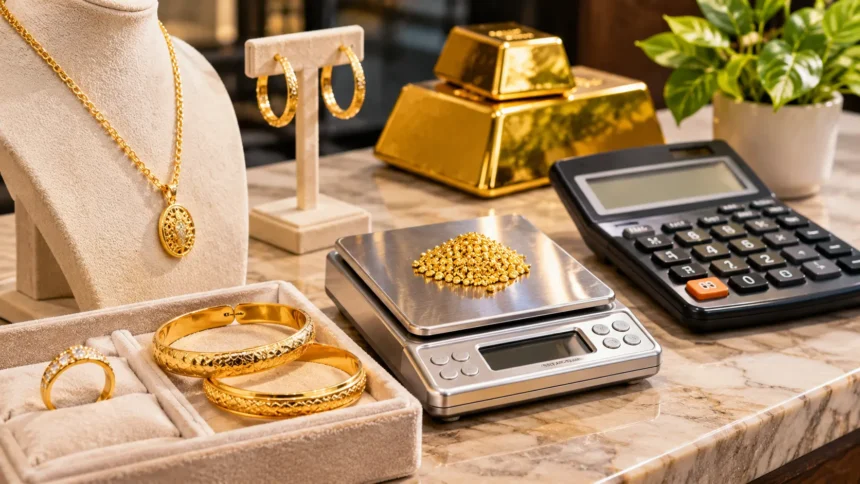
The 14K gold price per gram today is approximately $77.32 USD based on a gold spot price of $4,122.50 per troy ounce recorded on November 10, 2026. This represents the estimated value of the pure gold contained in one gram of 14-karat gold. The actual amount you pay or receive can differ because of dealer margins, jewelry craftsmanship, taxes, and other charges.
Understanding how 14K gold is priced helps you estimate the value of jewelry, compare gold purity levels, and evaluate potential resale offers. Gold prices change throughout the trading day, so checking an updated market quote is important. This guide explains the current value of 14K gold, how to calculate its price per gram, and what determines its actual worth.
What Is the 14K Gold Price per Gram Today?
As of November 10, 2026, a recorded U.S. gold spot quote was approximately $132.54 per gram for pure gold. Since 14K gold contains about 58.33% pure gold, its calculated metal value is approximately $77.32 per gram. This estimate excludes dealer fees, retail premiums, refining expenses, and other transaction costs.
The value of 14K gold is directly connected to the international price of gold. When the spot price rises, the estimated gold content value of 14K jewelry generally increases. Similarly, falling gold prices reduce the calculated value, although individual jewelry prices may not adjust immediately or proportionally.
The following table shows an indicative gold value comparison based on the same November 10, 2026 spot quote. These are calculated metal values rather than guaranteed selling prices. Always check a current quotation before buying or selling because the market may have changed since this snapshot.
| Gold Purity | Gold Content | Approximate Price per Gram |
|---|---|---|
| 24K | 100% | $132.54 |
| 22K | 91.67% | $121.50 |
| 18K | 75% | $99.41 |
| 14K | 58.33% | $77.32 |
| 10K | 41.67% | $55.23 |
What Does 14K Gold Mean?
14K gold is a gold alloy containing 14 parts pure gold out of 24 total parts. This means approximately 58.33% of its weight consists of gold, while the remaining portion contains other metals. These additional metals may include copper, silver, zinc, or other elements, depending on the jewelry’s color and manufacturing requirements.
Pure gold is relatively soft, which makes it less suitable for certain jewelry designs that experience frequent wear. Combining gold with other metals can improve hardness and resistance to everyday deformation. For this reason, 14K gold is commonly used in rings, necklaces, bracelets, earrings, and other jewelry pieces.
The term 14-karat refers to gold purity rather than gemstone weight. Although both concepts use the word karat or carat in some contexts, they describe different measurements. Understanding this distinction helps buyers recognize what they are purchasing and compare jewelry made with different gold compositions.
How to Calculate 14K Gold Price per Gram
Calculating the 14K gold price per gram begins with identifying the current market price of pure gold. Gold is commonly quoted in U.S. dollars per troy ounce, which equals approximately 31.1035 grams. Dividing the spot price by this weight provides the approximate value of one gram of pure gold.
Next, multiply the pure gold price per gram by the gold content percentage. For standard 14K gold, the theoretical purity factor is 14 divided by 24, or approximately 0.5833. This calculation estimates the value of the gold itself without accounting for processing costs or buyer deductions.
For example, a pure gold price of $132.54 per gram produces an estimated 14K value of $77.32 per gram. The calculation is straightforward, but it does not determine the final retail or resale price. Transaction conditions, verification costs, and the item’s characteristics may affect the amount involved.
14K Gold Price Formula
14K gold value per gram = Pure gold spot price per gram × (14 ÷ 24)
Example:
$132.54 × 0.583333 = $77.32 per gram
14K Gold Price Calculator by Weight
A 14K gold calculator helps estimate the metal value of jewelry based on weight and current gold prices. The calculation requires the item’s gold alloy weight and an appropriate market reference. It is useful when comparing different jewelry pieces or understanding an offer from a gold buyer.
For the most accurate estimate, weigh the gold portion rather than including gemstones or other non-gold components. A jewelry scale that measures grams can provide a useful starting point. However, the actual gold content may still require professional verification when purity stamps are missing or uncertain.
The following example uses a fixed estimated price of $77.32 per gram. It is not a live quotation, and these values will change as the gold market changes. The results represent approximate gold content value before fees, deductions, and other transaction adjustments.
| 14K Gold Weight | Estimated Metal Value |
|---|---|
| 1 gram | $77.32 |
| 2 grams | $154.64 |
| 3 grams | $231.96 |
| 5 grams | $386.60 |
| 8 grams | $618.56 |
| 10 grams | $773.20 |
| 15 grams | $1,159.80 |
| 20 grams | $1,546.40 |
| 25 grams | $1,933.00 |
| 50 grams | $3,866.00 |
How Much Is 1 Gram of 14K Gold Worth?
One gram of 14K gold contains approximately 0.5833 grams of pure gold. Its estimated value therefore depends on the current price of that amount of pure gold. Using the November 10, 2026 reference quote, one gram has an approximate gold content value of $77.32.
However, a one-gram jewelry item may cost considerably more than its calculated gold value. Retail prices can include design work, labor, manufacturing, store expenses, and profit margins. These additional costs explain why a small gold ring or pendant may be priced above the value of its underlying metal.
The resale value may also be lower than the calculated spot-based amount. Gold buyers often account for refining, testing, processing, and their operating margins. For this reason, understanding the difference between metal value and actual transaction price is essential when evaluating gold jewelry.
How Much Is 5 Grams of 14K Gold Worth?
Five grams of standard 14K gold contain approximately 2.9167 grams of pure gold. Using the illustrative gold value of $77.32 per gram, the total estimated metal value would be approximately $386.60. This calculation assumes the full five grams consist of the stated gold alloy without additional materials.
A five-gram gold item could be a ring, bracelet component, or other relatively small piece of jewelry. Its retail value may exceed its gold content value because craftsmanship and additional design features influence pricing. Branded pieces may also carry premiums related to their manufacturer or market demand.
If you plan to sell five grams of 14K gold, request a quote that clearly explains the offered price per gram. Compare the amount against the latest gold reference price and confirm the assessed purity. Understanding the deductions helps you evaluate the offer without assuming every buyer pays the same amount.
How Much Is 10 Grams of 14K Gold Worth?
Ten grams of 14K gold contain approximately 5.8333 grams of pure gold. At the example rate of $77.32 per gram, the estimated gold content value is $773.20. This amount reflects the theoretical value of the gold portion rather than the retail price of a finished jewelry item.
Jewelry weighing ten grams may include necklaces, bracelets, or larger rings, depending on the design. However, the total weight shown on a jewelry scale can sometimes include gemstones or non-gold components. These materials should not automatically be included when calculating the actual gold alloy weight.
The amount a buyer offers for a ten-gram item depends on purity verification, market conditions, and transaction terms. Some jewelry may also have collectible or design value beyond its metal content. Comparing multiple transparent quotes can provide a clearer understanding of its potential resale value.
<text color=”secondary” size=”sm”>Article continued below. The price figures are a November 10, 2026 snapshot, not automatically updating rates.</text>
<WritingBlock id=”92742″ variant=”document”>## What Factors Affect the 14K Gold Price Today?
The international spot price of gold is the primary factor influencing 14K gold’s calculated value. Gold prices respond to changes in investor demand, interest rates, currency movements, and economic uncertainty. Because gold trades internationally, price fluctuations can occur throughout the day, affecting estimates based on current market quotations.
Currency exchange rates also influence local gold prices. Gold is widely quoted in U.S. dollars, but buyers in other countries may pay in their national currencies. Changes in exchange rates can therefore affect local prices even when the underlying international gold quotation remains relatively stable.
Jewelry prices are additionally influenced by manufacturing costs, design complexity, taxes, and retailer margins. Two rings containing identical amounts of 14K gold may have different retail prices because of these factors. Separating metal value from additional charges helps buyers understand what they are paying for.
14K Gold vs. 18K Gold: Which Is More Valuable?
The main difference between 14K and 18K gold is the percentage of pure gold contained in each alloy. Standard 14K gold contains approximately 58.33% gold, while 18K gold contains 75%. Consequently, an equal weight of 18K gold generally has a higher intrinsic gold value.
Using the example gold spot price, one gram of 14K gold has an estimated metal value of $77.32. Meanwhile, one gram of 18K gold is worth approximately $99.41 in pure gold content. This difference reflects the higher gold concentration rather than a guaranteed difference in jewelry resale offers.
Both purity levels are commonly used in jewelry manufacturing. 14K gold can offer useful durability because of its alloy composition, while 18K gold provides a higher concentration of precious metal. The better choice depends on budget, design preferences, intended use, and individual sensitivity to alloy metals.
How to Identify Real 14K Gold Jewelry
One way to identify 14K gold jewelry is to look for a purity hallmark. Common markings include 14K, 14KT, and 585, with the last indicating approximately 585 parts gold per thousand. These stamps are often found inside rings or near the clasps of necklaces and bracelets.
However, a hallmark alone does not guarantee authenticity. Markings can be incorrect, altered, or placed on counterfeit items. Jewelry may also contain components with different materials, making the total gold content difficult to determine through visual inspection alone.
Professional jewelry testing can provide a more reliable purity assessment. Jewelers and precious metal specialists may use techniques such as X-ray fluorescence or other suitable testing methods. If an item’s value is significant, verifying its composition before buying or selling is a sensible precaution.
Is 14K Gold-Plated Jewelry Worth the Same?
14K solid gold and 14K gold-plated jewelry are not the same. Solid 14K gold is an alloy containing approximately 58.33% gold throughout the gold component. Gold-plated jewelry usually consists of a base material covered by a relatively thin layer of gold.
Because the gold coating may contain very little precious metal, plated jewelry generally has a much lower recoverable gold value. Its weight cannot simply be multiplied by the 14K gold price per gram. Most of the object’s weight may consist of silver, brass, stainless steel, or another underlying material.
Other jewelry descriptions, including gold-filled and gold vermeil, refer to different construction methods and material requirements. Their precious metal content can vary significantly. Understanding these labels is important because visual appearance alone cannot establish how much gold an item contains or its resale value.
How to Calculate the Resale Value of 14K Gold
Estimating the resale value begins with calculating the theoretical gold content value. Multiply the item’s actual gold alloy weight by the current price per gram for its verified purity. This provides a useful reference when comparing offers from jewelry buyers and precious metal dealers.
However, the theoretical calculation does not represent the amount a buyer is obligated to pay. Businesses may deduct amounts for testing, refining, administration, or operating margins. Some buyers may also consider gemstones, craftsmanship, and resale potential when determining an offer.
Before accepting a price, ask how the jewelry was weighed and tested. Request an explanation of the rate applied and any deductions included. Comparing quotations from reputable businesses can help you better understand the difference between the calculated metal value and the actual amount offered.
Common Mistakes When Calculating 14K Gold Value
A common mistake is calculating 14K gold at the full 24K gold price. Since 14K gold contains only approximately 58.33% pure gold, using the 24K rate exaggerates its precious metal content value. Applying the correct purity factor is essential for obtaining a reasonable estimate.
Another mistake involves confusing regular ounces with troy ounces. Gold markets use troy ounces, which weigh approximately 31.1035 grams, while a standard avoirdupois ounce weighs approximately 28.3495 grams. Using the wrong conversion can produce an inaccurate price per gram.
Buyers and sellers should also avoid treating calculated melt value as a guaranteed transaction price. Jewelry weight, purity, gemstones, service fees, and market movements may all affect the result. Checking current rates and obtaining professional verification can reduce avoidable valuation errors.
Conclusion
The 14K gold price per gram today depends on the international gold market and the percentage of pure gold contained in the alloy. Based on the November 10, 2026 reference quote used in this guide, its estimated metal value is approximately $77.32 per gram. This figure is a dated market snapshot, not a guaranteed retail or resale price.
Calculating 14K gold value is straightforward when you know the item’s weight and current pure gold price. Multiply the pure gold price per gram by 14 divided by 24, then multiply the result by the item’s gold alloy weight. Remember that actual payments may differ because of additional costs and buyer margins.
Whether you’re evaluating jewelry, comparing purity levels, or estimating a potential sale, understanding gold pricing helps you make better-informed decisions. Always verify the purity and weight of valuable items and check an updated spot quotation before a transaction. Accurate information is more useful than relying on outdated estimates or advertised prices alone.
Frequently Asked Questions
How Much Is 1 Gram of 14K Gold Worth Today?
On November 10, 2026, one gram of 14K gold had an estimated metal value of $77.32 USD using the reference spot quote in this article. Actual rates and transaction prices change.
How Do You Calculate the Price of 14K Gold?
Multiply the current pure gold price per gram by 14 divided by 24, then multiply by the gold alloy’s weight in grams. The result estimates metal value before any transaction costs.
Is 14K Gold Real Gold?
Yes, 14K gold is real gold. It contains approximately 58.33% pure gold, with the remaining portion made from other alloy metals that influence hardness, color, and durability.
How Much Is a 14K Gold Ring Worth?
Its metal value depends on gold alloy weight, purity, and the current spot price. Gemstones, craftsmanship, condition, and dealer margins may also influence the actual amount a buyer offers.
Is 14K Gold Worth More Than 10K Gold?
Yes, equal weights of standard 14K gold contain more pure gold than 10K gold. Therefore, 14K gold generally has a higher intrinsic metal value when compared using the same market price.