

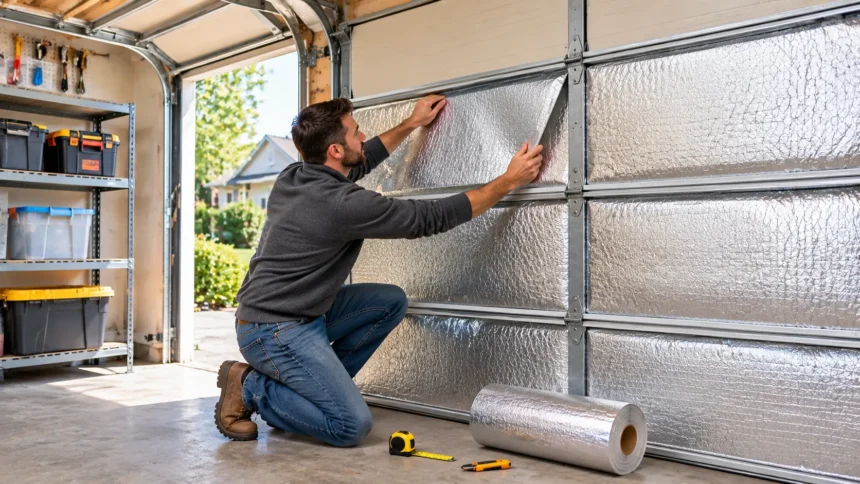
Garage door insulation can help reduce drafts, improve temperature control, and make a garage more comfortable throughout the year. Many garages have thin metal doors that allow heat to move easily between indoor and outdoor environments. During winter, cold air and uninsulated surfaces can make the space uncomfortable, while summer heat can raise garage temperatures. Adding suitable insulation can help reduce heat transfer and support better energy efficiency.
However, insulating a garage door involves more than attaching insulation panels. The door’s material, existing condition, insulation rating, weather seals, and surrounding walls all influence the results. Choosing the right materials and installation method can help improve comfort without affecting door operation. This guide explains garage door insulation benefits, common materials, installation considerations, costs, and practical ways to reduce drafts and manage energy use.
What Is Garage Door Insulation and How Does It Work?
Garage door insulation involves adding or incorporating materials that slow heat transfer through the door. These materials create a thermal barrier between the garage interior and outdoor conditions. Common insulation options include foam panels, reflective products, and factory-insulated door sections. The most suitable choice depends on the door’s construction, climate, and intended use.
Heat naturally moves from warmer areas toward cooler areas. During winter, an uninsulated garage door can allow indoor warmth to escape more quickly through its surface. In summer, outdoor heat can pass through the door and increase temperatures inside. Insulation slows this process, helping reduce temperature changes caused by heat moving through the door.
Insulation does not completely prevent heat transfer or eliminate every draft. Air can still enter through gaps around the door, while walls, ceilings, and windows may also contribute to temperature changes. Effective garage insulation therefore requires attention to the entire space. Combining suitable door insulation with proper weather sealing can provide more consistent results.
Benefits of Garage Door Insulation for Homeowners
One important benefit of garage door insulation is improved temperature control. Insulated doors slow heat transfer, which can make the garage less affected by outdoor temperature changes. This can be especially helpful in garages used for hobbies, storage, or occasional projects. The improvement depends on the existing door, surrounding construction, and local climate.
Garage door insulation may also help reduce unwanted noise. Certain insulation materials absorb or dampen sound, while insulated door construction can reduce vibration. This may make opening and closing the door sound less noticeable. However, noise reduction varies by product, and insulation cannot eliminate all sounds coming from traffic, equipment, or nearby activities.
Another advantage is improved comfort in garages connected to living spaces. Reducing heat transfer through the garage door may help moderate temperatures near shared walls. This can be useful when bedrooms or other occupied rooms are located beside or above the garage. Actual household energy savings depend on the building’s thermal design and heating or cooling requirements.
How Garage Door Insulation Can Save Energy
Garage door insulation can support energy efficiency by reducing heat movement through the door. This matters most when the garage is heated, cooled, or thermally connected to conditioned living areas. An insulated door can reduce heating and cooling demands under suitable conditions. However, energy savings are not guaranteed simply because insulation has been installed.
An attached garage may influence temperatures in neighboring rooms through shared walls and ceilings. Improving the garage door’s thermal performance can help, but those separating surfaces also need appropriate insulation and air sealing. A garage that remains unconditioned may deliver smaller direct energy savings. Understanding this distinction helps homeowners set realistic expectations.
For better results, consider the garage as part of the home’s overall building envelope. Inspect gaps, damaged seals, and areas where outdoor air enters. Appropriate insulation in surrounding structures may be equally important. A balanced approach can improve comfort and reduce unnecessary energy loss more effectively than focusing on the door alone.
Understanding Garage Door Insulation R-Values
R-value measures how strongly an insulation material resists heat flow. Higher R-values generally indicate better resistance when products are evaluated under comparable conditions. Manufacturers use these ratings to describe the thermal performance of insulation materials and certain insulated door assemblies. Understanding R-values helps homeowners compare products beyond their appearance or thickness.
A garage door’s advertised R-value may represent the insulation material rather than the complete installed door. Panels, joints, metal framing, and other components can affect overall thermal performance. For this reason, two doors with similar insulation ratings may not perform identically. Always check how the manufacturer defines and measures the stated value.
The appropriate insulation level depends on climate, garage construction, and intended use. A garage that is heated or cooled may justify higher thermal performance than an unconditioned storage space. Local building requirements can also influence insulation choices. Rather than selecting the highest rating automatically, compare performance, cost, compatibility, and expected benefits.
Best Materials for Garage Door Insulation
Several insulation materials are commonly used in garage door systems. Expanded polystyrene foam, polyurethane foam, and reflective insulation products are familiar options. Each material has different thermal properties, installation requirements, and costs. Choosing the right one depends on the door’s design and whether the insulation is installed during manufacturing or added afterward.
Polystyrene foam panels are often used in garage door insulation kits. They are relatively lightweight and can fit into compatible door sections. Factory-applied polyurethane foam is commonly found in insulated garage doors, where it can provide effective thermal resistance. The performance of either material depends on thickness, installation quality, and the complete door assembly.
Reflective insulation products use reflective surfaces to reduce radiant heat transfer under suitable installation conditions. Their performance depends heavily on factors such as air spaces and heat-flow direction. They should not automatically be treated as equivalent to thick foam insulation. Review manufacturer testing information and installation requirements before choosing a material for your garage.
Insulated Garage Doors vs Insulation Kits
Homeowners generally have two main options when improving garage door insulation. They can purchase a new factory-insulated garage door or use a compatible insulation kit on an existing door. Both approaches have advantages and limitations. The decision often depends on the current door’s condition, available budget, and desired thermal performance.
Factory-insulated garage doors typically include insulation integrated within the door sections. Some models use steel surfaces surrounding an insulating core, creating a more complete assembly. These doors may provide better durability, appearance, and thermal consistency than certain retrofitted solutions. However, replacing an otherwise functional door can involve a substantial additional expense.
Insulation kits can provide a lower-cost option when the existing garage door remains in good condition. They are available in different materials and configurations for compatible doors. Added insulation changes door weight and may affect balance, opener operation, or safety performance. Have the door manufacturer or qualified garage door professional confirm compatibility before installing a kit.
How to Identify Drafts Around a Garage Door
Drafts often enter through gaps around the edges of a garage door rather than directly through its panels. Common problem areas include the bottom seal, side weatherstripping, top edge, and joints between sections. These gaps may allow outdoor air, dust, and moisture to enter. Identifying their location is an important step toward improving garage comfort.
Begin with a visual inspection while the garage door is fully closed. Look for visible daylight around the perimeter and check whether weather seals appear cracked, flattened, or damaged. Notice any obvious gaps between the bottom of the door and the floor. Avoid touching moving components or operating the door while inspecting tight spaces.
Drafts may become more noticeable during windy or cold weather. However, a cold door surface does not necessarily mean outside air is entering through a gap. Insulation addresses heat transfer, while weatherstripping addresses air leakage. Understanding the difference helps you select the appropriate solution instead of applying unnecessary materials.
Garage Door Weatherstripping and Bottom Seals
Weatherstripping creates a flexible barrier around the garage door perimeter. It helps limit unwanted air movement when the door is closed. Common sealing components include bottom gaskets, side seals, and top weatherstripping. These materials may also help reduce the entry of dust, rainwater, and small pests when installed appropriately.
The bottom seal is especially important because garage floors are not always perfectly level. A worn gasket may leave gaps that allow air and water to enter. Replacement seals come in different profiles, so selecting a compatible product matters. The door should still close properly without excessive pressure or obstruction.
Side and top weatherstripping should contact the closed door without restricting movement. Poorly positioned seals can wear quickly or interfere with normal operation. When replacing weatherstripping, follow the manufacturer’s instructions and avoid altering tracks, springs, or safety equipment. A qualified technician can assess problems involving door alignment or mechanical adjustment.
How to Prepare for Garage Door Insulation
Before installing garage door insulation, evaluate the condition of the existing door. Look for damaged panels, loose components, corrosion, or visible operating problems. Insulation should not be used to cover structural defects or unresolved mechanical issues. A damaged or poorly functioning garage door may require professional repair before further improvements are considered.
Check the manufacturer’s instructions to determine whether the door supports additional insulation. Added weight can affect spring balance, cables, tracks, and opener performance. Garage door springs operate under substantial tension and should never be adjusted by an untrained person. Professional assessment is particularly important before modifying a door that was originally uninsulated.
You should also consider how the garage is ventilated and used. Insulation must not block required ventilation openings, safety labels, or important operating components. Follow applicable fire-safety and building requirements for the materials selected. Preparing carefully helps prevent installation mistakes and supports safe, reliable door operation.
Garage Door Insulation Installation: What to Expect
The installation process depends on the insulation product and garage door construction. Some compatible kits use precut panels designed to fit within designated door sections. Other products require manufacturer-approved attachment systems. Always follow the specific instructions supplied with the insulation and confirm that the materials are appropriate for the door.
Before installation, the door should be inspected for safe operation and compatibility with additional weight. The work should not involve loosening springs, cables, brackets, or other tension-loaded hardware. These components can cause serious injury if handled incorrectly. If installing insulation requires mechanical adjustments, the work belongs with a qualified garage door technician.
After installation, door balance and operation should be checked by an appropriate professional when required. The insulation must not interfere with hinges, tracks, safety sensors, or normal door movement. Observe whether the panels remain secure and whether any unusual sounds develop. Safe operation is more important than achieving a particular insulation thickness or appearance.
How Much Does Garage Door Insulation Cost?
Garage door insulation costs vary depending on the material, door size, product quality, and installation requirements. Basic insulation kits are generally less expensive than replacing an entire garage door. However, the total project cost can increase if professional installation or mechanical adjustments are necessary. Comparing complete project estimates gives a clearer picture than looking at material prices alone.
Factory-insulated garage doors typically require a larger investment because the project involves replacing major components. Door material, insulation construction, windows, hardware, and design features affect pricing. Installation labor and disposal of the old door may create additional expenses. Requesting detailed quotes helps identify which services and materials are included.
When comparing costs, consider long-term usefulness rather than focusing entirely on the lowest purchase price. Better insulation may improve comfort, but energy savings depend on how the garage is used. A simple weather-sealing repair may provide greater value when air leakage is the primary problem. Choose improvements based on the condition of your garage and realistic performance expectations.
Common Garage Door Insulation Mistakes to Avoid
One common mistake is assuming insulation alone will eliminate every source of cold air. Heat transfer through door panels and drafts around door edges are different problems. A well-insulated door can still allow outdoor air inside when seals are damaged. Inspecting both insulation and weatherstripping helps identify what actually needs attention.
Another mistake is adding insulation without considering door weight and mechanical balance. Even lightweight materials can change the forces acting on the garage door system. This may affect opening, closing, or safe operation. Never attempt to compensate by adjusting high-tension springs yourself, and consult a qualified professional before making changes that affect the door’s weight.
Choosing materials without checking compatibility can also create problems. Certain products may interfere with moving components or fail to meet relevant safety requirements. Poorly secured panels can become loose during repeated door operation. Following manufacturer guidance and reviewing the completed installation helps maintain both thermal performance and everyday reliability.
Additional Ways to Improve Garage Energy Efficiency
Garage door insulation works best when other sources of heat loss and air leakage are addressed. Walls, ceilings, windows, and gaps around utility penetrations can influence garage temperatures. In attached garages, the separation between the garage and living areas is particularly important. Appropriate insulation and air sealing can help improve overall thermal performance.
Inspect windows and accessible exterior openings for worn seals or visible gaps. Use suitable materials and professional guidance where fire-rated assemblies or building systems are involved. Never seal required ventilation openings or compromise the garage’s separation from occupied rooms. These precautions are especially important where vehicles, fuel-burning appliances, or other potential sources of harmful fumes are present.
Lighting and everyday usage habits may also influence overall garage energy consumption. Efficient lighting can reduce electricity use, while keeping the garage door closed when practical limits unnecessary outdoor air exchange. If the garage is heated or cooled, suitable temperature controls may help manage energy consumption. Combining several appropriate improvements often provides better results than relying on one product.
Is Garage Door Insulation Worth It?
Garage door insulation can be worthwhile when an uninsulated door contributes to uncomfortable temperatures or excessive heat transfer. It may be particularly useful in attached garages, conditioned garages, or spaces used regularly for activities. The potential benefits depend on the existing construction and climate. Homeowners should consider comfort improvements alongside possible energy savings.
For garages used mainly for parking or occasional storage, insulation may provide smaller financial benefits. Weatherstripping could be a more practical first improvement if drafts are the main concern. A garage with a damaged or aging door may also benefit from replacement rather than retrofitting. Evaluating the entire situation helps avoid unnecessary spending.
Before deciding, compare the cost of different solutions with your expectations for comfort and performance. Consider whether surrounding walls and ceilings already have appropriate insulation. Professional advice may be helpful when mechanical safety or building requirements are involved. The best investment is one that solves an identifiable problem while keeping the garage safe and functional.
Conclusion
Garage door insulation can help reduce heat transfer, improve temperature stability, and make certain garages more comfortable throughout the year. Materials such as polystyrene and polyurethane provide different insulation options, while compatible kits may improve existing doors. Weatherstripping is equally important when drafts enter through gaps around the perimeter. Together, these improvements can support better overall garage performance.
The effectiveness of garage door insulation depends on several factors, including climate, door construction, and surrounding building materials. Insulation alone cannot guarantee major energy savings, especially in an unconditioned garage. Addressing air leaks and considering the entire garage structure often provides more meaningful results. Choosing compatible products and following safety requirements are essential parts of the process.
Before starting an insulation project, inspect your garage door and identify the problems you want to solve. Compare materials, installation requirements, and professional service costs before making a decision. Avoid modifying high-tension hardware or compromising safety features. With thoughtful planning and appropriate installation, garage door insulation can become a practical home improvement that supports comfort and energy efficiency.
Frequently Asked Questions
Does garage door insulation really save energy?
Garage door insulation can reduce heat transfer and may lower heating or cooling demand in certain garages. Actual savings depend on climate, garage construction, whether the space is conditioned, and the insulation surrounding adjacent living areas.
What is the best insulation for a garage door?
Polyurethane and polystyrene foam are common insulation materials for garage doors. The best option depends on the door’s design, desired thermal performance, compatibility, safety requirements, and whether you are replacing the door or retrofitting it.
Can I insulate an existing garage door?
Some existing garage doors can accept compatible insulation kits, but additional weight may affect door balance and operation. Check manufacturer guidance and consult a qualified garage door technician before modifying the door.
Will insulating a garage door stop cold drafts?
Insulation reduces heat transfer through the door but does not automatically stop air leakage. Damaged bottom seals, worn weatherstripping, and perimeter gaps may need separate attention to reduce drafts effectively.
Is garage door insulation worth the investment?
Garage door insulation may be worthwhile for comfort, temperature control, and potential energy savings, especially in conditioned or attached garages. Its value depends on installation costs, existing insulation, climate, and how frequently the space is used.