

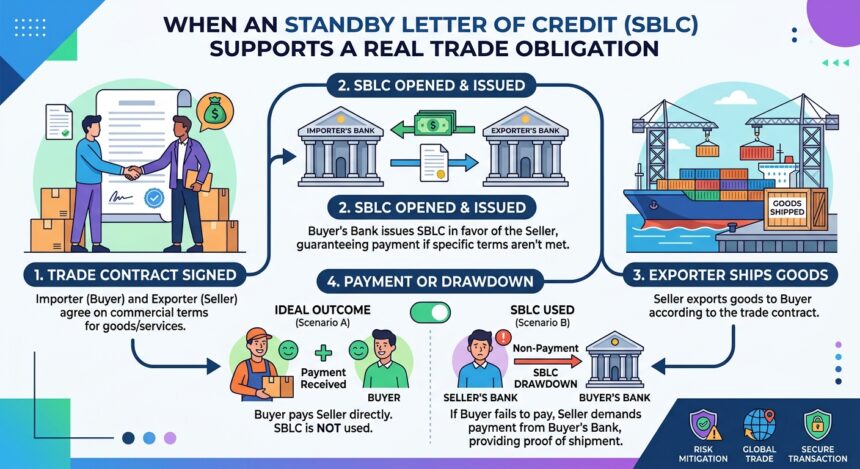
A standby letter of credit can support a payment or performance obligation under a commercial agreement. It is a contingent bank undertaking, not a substitute for a purchase contract, an approved loan or physical goods. The parties should identify the specific default the instrument covers and the beneficiary’s required demand procedure before requesting issuance.
Define the obligation
The contract should identify the applicant, beneficiary, underlying obligation, amount and expiry. Decide whether the SBLC secures buyer payment, seller performance or another defined risk. The beneficiary’s expected protection influences the draft wording. An instrument that simply states a large face amount without a clear contractual purpose is hard for an issuing bank and counterparty to evaluate.
Distinguish security from funding
A supplier may accept an SBLC as assurance that it can claim after a specified default. That does not mean another lender will automatically advance the face value as cash to the applicant. If the trading company needs working capital, it should present a separate financing request with repayment and collateral analysis. Confusing the two functions can produce a structure that reassures the supplier but leaves the goods unfunded.
Review demand conditions
An SBLC should specify what the beneficiary must present to demand payment and where and when presentation occurs. Conditions should be clear and operationally achievable. The applicant should understand the risk that a compliant demand triggers payment even while parties dispute the underlying transaction. Legal review is warranted where performance milestones or documentary evidence are complex.
Assess the issuing bank
A beneficiary will evaluate the bank’s standing, jurisdiction and the rules governing the instrument. The issuing bank will review the applicant’s credit, reimbursement capacity and any required collateral. An intermediary cannot promise issuance from a named bank without that bank’s approval. The parties should settle acceptable bank criteria before committing to a tight delivery date.
Questions to resolve before a mandate
For any proposed facility, identify the legal borrower and every party that will receive or control funds. Confirm the governing contracts, the currency and the date each payment becomes due. Mark assumptions that are still being negotiated. Explain the bank accounts through which proceeds will move and any lender rights already granted over goods or invoices. These details let advisers and potential funders distinguish a viable trade cycle from a request that needs further commercial work. An incomplete initial submission can be refined, but contradictions between contracts and cash forecasts should be resolved before firm terms are expected.
Test a beneficiary demand
Before issuance, the applicant can ask counsel and the bank to walk through a hypothetical claim. What written statement must the beneficiary make? Can it present electronically, and which bank office receives the demand? What happens if the contract parties disagree about default? The exercise helps reveal vague wording or an expiry that does not match the commercial exposure. It also reminds the applicant to keep reimbursement liquidity available: a standby can be drawn under its terms even when the applicant expects to recover money later through a separate contractual dispute.
Set amount and expiry
The face value should correspond to the exposure under the contract, including any agreed reduction as performance progresses. Expiry should cover the period when a valid claim could arise, with sufficient presentation time. A needlessly long tenor can increase cost and tie up credit capacity. Automatic extensions and reduction mechanics require careful drafting so the parties know exactly when the bank’s obligation ends.
Calculate the full cost
Issuance charges, collateral requirements, legal work and amendment fees can be material. If the bank requires full cash collateral, the SBLC may provide little working capital benefit to the applicant. Compare the instrument with a documentary LC, guarantee or other solution that addresses the actual commercial risk. The lowest advertised issuance fee is not necessarily the cheapest workable transaction.
Coordinate the trade file
Provide the bank with the signed agreement, transaction flow, counterparty information and proposed wording. Check that the SBLC amount, applicant name and expiry match the commercial contract. Any amendment to the sale or supply agreement may call for an instrument amendment. A controlled draft process avoids discovering after issuance that the beneficiary’s bank will not accept the wording.
A practical downside review
Assume one ordinary event goes wrong: shipment is late, documents require correction, goods fail inspection or a customer pays later than planned. Recalculate the amount outstanding, the additional expense and the next available source of repayment. Then consider whether two of those events could occur together. A useful facility has clear procedures for exceptions, not simply a base-case repayment date. Record who can authorize an amendment, provide replacement collateral or negotiate with the end buyer. These steps are easier to agree before a transaction is under deadline pressure.
Data that should remain current
A lender can initially review financial statements and contracts, but an active trade requires current figures. Update shipment status, outstanding invoices, collateral quantities and expected collections on an agreed schedule. Date every version so parties do not rely on superseded assumptions. If a buyer changes its delivery plan or a supplier requests new payment terms, assess the effect on available credit before proceeding. The reporting process should be simple enough to sustain during a busy week and precise enough to show when a material risk has changed.
Compare the execution burden
Each financing option imposes practical duties beyond signing documents. The company may need inspections, account controls, daily reporting or bank approvals for stock releases. Assign those jobs to named teams and budget their time and external cost. A structure that appears attractive on paper may fail if nobody can produce its required reports before a draw request. A short operational rehearsal is valuable: take a real transaction, assemble the requested evidence and identify every handoff that depends on another party.
SBLC support for commodity trade settlement is most useful when it responds to a specific contractual exposure and the issuing bank’s requirements are understood. The beneficiary should know what it can demand; the applicant should know how it will reimburse the bank if the standby is drawn.