
Commercial and industrial roofing systems play a vital role in protecting buildings, equipment, inventory, and daily business operations from harsh weather and environmental damage. Companies such as Sentry Roofing help businesses in Indiana and Illinois maintain reliable roofing systems through professional repairs, replacements, and preventative maintenance. Similarly, businesses searching for a reliable roofer manchester nh or professional roof replacement new hampshire services can benefit from experienced contractors who understand the importance of durable, well-maintained roofing systems. Sentry Roofing’s expertise covers TPO, PVC, EPDM, metal, and built-up roofing systems, along with specialized services such as metal roof retrofits, leak repairs, and customized maintenance plans. As a trusted Platinum Duro-Last Contractor, Sentry Roofing demonstrates the importance of working with experienced professionals who understand the unique demands of commercial and industrial properties.
Why Commercial Roofing Requires Specialized Care
Unlike residential roofs, commercial roofing systems often cover large surface areas and must withstand heavy equipment, drainage challenges, temperature fluctuations, and frequent exposure to severe weather. Even minor roofing problems can lead to water intrusion, damaged insulation, electrical hazards, and costly interruptions to business activities.
Regular inspections and timely repairs help property owners identify vulnerabilities before they develop into major structural concerns. Professional roofing contractors can assess membrane conditions, flashing, drainage systems, seams, and other critical components to determine the most appropriate solution for each building.
A proactive approach to roof management also helps businesses plan maintenance budgets, extend the useful life of existing materials, and reduce the likelihood of unexpected repair expenses.
Commercial Roof Repairs and Leak Detection
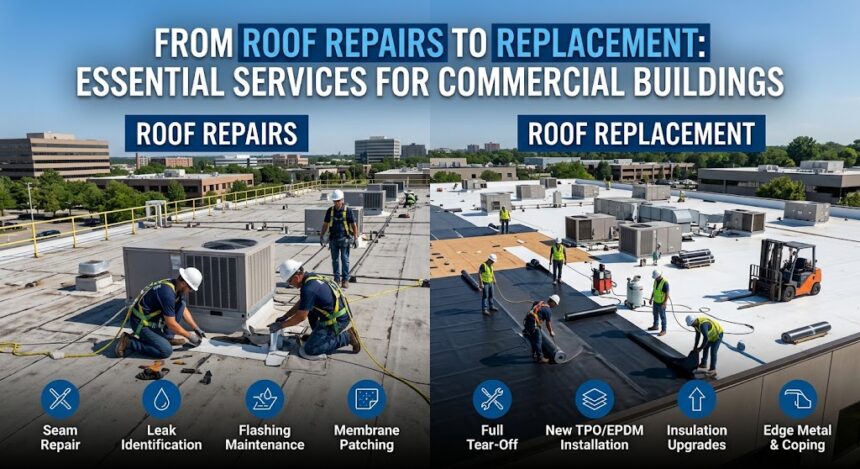
Roof repairs are often the first line of defense against premature roofing failure. Small punctures, deteriorating seams, damaged flashing, and loose fasteners can allow moisture to enter a building, particularly after heavy rain, snow, or strong winds.
Professional contractors investigate the source of a leak rather than simply treating visible water damage. This process may involve examining roof penetrations, drainage areas, membrane seams, and transitions around rooftop equipment. Once the underlying issue is identified, targeted repairs can help restore the roof’s protective capabilities.
Businesses should arrange an inspection whenever they notice interior water stains, unexplained moisture, damaged roofing materials, or recurring leaks. Addressing these warning signs promptly can prevent more extensive damage and help preserve the building’s interior.
When Roof Replacement Becomes the Better Investment
Although repairs can resolve many roofing problems, an aging or extensively damaged system may eventually require complete replacement. Repeated leaks, widespread membrane deterioration, failing insulation, and rising maintenance costs can indicate that continuing to repair the existing roof is no longer the most practical option.
A professional assessment helps determine whether replacement offers better long-term value. Contractors consider the roof’s current condition, expected service life, energy performance, drainage requirements, and the building owner’s budget before recommending a solution.
For property owners researching roof replacement new hampshire, choosing a contractor familiar with local weather conditions is particularly important. Snow accumulation, freeze-thaw cycles, ice formation, and seasonal temperature changes can place considerable stress on commercial roofing systems. Selecting suitable materials and ensuring proper installation can help businesses prepare their facilities for these environmental challenges.
A replacement project also provides an opportunity to evaluate insulation, improve drainage, address existing structural concerns, and consider materials that better suit the building’s operational requirements.
Understanding Different Commercial Roofing Systems
Commercial buildings use several roofing materials, each offering distinct advantages depending on the property’s design, climate, and intended use.
TPO Roofing
Thermoplastic polyolefin (TPO) is a popular single-ply roofing membrane used on many commercial buildings. Its reflective surface can help reduce heat absorption, while heat-welded seams provide a continuous protective layer when properly installed. Routine inspections help identify punctures, seam separation, and other defects before they compromise the system.
PVC Roofing
Polyvinyl chloride (PVC) roofing is valued for its durability, welded seams, and resistance to various chemicals, oils, and environmental contaminants. These characteristics can make it suitable for certain industrial facilities, restaurants, and buildings with specialized rooftop requirements.
EPDM Roofing
Ethylene propylene diene monomer (EPDM) is a synthetic rubber membrane known for its flexibility and weather resistance. It can perform well across a range of temperatures, although seams, flashing, and penetrations require appropriate installation and regular maintenance to preserve watertight protection.
Metal Roofing
Metal roofing systems offer durability and can provide a long service life when correctly installed and maintained. However, corrosion, loose fasteners, deteriorated sealants, and movement around roof joints can create vulnerabilities. Metal roof retrofits may provide an alternative to complete removal when an existing system and building structure are suitable for an engineered retrofit solution.
Built-Up Roofing
Built-up roofing systems consist of multiple layers of bitumen and reinforcing materials, often finished with a protective surface. Their layered construction can provide dependable protection, but inspections remain essential for identifying blistering, cracking, ponding water, and deterioration around roof penetrations.
The best roofing system depends on the property’s specific needs. A qualified contractor can compare installation requirements, expected maintenance, weather exposure, and long-term costs to help owners make an informed decision.
Preventative Maintenance for Long-Term Roof Performance
Waiting until a roof develops a serious leak can increase repair costs and expose a business to unnecessary disruption. Preventative maintenance provides a more structured way to protect commercial properties throughout the year.
A comprehensive maintenance plan may include scheduled inspections, debris removal, drainage checks, flashing assessments, seam inspections, and documentation of emerging problems. Contractors can also recommend repairs based on the roof’s condition and prioritize issues that present the greatest risk to the building.
Customized maintenance plans are especially useful for businesses operating warehouses, manufacturing facilities, retail buildings, and other properties where water damage could affect valuable equipment or inventory.
Property managers should also maintain records of completed repairs, inspection findings, and material warranties. These records help establish a clear picture of roof performance and support more effective decisions about future maintenance or replacement.
Choosing the Right Roofing Contractor
Selecting an experienced contractor is an important part of any commercial roofing project. Business owners should look for professionals with experience in the relevant roofing materials, appropriate licensing and insurance, established safety procedures, and a clear approach to project planning.
For companies seeking a roofer manchester nh, it is worth evaluating contractors based on their experience with commercial properties, understanding of regional weather conditions, repair capabilities, and ability to explain the advantages and limitations of different roofing options.
A reliable contractor should provide a detailed assessment, outline the recommended work, explain material choices, and establish realistic expectations for costs and scheduling. Clear communication is particularly important when roofing work must be completed without interrupting daily business operations.
Property owners should also ask about warranties, maintenance recommendations, emergency response procedures, and whether the contractor can support the roof throughout its service life rather than focusing exclusively on installation.
Protecting Commercial Buildings Through Proactive Roofing
Commercial roofing requires a combination of timely repairs, informed replacement decisions, and consistent preventative maintenance. Understanding the condition of a roof and addressing developing issues early can help businesses protect their facilities, reduce unexpected expenses, and maintain safer working environments.
From TPO and PVC membranes to EPDM, metal, and built-up roofing systems, the right solution depends on the building’s structure, operational needs, and environmental exposure. Working with an experienced roofing professional allows property owners to make decisions based on practical requirements rather than waiting for serious damage to occur.
Whether a business needs a minor leak repaired, an aging roof replaced, or a customized maintenance program, investing in professional roofing services helps preserve the value and reliability of commercial buildings for years to come.