
The gastrocnemius is one of the most important muscles in your lower legs, helping you walk, run, jump, and maintain balance. Located at the back of the calf, this powerful muscle supports everyday movements and many athletic activities. Strengthening it through appropriate exercises can improve lower-body function, ankle control, and overall movement efficiency.
Gastrocnemius exercises primarily involve controlled movements that raise your heels or stretch your calf muscles. These exercises can be performed at home, in a gym, or during a supervised rehabilitation program. Whether you are new to fitness or participate in regular sports activities, understanding proper technique is essential for developing strength safely.
This guide explains the best gastrocnemius exercises, their benefits, correct form, and important training practices. You will also learn about common mistakes, stretching techniques, and ways to build a balanced calf workout. The goal is to help you understand how these muscles function and how to exercise them comfortably and effectively.
What Is the Gastrocnemius Muscle?
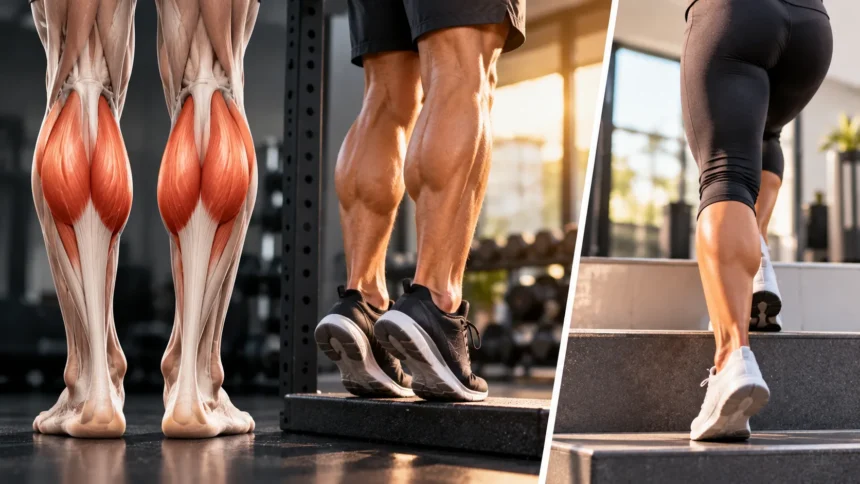
The gastrocnemius is a large, superficial muscle located at the back of the lower leg. It forms the prominent upper portion of the calf and consists of two sections called the medial and lateral heads. These sections originate from the lower end of the thighbone and connect to the heel through the Achilles tendon.
This muscle primarily supports plantar flexion, the movement that points your toes downward or lifts your heels off the ground. It also assists with bending the knee because it crosses both the knee and ankle joints. These actions make the gastrocnemius important for walking, running, climbing stairs, and many other daily movements.
The gastrocnemius works closely with another calf muscle called the soleus, which lies underneath it. Together, these muscles create the triceps surae muscle group and provide essential support for lower-leg movement. Understanding their relationship helps explain why different calf exercises emphasize different muscles and why balanced training is beneficial.
Benefits of Gastrocnemius Exercises
One of the main benefits of gastrocnemius exercises is improved calf strength and functional movement. Strong calf muscles help generate force when walking, running, or moving onto your toes. They also contribute to ankle stability and support movements that require pushing against the ground, including climbing stairs and walking uphill.
Regular calf strengthening may improve muscular endurance, allowing the lower legs to tolerate everyday activities more comfortably. This can be useful for people who spend considerable time standing or walking. When combined with appropriate mobility exercises, calf training can also support better ankle control and improve the ability to move through a comfortable range.
Gastrocnemius exercises are also useful as part of balanced lower-body conditioning. They complement activities that strengthen the thighs, hips, and other muscles around the ankle. However, stronger calves do not guarantee injury prevention or eliminate existing pain. Long-term benefits depend on suitable exercise selection, gradual progression, recovery, and individual physical needs.
Standing Calf Raises for Gastrocnemius Strength
Standing calf raises are among the most straightforward exercises for strengthening the gastrocnemius muscle. Begin by standing upright with your feet approximately hip-width apart and your weight distributed evenly. Hold a sturdy chair or stable surface for balance, keeping your knees comfortably straight without forcing them into a locked position.
Slowly lift your heels away from the floor while maintaining even pressure through the front of both feet. Raise your body as high as comfortably possible without rolling your ankles outward or inward. Pause briefly near the top before lowering your heels in a slow, controlled movement until both feet return to the ground.
Beginners can start with a small number of comfortable repetitions and focus on maintaining good posture. Two sets of approximately eight to ten controlled repetitions may be a reasonable starting point for general conditioning. The movement should feel manageable without sharp pain or excessive strain. Increase the challenge gradually as strength and control improve.
Single-Leg Calf Raises for Balance and Control
Single-leg calf raises provide a more demanding variation of the traditional standing calf raise. Because one leg supports the body, this exercise requires additional strength and balance. It can help identify differences in calf control between the legs, although such differences are common and do not automatically indicate a problem.
Stand beside a stable support and place your weight on one foot while keeping the supporting knee comfortably straight. Lift the opposite foot slightly from the floor and slowly raise your standing heel. Maintain a steady ankle position throughout the movement, then lower your heel carefully before repeating within a comfortable range.
This variation is best introduced after ordinary calf raises feel controlled and comfortable. Start with a few repetitions on each side rather than trying to achieve a demanding target immediately. Keep a hand on the support whenever necessary. If maintaining balance changes your technique significantly, return to two-legged calf raises until your control improves.
Wall-Supported Gastrocnemius Stretch
The wall-supported gastrocnemius stretch is a simple way to improve or maintain calf flexibility. Stand facing a wall and place your hands against it at approximately shoulder height. Position one foot behind the other, keeping the rear knee straight and the heel resting comfortably on the floor.
Slowly move your body forward by bending the front knee while maintaining the position of your back leg. You should feel a gentle stretching sensation along the upper portion of your rear calf. Avoid bouncing or forcing your heel downward. Hold the position for approximately twenty to thirty seconds while breathing naturally.
Repeat the stretch on the opposite leg, adjusting your stance to maintain comfort and balance. A gentle stretch may help improve ankle mobility when performed consistently over time. However, stretching should not cause sharp pain, tingling, or unusual discomfort. People recovering from calf or Achilles tendon injuries should follow guidance from a qualified healthcare professional.
Eccentric Calf Raises for Controlled Muscle Strength
Eccentric calf exercises emphasize the lowering phase of a movement, when the muscle lengthens while producing force. This type of training can help develop strength and muscular control when introduced appropriately. For the gastrocnemius, controlled heel lowering is commonly incorporated into calf-strengthening exercises and certain professionally supervised rehabilitation programs.
A beginner-friendly approach is to stand on a flat surface with both feet and rise gently onto your toes. Instead of dropping your heels quickly, lower them toward the floor over several seconds. Keep your movements smooth and your ankles aligned. Use a sturdy support to maintain balance throughout the exercise.
As the movement becomes comfortable, the lowering phase can gradually become slower or more controlled. More demanding variations, including exercises performed on steps, should not be rushed. People with Achilles tendon discomfort or recent lower-leg injuries may require individualized instructions. Proper technique and gradual progression are more important than completing a high number of repetitions.
Seated Calf Raises and the Role of the Soleus
Seated calf raises primarily emphasize the soleus muscle rather than the gastrocnemius because the knees remain bent. However, they are still valuable within a balanced calf-strengthening routine. The soleus supports ankle movement and works alongside the gastrocnemius during standing, walking, and other activities that require lower-leg stability.
To perform a basic seated calf raise, sit upright in a stable chair with both feet flat on the floor. Keep your knees comfortably bent and slowly raise your heels while maintaining contact between the balls of your feet and the ground. Lower your heels gently and repeat using controlled movements.
This exercise can complement standing calf raises by training the calf muscles in a different knee position. It is especially convenient for beginners who want to develop movement awareness without standing throughout the session. Although seated variations do not emphasize the gastrocnemius as strongly, including them can support more comprehensive lower-leg conditioning.
Resistance Band Exercises for Calf Strength
Resistance bands provide another way to train ankle plantar flexion, an important movement supported by the gastrocnemius and soleus. These lightweight exercise tools allow resistance to be applied while sitting, making them useful for controlled lower-leg conditioning. They are especially convenient for people who prefer simple exercises that require minimal space.
Sit on the floor or another stable surface with one leg comfortably extended in front of you. Position an appropriate exercise band around the ball of the foot while holding its ends securely. Gently point your toes away from your body against the resistance, then return your foot slowly to the starting position.
Choose a light resistance that allows smooth movement without forcing the ankle beyond its comfortable range. Keep the band securely positioned and avoid sudden snapping or jerking motions. This exercise works the calf muscles without requiring full body-weight loading. It can complement standing exercises, although individual needs and training goals may require different approaches.
Common Mistakes During Gastrocnemius Exercises
One common mistake during calf exercises is moving too quickly without controlling the lowering phase. Rapid bouncing may reduce movement quality and place unnecessary stress on the ankle and Achilles tendon. Performing each repetition deliberately helps maintain better alignment and makes it easier to recognize when fatigue begins affecting technique.
Another frequent problem is allowing the ankles to roll excessively inward or outward during heel raises. This movement can shift pressure unevenly through the feet and reduce stability. Maintaining a comfortable, neutral ankle position and distributing pressure across the forefoot can improve control. Holding a stable surface is helpful when balance becomes difficult.
Training too aggressively is another mistake that can interfere with progress. Increasing resistance, repetitions, or exercise difficulty before the muscles are prepared may contribute to excessive soreness or irritation. Rest and gradual progression allow the body to adapt. If discomfort persists or worsens, stop the activity and seek professional advice instead of continuing through pain.
How Often Should You Train Your Gastrocnemius?
The ideal frequency for gastrocnemius exercises depends on fitness level, overall activity, and recovery needs. For general strengthening, two or three sessions each week can provide opportunities to practice controlled movements. Beginners may benefit from leaving recovery time between demanding sessions, particularly when introducing exercises they have not performed previously.
A balanced session might include standing calf raises, a suitable seated variation, and gentle calf stretching. Start with manageable repetitions and focus on comfortable technique rather than maximizing volume. As strength improves, gradually adjust the number of repetitions or the exercise difficulty. Progress should remain appropriate for your age, ability, and physical condition.
Calf muscles also work during daily activities such as walking, cycling, and climbing stairs, so these movements contribute to overall workload. More exercise is not always more effective, especially when the legs are already fatigued. Pay attention to soreness, sleep, and recovery. Consistent, comfortable training is generally more sustainable than frequently pushing beyond your current ability.
Best Practices for Safe and Effective Calf Training
Effective gastrocnemius training begins with a comfortable warm-up that prepares the ankles and lower legs for movement. Gentle walking or easy ankle movements can help you transition into strengthening exercises. Start with familiar movements and gradually introduce more demanding variations. Good posture and steady breathing should remain consistent throughout each session.
Using an appropriate range of motion is also important for maintaining exercise quality. Raise and lower your heels only as far as you can comfortably control without forcing the joints. Avoid adding resistance simply to make an exercise harder. Smooth movement, stable foot positioning, and appropriate rest contribute to a safer and more productive routine.
Balanced lower-body fitness should include more than isolated calf exercises. Activities that strengthen the thighs, hips, feet, and ankles can support overall movement and coordination. Stretching and general physical activity also contribute to mobility and well-being. If you experience persistent calf pain, unexplained swelling, or difficulty walking, seek medical advice before continuing exercise.
Conclusion
Gastrocnemius exercises are an important part of lower-body conditioning because the calf muscles contribute to walking, running, balance, and ankle movement. Standing calf raises, single-leg variations, and controlled resistance exercises can help strengthen these muscles. Gentle stretching can also support flexibility and comfortable movement when performed with appropriate technique.
The most effective approach focuses on controlled repetitions, stable posture, and gradual progression. Beginners should start with comfortable exercises and avoid increasing intensity too quickly. Combining straight-knee calf exercises with suitable bent-knee movements also helps train the gastrocnemius and soleus as part of a balanced lower-leg routine.
Whether you exercise at home or in a gym, consistency and movement quality are essential for long-term improvement. Choose activities appropriate for your current ability, allow time for recovery, and pay attention to discomfort. With sensible exercise selection and good technique, gastrocnemius training can support stronger, more capable lower legs.
Frequently Asked Questions
What is the best exercise for the gastrocnemius muscle?
Standing calf raises are among the most effective basic gastrocnemius exercises because they strengthen the calf muscles with relatively straight knees. Beginners can use a sturdy chair for balance and focus on controlled movements.
How often should I perform gastrocnemius exercises?
For general strengthening, two or three sessions per week may be suitable, depending on your fitness level and overall activity. Allow adequate recovery between demanding sessions and increase exercise difficulty gradually.
Do seated calf raises work the gastrocnemius?
Seated calf raises involve the calf muscles but primarily emphasize the soleus because the knees remain bent. Standing calf raises with relatively straight knees provide greater emphasis on the gastrocnemius.
Can gastrocnemius exercises improve ankle stability?
Yes, calf strengthening can contribute to better ankle control and lower-leg function. However, ankle stability also depends on other muscles, joint mobility, balance, and coordination, so a balanced exercise routine is important.
Should gastrocnemius exercises cause calf pain?
You may experience normal muscular effort or mild soreness after unfamiliar exercise, but sharp or persistent pain is not expected. Stop exercising if pain develops and consult a healthcare professional when symptoms continue.