

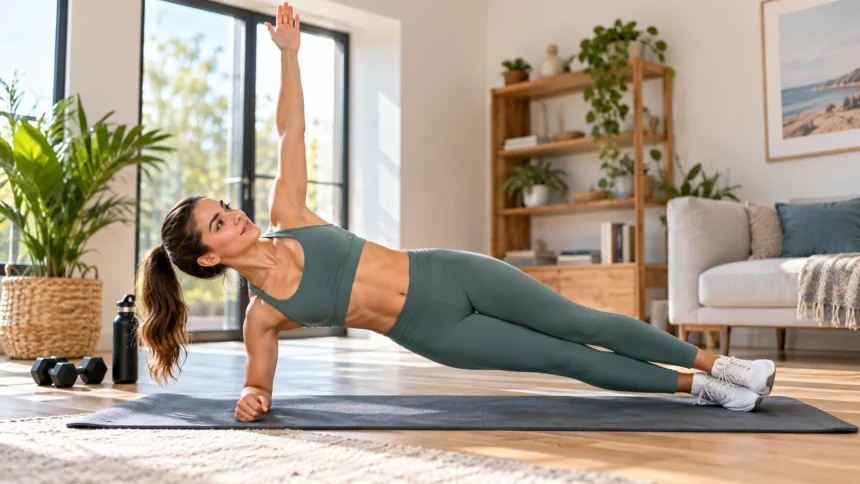
The side plank is a popular bodyweight exercise that helps strengthen the core, improve stability, and develop better control of the muscles supporting your spine. Unlike traditional planks, which primarily involve facing the floor, side planks challenge the body from a sideways position. Learning how to do a side plank correctly can help you practice this useful exercise with comfortable alignment and controlled movement.
Side planks are commonly included in beginner workout routines, home fitness programs, yoga sessions, and general strength training. They primarily engage the oblique abdominal muscles while also involving the shoulders, hips, and other stabilizing muscles. The exercise requires minimal equipment and can be modified according to individual experience and comfort.
This comprehensive guide explains how to do a side plank step by step, including proper form, muscles worked, beginner modifications, common mistakes, and practical safety tips. Whether you are learning the movement for the first time or refining your technique, understanding the fundamentals can help you practice with greater confidence and control.
What Is a Side Plank Exercise?
A side plank is an isometric core exercise in which you support your body sideways using one forearm or hand and the side of your lower body. During the movement, your muscles work to maintain a stable position rather than repeatedly bending or extending your torso. This makes the exercise different from many traditional abdominal movements.
The side plank is particularly useful for strengthening muscles that resist unwanted sideways bending of the trunk. These muscles contribute to everyday movements such as standing, walking, carrying objects, and changing direction. Because the exercise involves several muscle groups simultaneously, it is commonly used in general fitness and physical conditioning programs.
One advantage of the side plank is its adaptability. Beginners can perform the movement with bent knees, while people with more experience may use the standard straight-leg position. The most appropriate variation is one that allows comfortable alignment, steady breathing, and controlled movement without unnecessary strain.
How to Do a Side Plank Step by Step
Begin by lying on your side on a comfortable exercise mat, with your legs extended and your feet placed together or slightly staggered. Position your lower elbow directly beneath your shoulder and rest your forearm on the floor. Keep your head aligned with your spine and allow your upper arm to rest comfortably.
Gently engage your abdominal muscles and lift your hips away from the floor until your shoulders, hips, and ankles form a relatively straight line. Press through your supporting forearm without allowing your shoulder to collapse toward your ear. Keep your body steady while breathing naturally and avoiding unnecessary twisting.
Hold the position only as long as you can maintain comfortable control, then lower your hips slowly to the mat. Rest before repeating the exercise on the opposite side. Starting with brief, manageable holds is perfectly appropriate, and good alignment matters more than maintaining the position for a particular length of time.
Understanding Proper Side Plank Form
Proper side plank form begins with arranging the body in a stable sideways position. Your supporting elbow should remain beneath your shoulder, helping create a comfortable foundation for the upper body. Your head, shoulders, hips, and legs should stay aligned without forcing the spine into an exaggerated position.
The hips should remain lifted without dropping toward the floor or rising excessively. Think about maintaining a comfortable straight line through the body while allowing the abdominal muscles to support your position. Small adjustments to foot placement may help improve balance without changing the basic purpose of the movement.
Breathing is another important part of proper technique. Avoid holding your breath or tightening every muscle unnecessarily, as excessive tension can make the exercise uncomfortable. Instead, maintain steady breathing and focus on controlled support through your forearm, trunk, and hips throughout the position.
What Muscles Does a Side Plank Work?
The side plank primarily challenges the oblique abdominal muscles, which are located along the sides of the trunk. These muscles contribute to rotation, sideways bending, and stabilization of the torso. During a side plank, they work to resist gravity and prevent the hips from dropping toward the floor.
The transverse abdominis and other muscles surrounding the trunk also contribute to maintaining a stable position. The quadratus lumborum, a muscle involved in lateral trunk stability, helps support the movement. Together, these muscles provide control that is useful during ordinary activities and many forms of physical exercise.
Side planks additionally involve the gluteal muscles, shoulders, and muscles surrounding the supporting arm. The gluteus medius can contribute to hip stability, while shoulder muscles help maintain upper-body support. Although the exercise emphasizes the trunk, its benefits come from coordinated muscular activity throughout several connected regions.
Benefits of Doing Side Planks Regularly
One important benefit of side planks is improved muscular endurance in the core and surrounding stabilizing muscles. Developing better control in these areas can support balanced movement during everyday activities. The exercise also provides an opportunity to practice maintaining alignment while resisting sideways forces.
Side planks may help improve awareness of shoulder, hip, and trunk positioning. This can be useful when learning other controlled movements that require coordination between the upper and lower body. Because side planks use bodyweight resistance, they can also fit into general home exercise routines without requiring specialized gym equipment.
However, side planks are not a guaranteed treatment for back pain, posture problems, or sports injuries. Their usefulness depends on individual circumstances and how they fit into a broader activity program. Comfortable technique, gradual familiarity, and suitable exercise selection are more important than attempting challenging variations before mastering the basics.
How to Do a Modified Side Plank for Beginners
The modified side plank is an accessible variation that reduces the amount of bodyweight supported during the exercise. Begin by lying on your side with your knees bent and your supporting elbow positioned beneath your shoulder. Keep your lower forearm on the floor and arrange your knees in a comfortable position.
Gently lift your hips while keeping your knees in contact with the mat. Aim to form a relatively straight line from your head through your hips to your knees. Maintain natural breathing and focus on controlled alignment rather than attempting to lift your hips as high as possible.
Lower your hips slowly when your position becomes difficult to maintain, then repeat on the other side if comfortable. This variation can help beginners become familiar with the movement while placing less demand on balance and core endurance. There is no need to progress until the exercise feels controlled and manageable.
How Long Should You Hold a Side Plank?
There is no single side plank duration that is appropriate for everyone. The most useful hold length depends on your experience, comfort, and ability to maintain proper alignment. Beginners may find that a brief hold of approximately five to ten seconds provides enough time to practice the movement.
Rather than focusing exclusively on a stopwatch, pay attention to your breathing, shoulder position, and hip stability. If your body begins twisting or your shoulder becomes uncomfortable, lower yourself and rest. Several comfortable, controlled attempts can be more useful for learning than one prolonged hold with poor alignment.
As the movement becomes familiar, some people naturally find that they can maintain the position longer without additional strain. Increasing duration is optional rather than a requirement for a successful exercise routine. The goal is to develop comfortable strength and control, not to compete over how long the position can be maintained.
Common Side Plank Mistakes to Avoid
One common side plank mistake is allowing the hips to sink toward the floor. This may occur when the supporting muscles become tired or the movement feels too demanding. Choosing a modified variation or ending the hold earlier can help maintain comfortable alignment.
Another mistake is positioning the supporting elbow too far away from the shoulder. This can make upper-body support less comfortable and create unnecessary strain. Keeping the elbow approximately beneath the shoulder and avoiding a collapsed shoulder position helps establish a more stable foundation.
Holding your breath, twisting the torso, and forcing the body into an uncomfortable position are additional habits worth avoiding. The exercise should feel controlled rather than painful. If proper form becomes difficult to maintain, reduce the challenge instead of continuing through discomfort.
Side Plank Variations for Different Experience Levels
Side plank variations allow the exercise to be adapted to different levels of familiarity and muscular control. The bent-knee version is a practical starting point, while the standard forearm side plank provides a greater stability challenge. Each variation develops similar movement awareness while changing the amount of support required.
A staggered-foot side plank is another option in which one foot rests slightly in front of the other. This arrangement can make balancing more comfortable than placing the feet directly together. For some people, it provides a useful transition between the modified bent-knee position and a full side plank.
More advanced variations may involve supporting the body through the hand rather than the forearm or introducing carefully controlled movement. However, these options place different demands on the shoulders and trunk. They are not necessary for everyone, and basic side planks remain useful without increasing exercise complexity.
Side Plank vs. Regular Plank: What’s the Difference?
The regular plank and side plank are both isometric exercises that challenge the muscles responsible for trunk stability. However, they position the body differently and emphasize different movement demands. A traditional forearm plank involves facing the floor, while a side plank supports the body sideways.
Regular planks challenge the abdominal muscles while resisting excessive extension of the spine. Side planks place greater emphasis on resisting lateral bending, particularly through the oblique muscles and other side-body stabilizers. Both exercises also involve shoulder support and coordinated muscular control.
Neither exercise is universally better because each serves a somewhat different purpose. Some people find one position more comfortable depending on their shoulders, wrists, or previous exercise experience. Including appropriate variations in a balanced routine can provide variety, but exercise selection should always reflect individual comfort and ability.
Can Side Planks Help Strengthen Your Lower Back?
Side planks involve several muscles that contribute to supporting the spine, including the obliques and quadratus lumborum. These muscles help maintain trunk stability during everyday movement. Practicing side planks with suitable technique may support general muscular endurance around the lower back and abdominal region.
However, strengthening supporting muscles does not mean the exercise will automatically relieve existing back pain. Back discomfort can have many causes, and certain positions may worsen symptoms for some individuals. Anyone experiencing persistent pain should seek appropriate professional assessment rather than relying exclusively on one exercise.
For people who can perform side planks comfortably, modified variations may provide a manageable way to practice trunk stability. The exercise can be combined with other suitable movements as part of a balanced fitness routine. Maintaining controlled form and avoiding painful positions are essential considerations throughout the process.
How to Include Side Planks in a Home Workout
Side planks can be incorporated into a simple home workout because they require little space and minimal equipment. An exercise mat or another comfortable, stable surface is usually sufficient. The movement can be practiced alongside other beginner-friendly activities that emphasize balance, mobility, and general strength.
A comfortable routine might include gentle movement to warm up, followed by a few brief side plank attempts on each side. Allow time to rest and maintain natural breathing between efforts. The exact number of repetitions is less important than choosing a manageable amount of activity that feels appropriate.
Side planks do not need to be performed every day to be useful. Muscles benefit from suitable recovery, and variety can make exercise more enjoyable. Combining strength activities with walking, mobility exercises, and other comfortable movement options supports a more balanced approach to physical fitness.
Safety Tips Before Trying Side Planks
Before attempting a side plank, choose a stable surface and make sure there is enough room to move comfortably. Avoid slippery floors or positions that require your supporting arm to bear weight awkwardly. Beginning with the modified knee-supported version can be helpful when learning the basic movement.
People with wrist, elbow, shoulder, or back discomfort should be especially cautious because the exercise places weight through the supporting arm and challenges trunk stability. Pain is a reason to stop rather than push through the movement. A qualified healthcare professional can help determine whether a modification or alternative exercise is more suitable.
It is also important to avoid comparing your performance with someone else’s. Strength, balance, and exercise experience vary naturally between individuals. Choosing controlled movements, taking breaks, and respecting your body’s comfort can help make side plank practice safer and more sustainable.
How to Improve Side Plank Technique Over Time
Improving side plank technique begins with becoming comfortable in the basic position. Pay attention to the relationship between your supporting shoulder, hips, and legs while maintaining easy breathing. Practicing a manageable version consistently can help develop familiarity with the movement.
Small adjustments may make the exercise feel more stable. For example, changing foot placement or using the bent-knee modification can help reduce balance demands. A mirror or guidance from a qualified instructor may also be useful for understanding body alignment without becoming overly focused on achieving a perfect appearance.
Progress does not need to involve increasingly difficult variations or longer holding times. Feeling steadier, breathing more comfortably, and maintaining controlled positioning are meaningful signs of improved technique. The most effective approach is one that supports confidence, comfort, and enjoyment rather than unnecessary physical pressure.
Conclusion
Learning how to do a side plank correctly can help you practice an effective bodyweight exercise for core strength and stability. The movement primarily challenges the oblique muscles while also involving the shoulders, hips, and other supporting muscles. Proper positioning and controlled breathing are central to performing the exercise comfortably.
Beginners can start with a knee-supported side plank and gradually become familiar with the standard variation when appropriate. Keeping the supporting elbow beneath the shoulder, maintaining aligned hips, and avoiding unnecessary twisting can improve technique. Short, comfortable holds are perfectly suitable when learning the movement.
Whether you include side planks in a home workout or a general strength routine, focus on controlled movement rather than performance targets. Choose modifications that suit your abilities and stop whenever the position becomes painful. With sensible practice and attention to form, side planks can support a balanced approach to everyday physical fitness.
Frequently Asked Questions (FAQs)
How do you do a side plank correctly?
Lie on your side with your elbow beneath your shoulder, then gently lift your hips while maintaining a straight body line. Breathe naturally and lower yourself when you can no longer hold the position comfortably.
How long should beginners hold a side plank?
Beginners can start with comfortable holds of approximately five to ten seconds, depending on their ability. Proper alignment and steady breathing matter more than reaching a particular duration.
What muscles do side planks work?
Side planks primarily work the oblique abdominal muscles while also engaging the transverse abdominis, quadratus lumborum, gluteal muscles, and shoulder stabilizers. These muscles help maintain trunk and hip stability.
Are side planks better than regular planks?
Neither exercise is universally better. Side planks emphasize resistance to sideways bending, while regular planks challenge stability in a face-down position. Both can contribute to a balanced strength routine.
Can you do side planks every day?
Some people can comfortably practice brief side planks frequently, but daily exercise is not necessary. Appropriate rest, varied movement, and attention to discomfort are important for sustainable fitness habits.