

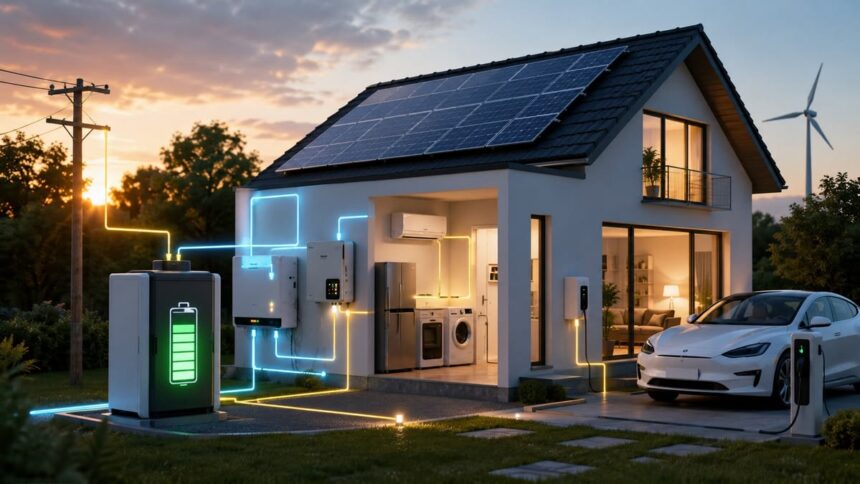
Electric vehicles are changing more than the way cars are powered. They are reshaping vehicle manufacturing, public transportation, energy demand, charging infrastructure, urban planning, oil consumption, and the everyday driving experience.
Traditional vehicles depend on internal combustion engines that burn gasoline or diesel. Electric vehicles use motors powered by electricity stored in batteries. This fundamental difference affects how vehicles are built, maintained, refueled, and connected to the wider energy system.
The global electric vehicle market reached a significant milestone in 2025. More than 21 million electric cars were sold worldwide, representing approximately one in every four new cars. The International Energy Agency expects sales to approach 23 million in 2026, placing electric vehicles close to 30% of the global new-car market.
These figures show that electric mobility is moving beyond the early-adopter stage. Electric vehicles are becoming a central part of the global transportation system.
What Is an Electric Vehicle?
An electric vehicle uses one or more electric motors for propulsion. Electricity is stored in a rechargeable battery that supplies energy to the motor.
A battery-electric vehicle runs entirely on electricity and produces no exhaust emissions while driving. A plug-in hybrid combines a rechargeable battery with a gasoline or diesel engine. Conventional hybrids also use electric motors, but their smaller batteries are charged through the engine and regenerative braking rather than an external charging connection.
Battery-electric vehicles represent the most complete shift away from oil-based road transport because they do not require gasoline or diesel during normal operation.
Electric Cars Are Becoming Mainstream
Electric vehicles were once viewed as expensive products designed for a small group of environmentally conscious consumers. That perception is changing as manufacturers introduce more models, battery technology improves, and production expands.
The electric car market grew by approximately 20% in 2025, exceeding 20 million annual sales. The market now includes compact cars, family vehicles, luxury models, delivery vans, pickup trucks, buses, motorcycles, and heavy-duty trucks.
Adoption remains uneven. China has the largest electric vehicle market, while Europe also maintains a substantial share. Growth is increasingly visible in Southeast Asia, Latin America, and other emerging markets as more affordable vehicles become available.
The IEA projects that electric cars could account for around half of global car sales by 2035 under its exploratory scenarios. Internal combustion engine vehicle sales, meanwhile, are not expected to return to their 2017 global peak.
This does not mean gasoline vehicles will disappear immediately. Cars often remain on the road for many years, so replacing the existing global fleet will take longer than changing new-vehicle sales.
EVs Are Changing the Driving Experience
Electric motors behave differently from internal combustion engines. They can provide rapid acceleration without waiting for an engine to build speed or change gears. Electric vehicles are also generally quieter, particularly at lower speeds.
Regenerative braking changes how drivers control the vehicle. When the driver slows down, the electric motor can operate in reverse and recover some of the vehicle’s movement as electrical energy. That energy is returned to the battery instead of being lost entirely as heat through conventional brakes.
Many electric vehicles allow strong regenerative braking, enabling drivers to control much of their acceleration and deceleration with one pedal. This can improve efficiency and reduce wear on mechanical brake components.
Electric vehicles are also closely connected to software. Mobile applications can display battery level, charging progress, vehicle location, cabin temperature, and estimated range. Some manufacturers can improve vehicle features through remote software updates.
As a result, cars are becoming more like connected digital platforms rather than purely mechanical machines.
Transportation Is Becoming Less Dependent on Oil
Road transportation has traditionally relied almost entirely on petroleum products. Electric vehicles change this relationship by shifting energy demand from gasoline and diesel to electricity.
The global electric vehicle fleet displaced approximately 1.7 million barrels of oil per day in 2025. China alone accounted for around one million barrels per day of that reduction. Under current and stated policies, global oil displacement from electric vehicles could reach approximately five million barrels per day by 2030.
Reducing oil consumption has environmental benefits, but it also affects national energy security. Countries that import large quantities of fuel can use electric transportation to reduce their exposure to international oil prices, supply interruptions, and geopolitical instability.
Electric vehicles do not eliminate energy dependence entirely. They replace oil demand with demand for electricity, batteries, minerals, charging equipment, and grid infrastructure. The strategic focus therefore moves from fuel supply toward electricity generation and clean-technology supply chains.
EVs Can Lower Transportation Emissions
Battery-electric vehicles do not release carbon dioxide, nitrogen oxides, or other combustion pollutants from an exhaust pipe while driving. This can improve local air quality, particularly in cities with heavy traffic.
Their total environmental impact, however, must be assessed across the entire life cycle. Battery manufacturing, vehicle production, electricity generation, mineral extraction, transportation, and recycling all produce environmental effects.
The emissions associated with charging depend partly on how electricity is generated. An electric vehicle charged from a coal-intensive grid has a larger carbon footprint than the same vehicle charged from renewable or nuclear electricity. Even so, official assessments generally find that battery-electric vehicles produce lower lifetime greenhouse gas emissions than comparable combustion vehicles, especially as electricity systems become cleaner.
The climate benefits of electric transportation will therefore grow as countries expand renewable energy, reduce fossil-fuel electricity generation, and improve battery manufacturing.
Charging Is Replacing the Traditional Fueling Model
Gasoline vehicles are usually refueled at dedicated service stations. Electric vehicles can be charged in several locations, including homes, offices, parking areas, shopping centers, fleet depots, and highway charging stations.
Home charging remains the preferred option where it is available because vehicles can recharge while parked overnight. This changes the driver’s routine. Instead of making a separate trip to a fuel station, many owners begin the day with a charged battery.
Public charging remains essential for apartment residents, commercial drivers, long-distance travelers, and people who cannot install private chargers.
By the end of 2024, the number of public charging points worldwide had exceeded five million, more than double the number available in 2022. More than 1.3 million public charging points were added during 2024 alone.
Fast-charging technology is also improving. Many current networks can add a significant amount of range during a short rest stop, although actual charging speed depends on the vehicle, battery temperature, charger capacity, and battery charge level.
The challenge is no longer simply installing as many chargers as possible. Chargers must also be reliable, conveniently located, easy to use, compatible with different vehicles, and supported by sufficient electrical capacity.
Electric Vehicles Are Becoming Part of the Power Grid
Large numbers of electric vehicles will increase electricity demand, but the increase is expected to be manageable if charging is coordinated effectively.
In 2025, electric vehicles consumed around 250 terawatt-hours of electricity, equal to approximately 1% of global final electricity demand. Under the IEA’s stated-policy scenario, EV electricity consumption could reach around 1,700 terawatt-hours by 2035, or roughly 5% of global electricity demand.
The timing of charging matters. If millions of drivers connect their vehicles during the same evening peak, local electricity networks may experience greater pressure. Smart charging can move demand toward periods when electricity is cheaper, overall consumption is lower, or renewable generation is abundant.
Some vehicles may eventually support vehicle-to-grid systems. These systems allow parked EVs to send electricity back to buildings or the grid when required. A large fleet of connected vehicles could therefore operate as a distributed energy-storage resource.
For this system to work at scale, utilities, vehicle manufacturers, charging companies, regulators, and consumers will need compatible technical standards and suitable electricity pricing.
Public Transportation Is Also Becoming Electric
The electric transportation transition is not limited to private cars.
Cities are introducing electric buses to reduce fuel consumption, exhaust pollution, and noise on frequently traveled routes. Buses are particularly suitable for electrification because many operate on predictable schedules and return to central depots where they can be charged.
Electric taxis and ride-hailing vehicles can also deliver substantial benefits because they usually travel more kilometers than privately owned cars. Replacing a heavily used gasoline vehicle can avoid more fuel consumption than replacing a vehicle that is driven only occasionally.
Electric two-wheelers and three-wheelers are increasingly important in countries where motorcycles, scooters, and auto-rickshaws provide a large share of daily transportation. They require smaller batteries than cars and can often be charged through relatively simple infrastructure.
Commercial vans and delivery vehicles are another expanding market. Their planned routes and depot-based operations can make charging easier to manage.
Electric Trucks Are Changing Freight Transport
Battery-electric trucks are beginning to transform freight movement, particularly for urban deliveries, port operations, regional transport, and predictable routes.
Electric trucks have higher upfront costs in many markets, but fleet operators evaluate vehicles differently from ordinary consumers. A commercial truck may travel long distances every day, so energy costs, maintenance, downtime, and total cost of ownership are highly important.
Battery demand from electric trucks more than doubled in 2025, largely because of rapid market growth in China. Electric trucks represented about 8% of global EV battery deployment, compared with less than 5% in 2024.
Long-distance electric trucking requires larger batteries and high-powered charging stations. Depot charging is expected to remain the main option for many commercial fleets, while highway and terminal charging will be needed for longer routes.
The IEA estimates that charging capacity for electric trucks and buses could increase more than sixfold by 2035.
EVs Can Reduce Operating and Maintenance Costs
Electric motors have fewer moving parts than gasoline or diesel engines. Battery-electric vehicles do not require engine-oil changes, spark plugs, fuel filters, or traditional exhaust-system maintenance.
Regenerative braking can also reduce wear on brake pads and discs. The battery, motor, and power electronics generally require relatively little scheduled maintenance compared with a combustion powertrain.
The U.S. Department of Energy has estimated scheduled maintenance costs of approximately 6.1 cents per mile for battery-electric light-duty vehicles, compared with 10.1 cents per mile for conventional internal combustion vehicles. Actual costs vary by model, location, tire wear, repair pricing, electricity rates, insurance, and driving behavior.
The initial purchase price remains a barrier in some markets. However, lower electricity and maintenance expenses can make EVs more economical over their full operating life, particularly for high-mileage vehicles.
Vehicle Manufacturing Is Being Redesigned
Electric vehicles require different components and production methods from combustion vehicles.
Traditional automotive supply chains are built around engines, transmissions, fuel systems, exhausts, and many mechanical components. EV manufacturing places greater emphasis on battery cells, power electronics, electric motors, thermal-management systems, semiconductors, and software.
This change is forcing established manufacturers and suppliers to redesign factories, retrain workers, establish battery partnerships, and compete with newer technology-focused companies.
The transition is also creating economic competition over battery production and critical minerals. Lithium, nickel, graphite, copper, and other materials are becoming strategically important to transportation.
Battery recycling will therefore play an increasingly significant role. Recovering valuable materials from used batteries could reduce waste, support domestic supply chains, and decrease the need for some newly mined resources.
Challenges Slowing the EV Transition
Electric transportation still faces practical and economic obstacles.
Charging access is uneven, especially for apartment residents, rural drivers, and people in lower-income regions. Public chargers may be unavailable, occupied, unreliable, or incompatible with particular payment systems.
Vehicle affordability is another concern. Although operating costs can be lower, the purchase price of an EV may remain higher than that of a comparable gasoline model in some markets.
Battery production also creates environmental and social concerns involving mining, water use, worker protections, local ecosystems, manufacturing emissions, and supply-chain concentration.
Cold or extremely hot weather can reduce vehicle efficiency and range. Towing, high speeds, heavy loads, and repeated fast charging can also affect energy use.
Governments and industries must address these challenges rather than assuming that consumer demand alone will complete the transition.
Electric Cars Are Only Part of Sustainable Transportation
Replacing every gasoline car with an electric car would reduce emissions, but it would not solve congestion, traffic injuries, parking shortages, or inefficient land use.
A sustainable transportation system also requires reliable public transit, safe walking and cycling routes, efficient freight networks, shared mobility, and urban development that reduces the need for long journeys.
Electric vehicles are most effective when they form part of a broader mobility strategy. Electric buses, trains, scooters, delivery vehicles, and shared fleets can improve transportation while reducing the number of private cars needed.
The goal is not simply to electrify existing traffic. It is to create cleaner, safer, more accessible, and more efficient mobility.
The Future of Electric Transportation
The future transportation system will likely be more electric, connected, automated, and integrated with electricity networks.
Battery costs and vehicle prices are expected to continue influencing adoption. Charging networks will expand, while fast chargers will become more common along major transport corridors. Electric trucks and buses will represent a growing share of battery demand.
Software will help vehicles choose when and where to charge. Fleet operators will use data to optimize routes, energy consumption, and battery health. Used batteries may be repurposed for stationary energy storage before being recycled.
The pace of change will vary by country. Markets with affordable vehicles, dependable electricity, strong charging infrastructure, suitable policies, and domestic manufacturing capabilities are likely to transition more quickly.
Conclusion
Electric vehicles are transforming transportation by replacing petroleum with electricity, reducing tailpipe emissions, changing how vehicles are maintained, and creating a new charging ecosystem.
Their influence extends beyond private cars. Electric buses, trucks, motorcycles, taxis, and delivery vehicles are changing public transit and commercial transport. At the same time, vehicle manufacturing is becoming more closely connected to batteries, software, electricity networks, and critical-mineral supply chains.
Electric vehicles are not a complete solution to every transportation problem. Their environmental benefits depend on clean electricity, responsible battery production, efficient vehicle design, reliable charging, and effective recycling.
Even with these limitations, the direction of change is clear. Electric mobility is moving from a specialist technology toward a central part of the global transportation system.
Frequently Asked Questions
How are electric vehicles changing transportation?
Electric vehicles are shifting transportation from gasoline and diesel to electricity. They are also changing vehicle design, maintenance, charging behavior, public transit, freight operations, energy demand, and urban infrastructure.
Are electric vehicles better for the environment?
Battery-electric vehicles produce no tailpipe emissions. Their total environmental impact depends on battery manufacturing and the electricity used for charging, but they generally produce lower lifetime greenhouse gas emissions than comparable combustion vehicles.
Are electric vehicles cheaper to operate?
EVs can have lower fueling and scheduled maintenance costs because electric motors are efficient and contain fewer moving parts. Total savings depend on electricity prices, vehicle price, mileage, insurance, battery condition, and local incentives.
How long does it take to charge an electric vehicle?
Charging time depends on battery size, charger speed, vehicle capability, temperature, and current battery level. Home charging may take several hours, while a compatible fast charger can add substantial range during a shorter stop.
Will electric vehicles overload the power grid?
EVs will increase electricity demand, but smart charging, grid upgrades, renewable energy, and vehicle-to-grid technology can help manage the additional load. The timing and location of charging are often more important than total annual consumption.
What is the biggest challenge facing electric vehicles?
The main challenges include purchase price, public charging availability, charging reliability, battery supply chains, mineral sourcing, grid capacity, recycling, and unequal access to electric transportation.
Will gasoline cars disappear completely?
Gasoline and diesel vehicles will remain on roads for many years because vehicles have long operating lives and adoption differs by region. However, their share of new vehicle sales is expected to decline as electric vehicle adoption grows.