
Heavy machinery plays an essential role in industries such as construction, agriculture, manufacturing, and transportation. However, purchasing expensive equipment outright can place considerable pressure on a company’s cash flow. Businesses can explore flexible solutions through providers such as Thirty3 Capital, which offers tailored financing options for heavy machinery acquisitions. Using a heavy equipment financing calculator can help businesses estimate monthly payments, compare financing terms, and plan their budgets more effectively. With solutions such as asset-backed financing and monthly payment planning tools, businesses can secure the equipment they need while managing costs through flexible, strategic financing arrangements.
Understanding Heavy Equipment Financing
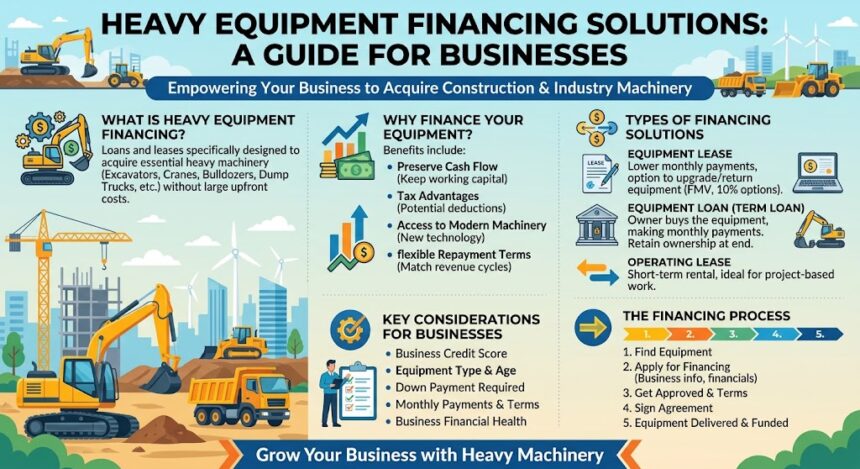
Heavy equipment financing allows businesses to acquire essential machinery without paying the entire purchase price upfront. Instead, companies can spread the cost over an agreed period through structured payments, helping them preserve working capital for payroll, materials, maintenance, and other operating expenses.
Depending on the lender and financing arrangement, businesses may finance new or used machinery, upgrade existing equipment, or obtain funding for specialized assets. Commonly financed equipment includes excavators, bulldozers, cranes, loaders, tractors, forklifts, and industrial machinery.
Choosing the right financing structure depends on the equipment’s cost, its expected useful life, the company’s financial position, and the anticipated return on investment.
Benefits of Heavy Construction Equipment Financing
Construction companies frequently require expensive machinery to complete projects efficiently and meet demanding deadlines. Heavy construction equipment financing can help businesses obtain the necessary resources without committing a substantial portion of their available cash to a single purchase.
Some important benefits include:
- Preserved cash flow: Spreading equipment costs across scheduled payments leaves more capital available for everyday operations.
- Improved project capacity: Access to additional machinery can help contractors undertake larger projects and manage multiple jobs simultaneously.
- Flexible equipment acquisition: Financing may provide opportunities to purchase equipment that would otherwise be financially difficult to obtain.
- Better financial planning: Predictable payment schedules can make it easier to prepare budgets and manage upcoming expenses.
- Business growth: The right equipment can improve productivity, reduce delays, and support long-term expansion.
Before choosing a financing option, businesses should compare interest rates, repayment terms, fees, down payment requirements, and any restrictions associated with the agreement.
How a Heavy Equipment Financing Calculator Helps
Understanding the total cost of financing is essential before committing to a major equipment purchase. A heavy equipment financing calculator helps businesses estimate their potential monthly payments using details such as the equipment price, down payment, interest rate, and repayment period.
For example, a contractor purchasing an excavator can compare different loan terms to determine which payment schedule best fits the company’s budget. A longer repayment period may reduce monthly payments but could increase the total interest paid over the life of the loan.
When evaluating financing scenarios, businesses should consider the following factors:
- Equipment purchase price: Establish the total amount required to acquire the machinery.
- Down payment: Determine how much cash can be contributed upfront.
- Interest rate: Compare available rates and understand whether they are fixed or variable.
- Repayment term: Review how different loan durations affect monthly obligations and total financing costs.
- Additional expenses: Account for insurance, maintenance, taxes, and other ownership costs where applicable.
Calculator results are estimates rather than guaranteed loan offers. Actual payments depend on the lender’s terms, applicable fees, and the borrower’s financial circumstances.
Exploring Asset-Backed Financing Solutions
Asset-backed financing can provide another option for businesses seeking to acquire heavy machinery. Depending on the agreement, the equipment being financed may serve as collateral, helping structure funding around the asset’s value.
This approach can be particularly relevant for construction companies, agricultural operators, and industrial businesses that depend on expensive machinery to generate revenue. Rather than using all available cash for an outright purchase, a company may be able to spread the cost over time while putting the equipment to productive use.
Providers such as Thirty3 Capital offer an example of how tailored financing options and monthly payment planning tools can help businesses evaluate equipment acquisitions. Reviewing available structures and repayment expectations allows decision-makers to select financing arrangements that align with operational requirements and financial goals.
Businesses should also understand the implications of using equipment as collateral, including the potential consequences of missed payments and the lender’s rights under the financing agreement.
Choosing the Right Financing Strategy
Selecting suitable financing requires more than finding the lowest monthly payment. Companies should assess how quickly the equipment will contribute to revenue, how frequently it will be used, and whether ownership or an alternative arrangement better suits their needs.
Before proceeding, businesses should:
- Establish a realistic equipment budget.
- Compare offers from multiple financing providers.
- Review the complete repayment schedule and total borrowing costs.
- Check eligibility requirements and documentation.
- Evaluate the equipment’s expected maintenance costs and resale value.
- Ensure projected cash flow can comfortably support repayments.
A well-planned financing strategy can help businesses avoid unnecessary financial pressure while maintaining access to essential machinery.
Conclusion
Heavy equipment financing solutions can help businesses acquire the machinery they need while preserving capital for other priorities. From asset-backed financing to structured monthly payments, the right arrangement can support operational efficiency, project delivery, and sustainable growth.
By comparing financing options, using a heavy equipment financing calculator to estimate repayments, and carefully evaluating heavy construction equipment financing terms, companies can make more informed purchasing decisions. Working with a financing provider such as Thirty3 Capital can also help businesses explore tailored solutions that balance equipment requirements with long-term financial stability.