
Getting kids excited about soccer is as simple as giving them the right space and tools to practice. A child doesn’t need an elaborate setup to start developing better control, passing, shooting, and coordination; a few well-chosen training essentials can turn any backyard, school field, or local park into an active practice area.
The goal is to help young players enjoy training rather than feel like every session is a serious competition. Focusing on practical tools supports core skill development while keeping practice energetic and fun.
What Soccer Training Equipment Do Kids Need?
The ideal setup depends on the child’s age, experience level, and the type of practice they enjoy most. Beginners don’t need every piece of equipment on the market—starting with a properly sized ball, a set of cones, and a small goal provides plenty of opportunity to build fundamental skills.
As players grow more confident, training gear can be introduced to challenge them in new ways:
- Nets: Perfect for finishing drills and shooting accuracy.
- Cones: Essential for setting up dribbling courses and agility boundaries.
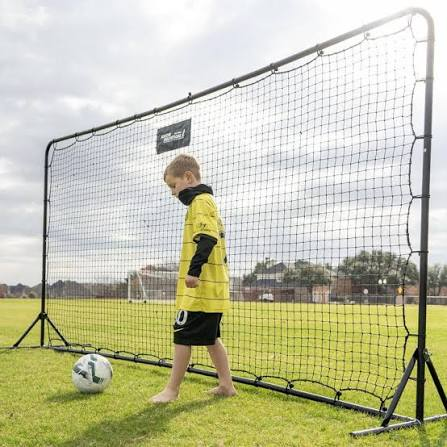
- Rebounders: Great for building passing rhythm and improving first-touch control.
The key is selecting gear that encourages movement, repetition, and creative play, helping young athletes learn naturally through active execution.
Soccer Training Gear for Kids
When choosing soccer training gear for kids, focus on equipment that keeps them genuinely engaged. Young players are far more likely to practice when drills feel like interactive games rather than routine chores.
Cones can be set up into dynamic obstacle courses where kids weave through before targeting a goal. Portable goals turn standard passing and shooting into mini-challenges, while rebounders add unpredictability by returning the ball quickly to sharpen reaction times.
Choosing age-appropriate equipment makes practice comfortable, keeping the focus entirely on skill development rather than struggling with mismatched gear.
Kids Soccer Practice Equipment for Different Skills
One of the easiest ways to make practice more productive is to use each item for a specific skill.
Dribbling:
Set cones a short distance apart and ask children to weave through them while maintaining control.
Passing:
Create two small zones and have players pass accurately between them.
Shooting:
Use a portable goal and set different targets for players to aim at.
First touch:
A rebounder can return the ball at different angles, encouraging children to control it quickly.
Speed and movement:
Cones can mark short sprinting or change-of-direction exercises.
These activities can be adapted according to age. Younger children may need simpler drills, while older ones can be challenged with faster movements, smaller spaces, or additional touches.
Are Soccer Rebounders Good for Kids’ Training?
Yes, soccer rebounders are good for kids’ training, particularly when they are used to develop passing, receiving, and reaction skills.
A rebounder gives children an opportunity to practise without requiring another player to return every pass. They can kick the ball toward the surface, prepare for its return, and work on controlling it with their feet or other permitted body parts.
For a child practising alone, this can be particularly useful. Instead of waiting for a parent, sibling, or teammate to participate, they can repeat the exercise independently.
Rebounders can also make practice more challenging as the child improves. They can experiment with different passing strengths and angles, helping develop greater awareness and control.
Learn more about the key football rebounder benefits and the drills players can use to improve control, passing, and reaction time.
Portable Nets for Backyard and Club Practice
A permanent goal is not always practical. Families may have limited outdoor space, while clubs may train at fields that need to accommodate different groups throughout the day.
Portable soccer goals provide greater flexibility for shooting exercises, small-sided games, and finishing drills.
For children, having a visible target can also make practice more enjoyable. Instead of simply kicking the ball around, they have something specific to aim for.
Coaches can create small games around the net, such as awarding points for hitting different areas or challenging players to score using their weaker foot.
Cones and Simple Drills
Cones may look basic, but they can be incredibly useful for children’s practice. They can mark boundaries, create dribbling routes, divide players into groups, or establish shooting zones.
For younger children, coaches can begin with wide gaps between cones. As their control improves, the gaps can be reduced to create a more demanding challenge.
Parents can also use them at home without needing to create a complicated coaching session. A short obstacle course can become a fun activity that encourages kids to practise ball control while staying active.
The simplicity is part of the appeal. There is no need for an elaborate setup before a child can begin working on their skills.
Choosing the Right Ball for Young Players
The ball itself is one of the most important parts of a training setup. Younger players have different requirements from senior players, which is why we offer a Junior soccer ball range alongside our other models.
For children moving into more structured practice, different sizing options can provide alternatives suited to regular sessions. Players preparing for competitive matches can eventually move toward performance models as appropriate.
Creating a Fun Practice Environment
The best soccer training equipment for kids is ultimately the equipment that encourages them to keep playing. A few cones, a portable net, a suitable ball, and a rebounder can provide enough variety for countless drills without making practice feel overwhelming.
Parents can turn short sessions into games, while coaches can create structured activities around specific skills. As kids improve, the same setup can be adapted to make exercises progressively more challenging.