

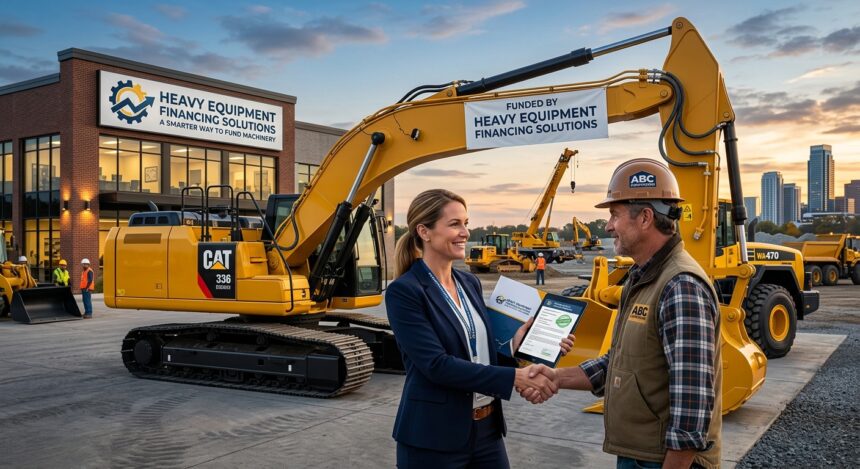
Businesses that rely on construction, agriculture, transportation, manufacturing, and other industries often need expensive machinery to maintain productivity and pursue new opportunities. Instead of paying the full purchase price upfront, companies can explore heavy equipment financing to spread costs over time and preserve working capital. Thirty3 Capital is an example of a financing provider that offers tailored solutions for heavy machinery acquisitions, including asset-backed financing and monthly payment planning tools designed to help businesses secure necessary equipment while managing costs through flexible financing strategies.
Why Equipment Financing Matters
Heavy machinery represents a significant investment. Excavators, loaders, cranes, tractors, commercial vehicles, and specialized industrial equipment can require substantial capital, particularly when a business needs several assets at once.
Financing can allow companies to acquire equipment without committing all available cash to a single purchase. Instead, the cost may be distributed across scheduled payments, helping businesses maintain liquidity for payroll, inventory, maintenance, expansion, and other operating expenses.
Understanding Asset-Backed Financing
Asset-backed financing can be particularly useful when purchasing valuable machinery. With this type of arrangement, the equipment itself may serve as an important part of the financing structure.
Because the asset provides underlying value, businesses may have an additional financing avenue to consider when evaluating machinery purchases. The specific terms, eligibility requirements, rates, and repayment schedules will vary according to the lender, borrower, equipment, and transaction.
Planning Monthly Payments
Understanding the expected monthly obligation is an important part of any equipment purchase. A heavy equipment financing calculator can help businesses estimate potential payments by considering factors such as the equipment price, down payment, financing term, and interest rate.
For example, a business considering a $150,000 machine can compare different repayment periods to understand how changing the term could affect its estimated monthly payment. While calculator results are useful for planning, actual financing terms should always be confirmed with the financing provider.
Choosing the Right Financing Structure
There is no single financing structure that works for every business. Companies should consider the type of equipment they need, its expected useful life, available cash, projected revenue, and how quickly the machinery is expected to generate value.
Businesses may also want to examine:
- Purchase price and required down payment
- Interest rate and total financing cost
- Repayment duration
- Monthly cash-flow requirements
- Equipment depreciation
- Maintenance and operating expenses
- Potential resale value
- Seasonal fluctuations in revenue
Taking these factors into account can make the financing decision more aligned with the company’s broader financial plan.
Financing Equipment Without Disrupting Growth
The ability to spread an equipment purchase across manageable payments can help businesses avoid putting excessive pressure on their cash reserves. This can be especially relevant for companies that need to replace aging machinery or acquire additional equipment to take on larger contracts.
A flexible financing strategy can also make it easier to plan future investments. Rather than treating machinery as a one-time expense, businesses can incorporate financing payments into their ongoing budgeting and cash-flow forecasts.
A Strategic Approach to Heavy Machinery
Heavy equipment is often essential to day-to-day operations, making the way it is financed almost as important as the equipment itself. Comparing financing structures, estimating monthly obligations, and understanding the total cost can help businesses make informed purchasing decisions.
Providers such as Thirty3 Capital demonstrate how tailored financing options, asset-backed solutions, and payment-planning resources can support businesses seeking the machinery necessary for continued operations and growth. With careful planning, companies can acquire essential equipment while maintaining greater control over their available capital.