

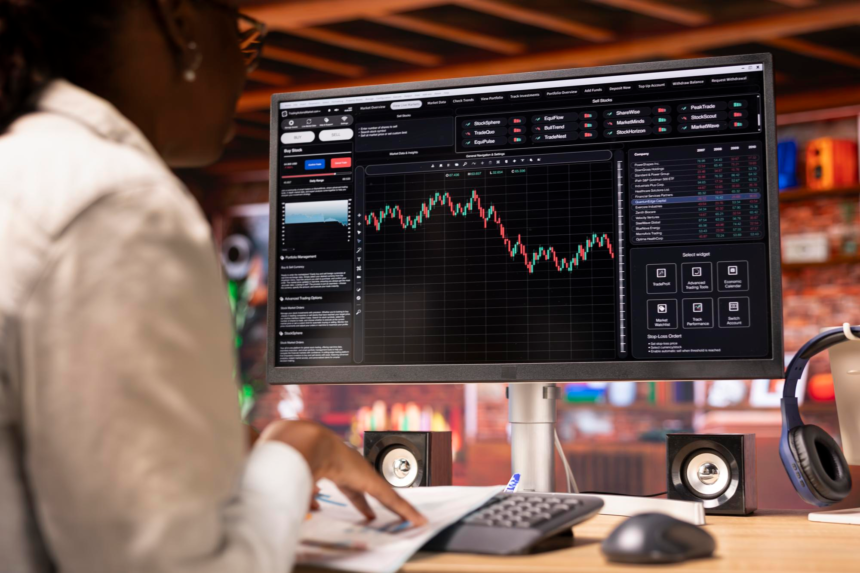
Uncontrolled leverage and account breaches can wipe out commodity traders overnight. Protect your capital by maintaining a 20% margin buffer, implementing trailing stop-losses, enforcing maximum position limits, and securing your platform with two-factor authentication and strict API permissions.
Key Takeaways:
- Buffer Maintenance:Maintain a 20–25% equity buffer above maintenance margin to absorb routine intraday volatility without triggering forced liquidations
- Account Security:Secure your trading account using two-factor authentication, strong passwords, session monitoring, and restricted read-only API access permissions
- Capital Diversification:Cap individual position sizes at 10–15% of total capital and diversify across multiple uncorrelated commodities to manage risk
Commodity markets move fast, and margin and leverage decide how much of that movement a trader can absorb before capital is wiped out. For Indians trading gold, silver, and crude oil, these mechanics aren’t optional reading.
They are the difference between a controlled position and a forced liquidation. Here’s how you can manage both securely.
Understanding Margin and Leverage on Modern Commodity Trading Platforms
Margin is the upfront deposit (changes depending on volatility) of contract value that lets a trader open a position on MCX without paying the full amount. Leverage is the multiplier it creates. For example, a ₹5,00,000 gold contract needing ₹25,000 margin gives 20x exposure.
Modern commodity trading platforms display this ratio in real time, but it only protects a trader who understands it before entering the trade. Let’s understand the terms in detail.
| Term | Definition | Example (INR) |
| Initial Margin | Upfront deposit required to open a position | ₹25,000 to open a ₹5,00,000 gold contract (5%) |
| Maintenance Margin | Minimum equity required to keep the position open | Account equity falls below ₹20,000 → triggers a margin call |
| Margin Call | Broker demand for additional funds when equity drops | Deposit ₹5,000 more, or reduce position size |
| Leverage Ratio | Contract value divided by margin posted | ₹5,00,000 ÷ ₹25,000 = 20x |
| Mark-to-Market (MTM) | Daily settlement of gains/losses on open positions | Loss of ₹8,000 debited from account daily |
Table 1: Core Terms Every Trader Should Know Before Placing an Order
Security-First Habits for Managing Margin
Margin management isn’t just financial discipline; it’s operational security. A compromised account holding an open leveraged position is a fast route to catastrophic loss, since anyone with access can modify or close trades.
- Enable two-factor authentication on every login
- Avoid reused passwords
- Review active sessions weekly to catch unrecognized devices early
- Set price alerts so a margin call is flagged before it happens, not after
If a broker offers API-based trading, restrict your API keys to read-only access wherever the strategy allows. This is because a leaked write-access key can open leveraged positions without the account holder’s knowledge.
| 💡 A margin call ignored for even one trading session can trigger automatic square-off at unfavorable prices. Keep a buffer of 15-20% above the maintenance margin so routine volatility doesn’t force a liquidation you didn’t choose. |
What to Look for in a Secure Commodity Trading App
Choosing a commodity trading app with strong security architecture matters as much as choosing low brokerage. Look for the following features in your app before trading or investing real capital.
| Feature | Purpose | Why It Matters |
| Two-Factor Authentication | Adds a verification step beyond password | Blocks unauthorized login even if a password leaks |
| Real-Time Margin Dashboard | Shows live margin utilization per position | Lets a trader act before a margin call, not after |
| Auto Square-Off Threshold | Closes positions at a preset margin level | Prevents losses from exceeding deposited capital |
| Encrypted API Access | Secures automated/algo trading connections | Stops a leaked key from opening trades unnoticed |
| Session & Device Monitoring | Flags logins from new devices or locations | Early warning against account compromise |
Table 2: Security Features Worth Prioritizing During App Comparison
| 📝 A crude oil trader sets a price alert 2% below entry and enables auto square-off at the maintenance margin threshold. When an overnight price gap hits, the app closes the position automatically, capping losses before they exceed the deposited margin. |
Automated Risk Controls Across Commodity Trading Platforms
Most commodity trading platforms now offer automated risk controls beyond a manual stop-loss.
- Trailing stop-losses adjust as a position moves favorably, locking in gains without constant monitoring.
- Basket-level margin caps stop a single overleveraged trade from threatening an entire account.
- Configure maximum position size as a share of total capital to avoid a full account margin call.
| ⚠️ Never treat the exchange-mandated minimum margin as your buffer. Keeping 20-25% additional equity beyond the minimum absorbs normal intraday volatility in gold and crude oil without forcing an unplanned square-off during a routine price swing. |
Common Leverage Mistakes and Safer Fixes
Here are some common mistakes to avoid on a commodity trading app and safer alternatives to avoid the risks of the mistakes.
| Mistake | Risk | Safer Alternative |
| Using maximum available leverage on every trade | Small adverse move wipes out entire margin | Limit position sizes to 10-15% of capital per commodity |
| Ignoring margin call alerts | Auto square-off at an unfavorable price | Maintain 20-25% buffer above maintenance margin |
| Reusing passwords across trading apps | Account compromise enables unauthorized leveraged trades | Unique passwords plus two-factor authentication |
| No stop-loss on leveraged positions | Losses compound beyond deposited margin | Trailing stop-loss set at entry |
| Concentrating capital in one commodity | Single price gap triggers full account margin call | Diversify across 3+ uncorrelated commodities |
Table 3: Mistakes and Safer Alternatives
| 📝 A trader diversifies across gold, silver, and crude oil, capping each position at 10% of total capital and enabling margin alerts on all three simultaneously, which helps avoid forced liquidation when just one commodity gaps sharply during an overnight session. |
Conclusion
Margin and leverage amplify outcomes in both directions, but security lapses amplify losses to such an extent that no strategy can help you recover. Combine SEBI-aligned margin discipline with app-level security controls to trade with capital protection built in from the start.
Start Commodity Trading Today with These Margin and Leverage Management Strategies!
Look for apps or brokers that will support the aforementioned strategies and security habits. Do not forget to paper trade to know how the app works before investing your savings.