

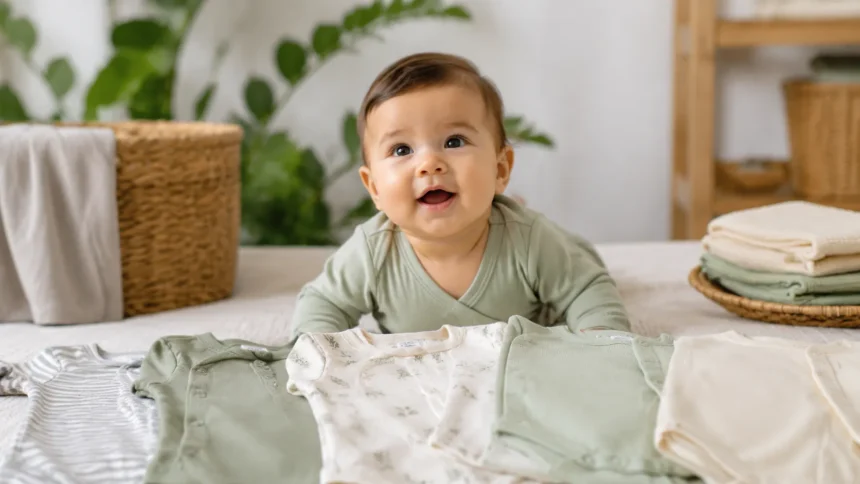
Baby clothing has evolved considerably over the years. Today’s parents are not only interested in attractive prints and adorable designs; they also want garments that fit comfortably, work well with busy routines, and offer reliable quality. Fabric choice has consequently become an important part of building a baby’s wardrobe.
Among the many materials available, bamboo-derived textiles have attracted considerable attention. Their smooth texture and lightweight feel make them popular for bodysuits, rompers, sleepwear, leggings, and other everyday garments. However, choosing the right clothing involves more than selecting an item simply because it carries a “bamboo” label.
For parents considering bamboo baby clothes, understanding the fabric, garment construction, sizing, care requirements, and intended use can lead to much more satisfying purchases. RAPH&REMY currently offers a range of bamboo baby essentials, including onesies, leggings, T-shirts, zippies, swaddles, and sleepwear.
Understanding What “Bamboo” Means on a Clothing Label
The term bamboo can sometimes create confusion when shopping for textiles. Most commercially available bamboo clothing is not made from fibres that remain in their original plant form. Instead, bamboo pulp is commonly processed into regenerated fibres such as viscose or rayon.
That distinction is worth understanding because different textile processes can result in different characteristics.
A professional approach to shopping starts with checking the exact fibre composition listed by the manufacturer. Rather than relying on broad marketing descriptions, parents can look at the product’s material information, care label, and construction details.
This makes it easier to compare bamboo-derived clothing with cotton, modal, linen, or blended fabrics.
Comfort Should Guide the First Purchase
A baby’s wardrobe should begin with comfort.
Babies spend a considerable amount of time lying down, sleeping, being carried, and moving their arms and legs. Clothing that feels soft and flexible can therefore be more practical than garments designed primarily for appearance.
Bamboo-derived fabrics are often appreciated for their smooth hand feel. However, fabric softness is only one element of comfort.
Parents should also look at seam placement, neckline construction, waistbands, sleeve openings, fastenings, fabric weight, stretch, and overall fit.
A beautifully soft fabric can still be uncomfortable if the garment is poorly constructed.
Match the Fabric to the Climate
Weather should influence a baby’s wardrobe.
In warmer environments, parents generally have good reason to prefer lightweight clothing that does not create unnecessary layers. In cooler conditions, the same baby may need additional garments or appropriately warm fabrics.
For warm-weather wardrobes, lightweight bamboo-based garments can be considered alongside cotton and other breathable options.
RAPH&REMY specifically describes its baby essentials as designed with tropical climates in mind, with products focused on comfort and lightweight bamboo fabrics.
Rather than assuming that a particular fibre will automatically keep a baby at the ideal temperature, parents should consider the complete garment and the surrounding environment.
Build Around Everyday Essentials
A baby’s wardrobe does not need to contain dozens of elaborate outfits.
A practical collection can begin with a group of versatile basics.
Bodysuits are useful for layering and everyday wear. Rompers provide an easy one-piece outfit. T-shirts and leggings can be mixed together, while zippies can simplify dressing and changing.
Sleepwear can form another important category.
The advantage of building around essentials is that individual pieces can be used repeatedly instead of being reserved for a particular occasion.
This approach also makes laundry management easier for parents.
Bodysuits for Flexible Dressing
Bodysuits are among the most versatile garments in an infant’s wardrobe.
They can be worn alone in warm weather or layered under trousers, skirts, shorts, or other garments. They also tend to stay in place more effectively than loose tops.
When selecting a bamboo bodysuit, consider the neckline and fastening system. Parents may prefer designs that make dressing and diaper changes straightforward.
For newborns, wider openings and convenient snaps can be especially practical.
As the baby becomes more active, stretch and freedom of movement become increasingly important.
Rompers for Simplicity
Parents often appreciate clothing that does not require complicated outfit planning.
A romper provides a simple solution because it combines several clothing functions into one garment.
A bamboo-based romper can be a comfortable option for daytime activities, particularly when the design is lightweight and easy to put on.
Look for secure fastenings and enough room for natural movement. The garment should not feel restrictive around the arms, legs, or waist.
Simple designs are often the most useful because they can be worn regularly rather than being reserved for photographs or special occasions.
Sleepwear Requires Extra Attention
Baby sleepwear deserves careful consideration because infants spend so much time sleeping.
A soft, lightweight garment may be appealing, but parents should select sleepwear according to the baby’s environment and follow established safe-sleep recommendations.
The objective should be comfortable, appropriate clothing without unnecessary layers.
Parents should also pay attention to the fit. Sleepwear should not be excessively loose or create avoidable hazards. Product-specific instructions and age recommendations should always be followed.
Fabric preference should never take priority over safe sleeping practices.
Clothing Should Support Movement
A baby’s physical abilities change rapidly.
A newborn may spend most of the day lying down, while a few months later the same child may be rolling, reaching, crawling, or attempting to stand.
Clothing therefore needs to accommodate development.
Stretch fabrics can be useful because they allow movement while making garments easier to put on. However, stretch should be balanced with proper sizing.
Parents should avoid purchasing clothing that is excessively tight simply because it has a flexible fabric. Likewise, garments should not be so oversized that they become difficult to manage.
The right fit should provide comfortable movement without unnecessary excess material.
Choose Sizes Strategically
One of the most common challenges with baby clothing is rapid growth.
A newborn can outgrow an outfit surprisingly quickly, so purchasing an entire wardrobe in one size may not be the most practical approach.
Instead, consider building a gradual size range.
Keep enough current-size clothing for everyday use while introducing a few larger garments for future growth.
When purchasing a gift, slightly larger sizing can sometimes be useful, provided that the garment is used only when it is appropriate and fits safely.
Always refer to the manufacturer’s specific measurements because age-based sizing can vary between brands.
Make Laundry Part of the Decision
Baby clothing needs to withstand frequent washing.
A garment that looks impressive in a shop but requires complicated maintenance may become inconvenient when used every few days.
Before purchasing, read the care label.
Check whether the clothing can be machine washed, whether cold or warm water is recommended, and whether tumble drying is suitable.
Different bamboo-derived fabrics may have different care requirements, so parents should not assume that every bamboo garment should be washed identically.
Following the manufacturer’s instructions is the best way to protect the garment’s texture, shape, and longevity.
Examine Construction Carefully
Quality is often visible in the details.
Look closely at the stitching and seams. Check that snaps and zippers are securely attached. Examine cuffs, waistbands, and hems for clean finishing.
For baby clothing, decorative details should also be considered carefully. Loose components can create safety concerns, so simple and secure construction is generally preferable.
A professional-quality garment should combine attractive design with dependable construction.
Bamboo Clothing as a Gift
Baby clothing can make an excellent present because it combines practical value with an opportunity for personalisation.
For a baby shower, newborn celebration, or first birthday, a coordinated clothing collection can create a thoughtful gift.
Instead of selecting one random outfit, consider creating a small wardrobe set. A bodysuit, romper, leggings, or sleepwear piece can be combined with another complementary baby essential.
Personalisation can make the present even more memorable.
A baby’s name or initials can turn a practical garment into something that feels specifically chosen for the child.
RAPH&REMY also offers personalised baby essentials and gift collections alongside its bamboo clothing range, providing options for both everyday use and special occasions.
Think Beyond Appearance
Baby fashion is undoubtedly appealing, but appearance should not dominate the purchasing decision.
An attractive print may catch attention immediately, but the garment also needs to be comfortable, practical, and appropriate for everyday use.
Ask yourself several questions before buying:
Will the baby be comfortable wearing it?
Is the fabric appropriate for the environment?
Can parents easily dress and change the baby?
Is the size suitable?
Can the garment withstand regular washing?
Does the construction appear durable?
If the answer to these questions is positive, the garment is much more likely to become a useful part of the wardrobe.
Consider the Environmental Story Carefully
Bamboo is frequently presented as an environmentally friendly textile, but the complete environmental picture depends on how the material is processed and manufactured.
The plant source alone does not tell the whole story. Bamboo-derived fibres can involve industrial processing before they become finished textiles.
Consumers interested in sustainability should therefore look for clear information about fibre composition, manufacturing, certifications, and company practices rather than relying exclusively on broad environmental claims.
Another practical way to make a more responsible choice is to buy thoughtfully, select durable garments, and use clothing for as long as it remains appropriate.
Compare Bamboo With Other Fabrics
There is no requirement for parents to build an entire wardrobe from one material.
Cotton remains a widely used baby-clothing fabric. Muslin can be useful for lightweight layers and swaddling, while other textiles may suit different temperatures and activities.
Bamboo-derived fabrics can be considered when softness and lightweight comfort are priorities.
The most effective wardrobe may therefore contain several materials rather than relying exclusively on one.
The important thing is to evaluate each garment based on its intended purpose.
Creating a More Efficient Baby Wardrobe
A thoughtfully designed wardrobe can make everyday parenting easier.
Start with frequently used basics. Add climate-specific pieces as needed. Keep special-occasion clothing limited unless there is a genuine need for it.
Choose colours and designs that can be mixed together.
This creates more outfit combinations without requiring a large number of garments.
It also reduces the pressure to constantly purchase new clothing as the baby grows.
Final Thoughts
Bamboo baby clothing can be an attractive option for families looking for soft, lightweight, and versatile garments. Its appeal is particularly strong when comfort and simple everyday dressing are priorities.
However, the most informed choice goes beyond the word “bamboo.”
Parents should examine the exact fibre composition, construction, sizing, intended use, care requirements, and safety features of each garment. Climate and the baby’s stage of development should also influence the decision.
The best baby wardrobe is not necessarily the largest or most expensive. It is one built around the realities of everyday family life.
A thoughtfully selected bamboo bodysuit can make changing easier. A well-designed romper can simplify daytime dressing. Comfortable sleepwear can become part of a familiar bedtime routine. A personalised outfit can eventually become a treasured keepsake.
Ultimately, good baby clothing should combine practicality with comfort and thoughtful design. When parents choose garments based on how they will actually be worn—not simply how they look on a product page—they can create a wardrobe that supports their child through some of the most important and rapidly changing stages of early life.