

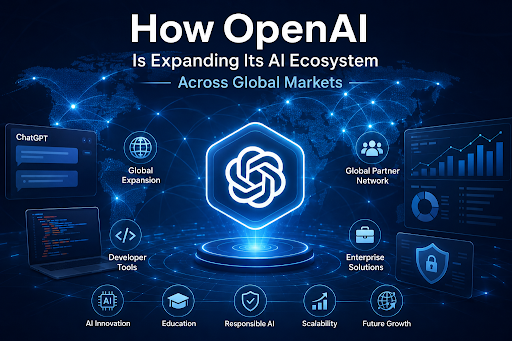
Artificial intelligence has moved beyond being an experimental technology to becoming a fundamental part of modern business, education, software development, and everyday productivity. Over the past few years, OpenAI has played a major role in accelerating this transformation by introducing advanced AI models and expanding access to intelligent tools for users around the world.
Today, AI adoption is no longer limited to technology companies. Enterprises, startups, educational institutions, healthcare organizations, and independent developers are integrating AI into their daily workflows to improve efficiency, automate repetitive tasks, and create innovative digital experiences. Publications like TheTweaks frequently cover these developments, highlighting how AI continues to reshape industries through new technologies and strategic initiatives.
OpenAI’s recent announcements demonstrate that the company is focused on much more than releasing powerful language models. Its broader strategy centers on creating a complete AI ecosystem that combines accessibility, developer tools, enterprise collaboration, and global partnerships. This long-term vision is positioning OpenAI as one of the most influential organizations in the artificial intelligence landscape.
AI Is Becoming a Global Platform
The next phase of artificial intelligence is not simply about making models smarter. Instead, success depends on making AI available to more people, supporting developers with better tools, and enabling organizations to build reliable AI-powered solutions.
Modern AI platforms require several essential components:
- Wide geographic availability
- Developer-friendly tools
- Enterprise integration
- Strong partner networks
- Continuous model improvements
- Responsible deployment practices
Rather than focusing on a single product, OpenAI has invested across all of these areas simultaneously. This comprehensive approach allows businesses of every size to adopt AI according to their own needs while encouraging innovation across multiple industries.
Expanding ChatGPT Access Across New Markets
One of the clearest examples of OpenAI’s global expansion strategy is its continued effort to bring premium AI services to additional regions. Increased accessibility allows professionals, students, creators, and businesses to benefit from advanced AI capabilities regardless of their location.
A recent example of this expansion is OpenAI Launches Nationwide ChatGPT Plus in Malta, illustrating how OpenAI continues extending premium AI services into new markets while improving access for local users.
Regional availability is more important than many people realize. Businesses often require localized support, improved infrastructure, and regulatory compliance before adopting enterprise AI solutions. Expanding into additional countries helps accelerate AI adoption while making advanced tools available to a broader audience.
As more regions gain access to premium AI services, organizations can improve productivity, streamline communication, automate documentation, and enhance customer experiences through intelligent automation.
Empowering Developers Through Better AI Tools
Developers remain one of OpenAI’s most important audiences. Software engineers increasingly rely on AI for code generation, debugging, documentation, testing, and workflow automation.
Rather than replacing developers, AI functions as an intelligent assistant capable of reducing repetitive work while allowing engineers to focus on architecture, innovation, and problem solving.
This strategy is reflected in initiatives such as OpenAI Launched Codex Micro Keyboard, highlighting OpenAI’s continued investment in developer productivity and AI-assisted programming experiences.
AI-assisted coding now supports a wide range of development tasks, including:
- Writing boilerplate code
- Explaining unfamiliar functions
- Detecting programming errors
- Refactoring existing projects
- Generating documentation
- Speeding up testing workflows
These capabilities significantly reduce development time while allowing software teams to maintain higher quality standards.
As AI coding assistants continue evolving, they are becoming valuable companions rather than replacements for experienced software engineers.
Building a Strong Global Partner Network
Technology platforms rarely succeed in isolation. Sustainable growth depends on partnerships with businesses, educational institutions, infrastructure providers, cloud platforms, and software vendors.
OpenAI’s strategy increasingly reflects this reality by expanding collaboration opportunities across industries.
The announcement OpenAI Launches Global Partner Network demonstrates how strategic partnerships can accelerate AI adoption while encouraging organizations to build specialized solutions on top of OpenAI technologies.
Partner ecosystems create several advantages:
- Faster enterprise adoption
- Industry-specific AI applications
- Better customer support
- Improved technical integration
- Expanded educational resources
- Larger developer communities
This collaborative model enables businesses to integrate AI into existing workflows without starting from scratch, making implementation faster and more cost-effective.
Enterprise AI Continues to Mature
Large organizations have different requirements than individual users. Enterprise AI solutions must prioritize security, compliance, scalability, reliability, and governance.
OpenAI has steadily expanded its enterprise capabilities to address these challenges. Modern organizations expect AI systems that integrate with existing business processes while protecting sensitive information.
Today’s enterprise AI implementations commonly support:
- Customer service automation
- Internal knowledge management
- Document summarization
- Software development assistance
- Business intelligence
- Content generation
- Workflow automation
As these capabilities mature, organizations are increasingly viewing AI as a long-term operational investment rather than a temporary technology trend.
Education and Professional Learning
Artificial intelligence is also transforming education and professional development.
Students can receive personalized explanations for complex concepts, while educators can create learning materials more efficiently. Businesses are using AI to develop internal training programs, improve onboarding experiences, and deliver customized educational content.
Professionals across industries are learning how to collaborate with AI rather than compete against it. Skills such as prompt engineering, AI-assisted research, workflow automation, and responsible AI usage are becoming increasingly valuable in today’s workplace.
Responsible AI Development
Rapid innovation must be accompanied by responsible development practices.
Organizations deploying AI must consider:
- Data privacy
- Transparency
- Security
- Human oversight
- Bias reduction
- Regulatory compliance
Responsible AI development builds trust among businesses and users while supporting sustainable long-term adoption.
OpenAI continues emphasizing safety research alongside product innovation, recognizing that trustworthy AI systems are essential for widespread acceptance.
The Future of the AI Ecosystem
Artificial intelligence will likely become deeply integrated into nearly every digital product over the coming years.
Instead of existing as standalone applications, AI capabilities will increasingly appear inside productivity software, communication platforms, design tools, developer environments, search experiences, healthcare systems, and enterprise applications.
Future growth will likely focus on:
- More personalized AI assistants
- Better multimodal capabilities
- Smarter developer tools
- Stronger enterprise integration
- Global accessibility
- Industry-specific AI solutions
Organizations that begin building AI expertise today will be better prepared to adapt as these technologies continue evolving.
Conclusion
OpenAI is steadily building a stronger AI ecosystem through global expansion, developer-focused innovation, and strategic partnerships. As these initiatives continue to grow, platforms like TheTweaks help readers stay informed about the latest AI developments and technology trends.
With continuous improvements across products and services, OpenAI is well positioned to shape the future of artificial intelligence for businesses, developers, and everyday users worldwide.