

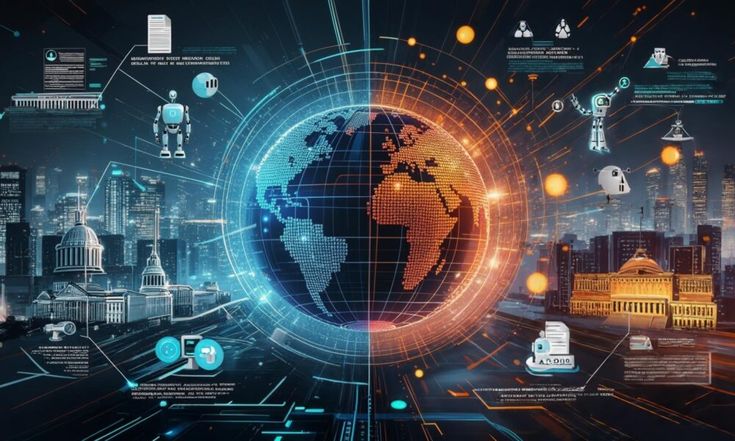
Artificial intelligence is no longer a distant concept confined to science fiction—it has become a defining force of the 21st century. From automating routine tasks to transforming entire industries, AI is reshaping how societies function, economies grow, and individuals live their daily lives. Yet, like any transformative technology, it brings both immense promise and serious challenges. Understanding this balance is essential as the world moves deeper into the AI revolution.
The Rise of Artificial Intelligence
AI has evolved rapidly over the past decade, fueled by advances in computing power, data availability, and algorithm design. What began as rule-based systems has grown into complex models capable of learning patterns, generating human-like language, and making decisions in uncertain environments.
Today, AI systems are embedded in everyday tools—recommendation engines, virtual assistants, medical diagnostics, and financial forecasting. This widespread integration signals a shift: AI is no longer just a tool; it is becoming infrastructure.
Opportunities: Transforming Industries and Human Potential
One of the most compelling aspects of AI is its ability to amplify human capability. In healthcare, AI assists in early disease detection and personalized treatment plans, potentially saving lives and reducing costs. In education, adaptive learning platforms tailor content to individual students, improving engagement and outcomes.
Economic productivity is another major benefit. Businesses are using AI to optimize supply chains, automate repetitive tasks, and uncover insights from massive datasets. This efficiency can lead to innovation, lower costs, and new markets.
AI also enables entirely new fields. Autonomous vehicles, smart cities, and advanced robotics are no longer theoretical—they are actively being developed and deployed. For developing economies, AI presents a chance to leapfrog traditional stages of industrial growth.
Risks: Ethical, Social, and Economic Concerns
Despite its advantages, AI introduces significant risks that cannot be ignored. One of the most pressing concerns is job displacement. Automation threatens roles in manufacturing, customer service, and even white-collar professions. While new jobs will emerge, the transition may be uneven and disruptive.
Bias in AI systems is another critical issue. Since AI learns from data, it can replicate and even amplify existing societal inequalities. This can lead to unfair outcomes in hiring, lending, law enforcement, and beyond.
Privacy is also under pressure. AI systems often rely on vast amounts of personal data, raising questions about surveillance, consent, and data ownership. Without strong safeguards, individuals may lose control over their digital identities.
Finally, there is the risk of misuse. From deepfakes to autonomous weapons, AI can be weaponized in ways that destabilize societies and challenge global security.
Global Impact: A New Technological Divide?
AI is reshaping global power structures. Countries investing heavily in AI research and infrastructure are gaining economic and strategic advantages. This could widen the gap between technologically advanced nations and those struggling to keep up.
At the same time, AI has the potential to address global challenges such as climate change, food security, and public health. Predictive models can optimize energy use, improve crop yields, and track disease outbreaks. The question is whether these benefits will be shared equitably.
International cooperation is becoming increasingly important. Without shared standards and ethical frameworks, the development of AI could lead to fragmentation, competition, and even conflict.
The Future of Work and Society
AI is not just changing what we do—it is changing how we think about work itself. Routine tasks are increasingly automated, placing greater value on creativity, critical thinking, and emotional intelligence.
Education systems must adapt to this reality. Lifelong learning will become essential as workers continuously reskill to stay relevant. Governments and organizations will need to support this transition through policies, training programs, and social safety nets.
Society as a whole will also need to grapple with philosophical questions. What does it mean to be human in an age of intelligent machines? How do we ensure that technology serves humanity rather than the other way around?
Governance and Regulation: Finding the Balance
Regulating AI is a complex challenge. Too little oversight can lead to harm, while too much can stifle innovation. Policymakers must strike a balance that encourages progress while protecting public interests.
Transparency is key. AI systems should be explainable and accountable, especially in high-stakes applications. Ethical guidelines and industry standards can help ensure responsible development.
Public engagement is equally important. Citizens should have a voice in how AI is used and governed, fostering trust and aligning technological progress with societal values.
Frequently Asked Questions (FAQs)
What is artificial intelligence in simple terms?
Artificial intelligence refers to computer systems designed to perform tasks that typically require human intelligence, such as learning, reasoning, problem-solving, and understanding language.
Will AI replace human jobs completely?
AI is likely to replace some jobs, especially those involving repetitive tasks, but it will also create new roles. The overall impact will depend on how societies manage the transition and invest in reskilling workers.
Is AI dangerous?
AI itself is not inherently dangerous, but its misuse or poor design can lead to harmful outcomes. Risks include bias, privacy violations, and potential misuse in areas like misinformation or warfare.
How does AI affect privacy?
AI systems often rely on large amounts of data, including personal information. This raises concerns about how data is collected, stored, and used, making privacy protection a major issue.
Which industries benefit the most from AI?
Healthcare, finance, education, manufacturing, and transportation are among the sectors experiencing significant transformation due to AI.
Can AI help solve global problems?
Yes, AI has the potential to address challenges like climate change, disease outbreaks, and resource management. However, its effectiveness depends on ethical use and global collaboration.
What skills are important in an AI-driven future?
Skills such as critical thinking, creativity, adaptability, and digital literacy will be increasingly valuable, along with technical knowledge related to AI and data.
Conclusion
The AI revolution is not a single event but an ongoing transformation that touches every aspect of human life. Its opportunities are vast, offering the potential to improve living standards, drive innovation, and solve complex global problems. At the same time, its risks demand careful consideration and proactive management.
The future of AI will be shaped not only by technological advancements but also by the choices societies make today. By fostering ethical development, inclusive policies, and global cooperation, humanity can harness AI as a force for good—one that enhances, rather than diminishes, what it means to be human.