

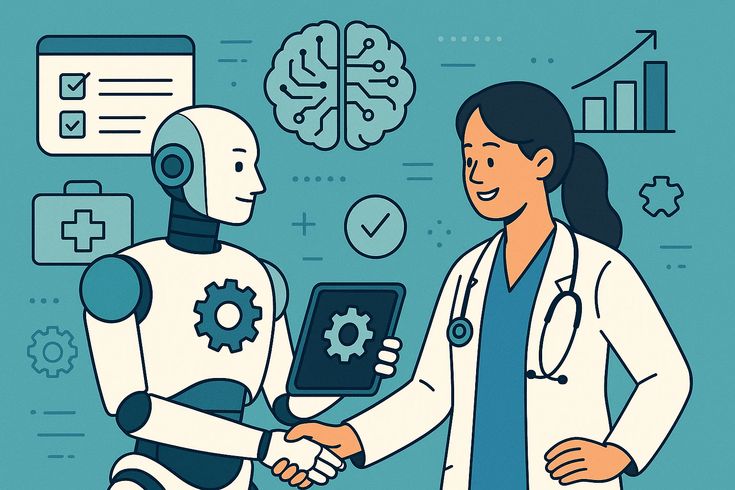
Artificial Intelligence (AI) is transforming healthcare faster than almost any other industry. From detecting diseases earlier to helping doctors make faster decisions, AI is becoming a powerful tool in hospitals, clinics, and research centers worldwide. Yet, alongside these benefits come serious concerns about privacy, bias, reliability, and ethics. The debate is no longer about whether AI will shape healthcare—it already is. The real question is whether it will primarily save lives or create new risks for patients and healthcare systems.
Understanding AI in Healthcare
Artificial Intelligence refers to computer systems designed to perform tasks that usually require human intelligence. In healthcare, AI can analyze medical data, recognize patterns, predict outcomes, and even assist in surgeries. Machine learning, a branch of AI, allows systems to improve over time as they process more information.
Today, AI is used in medical imaging, virtual health assistants, drug discovery, patient monitoring, and administrative automation. Hospitals use AI tools to reduce waiting times, improve diagnosis accuracy, and support overwhelmed healthcare workers.
The growing adoption of AI is driven by the increasing amount of healthcare data. Medical records, imaging scans, wearable devices, and genetic information produce enormous volumes of data that humans alone cannot process efficiently. AI systems help convert this data into actionable medical insights.
How AI Is Saving Lives
One of the strongest arguments in favor of AI is its ability to improve patient outcomes. AI-powered systems can identify diseases such as cancer, diabetes, and heart conditions at earlier stages than traditional methods in some cases. Early detection often means more effective treatment and higher survival rates.
AI also helps doctors make faster decisions during emergencies. For example, AI algorithms can quickly analyze brain scans to identify strokes, allowing patients to receive treatment sooner. In critical care units, AI can monitor patient vitals continuously and alert medical staff before a patient’s condition worsens.
Another important contribution is personalized medicine. AI can analyze a patient’s genetic profile, medical history, and lifestyle to recommend treatments tailored specifically to that individual. This approach reduces trial-and-error prescribing and increases treatment effectiveness.
Drug development has also benefited significantly from AI. Traditional drug discovery can take years and cost billions of dollars. AI accelerates the process by identifying promising compounds and predicting how drugs may interact with diseases. During global health crises, such as pandemics, this speed can save countless lives.
In rural or underserved regions, AI-powered telemedicine tools are helping bridge gaps in healthcare access. Virtual consultations, symptom checkers, and remote monitoring systems allow patients to receive medical guidance even when doctors are not physically nearby.
The Risks and Challenges of AI in Healthcare
Despite its advantages, AI in healthcare carries serious risks. One of the biggest concerns is data privacy. Healthcare systems rely on sensitive patient information, and AI requires massive datasets to function effectively. If this data is mishandled or hacked, patient confidentiality can be compromised.
Bias in AI systems is another major issue. AI models learn from historical data, and if that data contains biases, the AI may produce unfair or inaccurate results. For example, an AI system trained primarily on one population group may perform poorly for patients from different ethnic or socioeconomic backgrounds.
There is also the danger of overreliance on technology. AI tools can support doctors, but they are not perfect. Errors in algorithms or inaccurate predictions can lead to misdiagnosis or inappropriate treatment. If healthcare professionals trust AI blindly without human judgment, patient safety could be at risk.
Job displacement is another concern. While AI is unlikely to replace doctors entirely, it may automate certain administrative and diagnostic tasks. This could change the roles of healthcare workers and create uncertainty in the workforce.
Ethical questions remain unresolved as well. Who is responsible if an AI system makes a harmful medical decision? Should machines be allowed to make life-and-death recommendations? Governments and healthcare organizations are still developing regulations to address these complex issues.
Balancing Innovation and Responsibility
The future of AI in healthcare depends on balancing innovation with ethical responsibility. AI should be viewed as a support system rather than a replacement for medical professionals. Human expertise, empathy, and ethical judgment remain essential in patient care.
Healthcare organizations must invest in transparent AI systems that can explain how decisions are made. Strong cybersecurity measures are also necessary to protect patient data from breaches. In addition, AI models should be trained on diverse datasets to reduce bias and improve fairness.
Governments and regulatory bodies play a critical role in setting standards for AI safety and accountability. Clear regulations can help ensure that AI technologies are tested thoroughly before being used in clinical settings.
Education is equally important. Doctors, nurses, and healthcare staff need training to understand how AI works, its limitations, and how to use it responsibly. Patients should also be informed when AI tools are involved in their care.
The Future of Healthcare with AI
AI has the potential to revolutionize healthcare in ways previously unimaginable. It can improve efficiency, reduce medical errors, lower healthcare costs, and expand access to treatment. However, these benefits will only be realized if AI is developed and implemented responsibly.
Rather than asking whether AI is entirely good or bad, society should focus on how it is managed. Technology itself is neutral; its impact depends on how humans choose to use it. With proper oversight, ethical standards, and human involvement, AI can become one of the most valuable tools in modern medicine.
Conclusion
Artificial Intelligence is reshaping healthcare by offering faster diagnoses, personalized treatments, and improved patient care. At the same time, it raises important concerns about privacy, bias, ethics, and reliability. The challenge is not to stop AI from entering healthcare, but to ensure it serves humanity safely and fairly.
If used responsibly, AI can save millions of lives and make healthcare more accessible around the world. However, ignoring its risks could lead to serious consequences. The future of healthcare will likely depend on finding the right balance between technological advancement and human responsibility.
Frequently Asked Questions (FAQs)
What is AI in healthcare?
AI in healthcare refers to the use of computer systems and algorithms to assist with medical tasks such as diagnosis, treatment planning, patient monitoring, and data analysis.
Can AI replace doctors?
AI is designed to support doctors rather than replace them. Human judgment, communication, and empathy remain essential in healthcare.
How does AI help patients?
AI helps patients through early disease detection, personalized treatment recommendations, faster diagnoses, and improved healthcare access through telemedicine.
What are the biggest risks of AI in healthcare?
The major risks include data privacy breaches, biased algorithms, inaccurate diagnoses, ethical concerns, and overdependence on technology.
Is AI in healthcare safe?
AI can be safe when properly tested, monitored, and regulated. Human oversight is necessary to ensure patient safety and ethical use.
How is AI used in hospitals today?
Hospitals use AI for medical imaging analysis, patient monitoring, scheduling, robotic surgery assistance, and administrative tasks.
Why is data important for healthcare AI?
AI systems learn from data. Large and diverse medical datasets help AI make more accurate predictions and reduce errors.
What does the future of AI in healthcare look like?
The future may include more personalized medicine, faster drug development, advanced robotic surgeries, and improved global healthcare access through digital technologies.